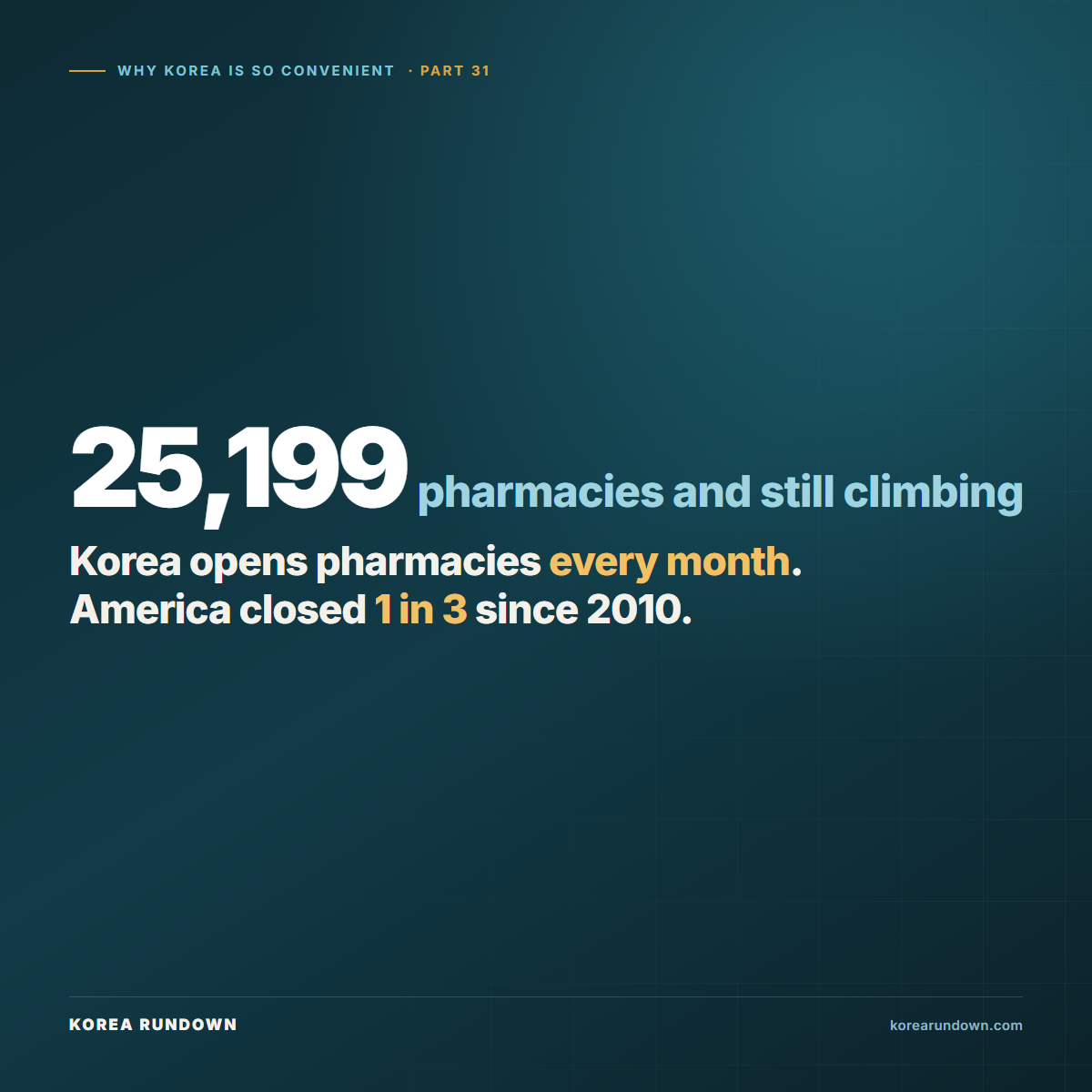
Korea Has 25,199 Pharmacies and Opens More Every Month. America Closed Nearly One in Three.
The American version of this errand has two separate failure points, and most people only complain about the second one. First you have to get to a pharmacy. Then you have to find out what the drug costs, which you generally cannot do until you are standing at the counter and the clerk has already run it through your insurance. If the number is wrong, you are negotiating at a window with a line behind you.
Both failure points are getting worse. A study in Health Affairs tracked every retail pharmacy in the country and found that nearly one in three closed between 2010 and 2021. About a third of U.S. counties saw a net decline in pharmacies over that period — counties holding 91.6 million people — and between 2018 and 2021 the count fell in 41 states. Closure was not evenly spread: 37.5% of pharmacies in predominantly Black neighborhoods and 35.6% in predominantly Latino neighborhoods shut, against 27.7% in predominantly white ones. Independent pharmacies were more than twice as likely to close as chains.
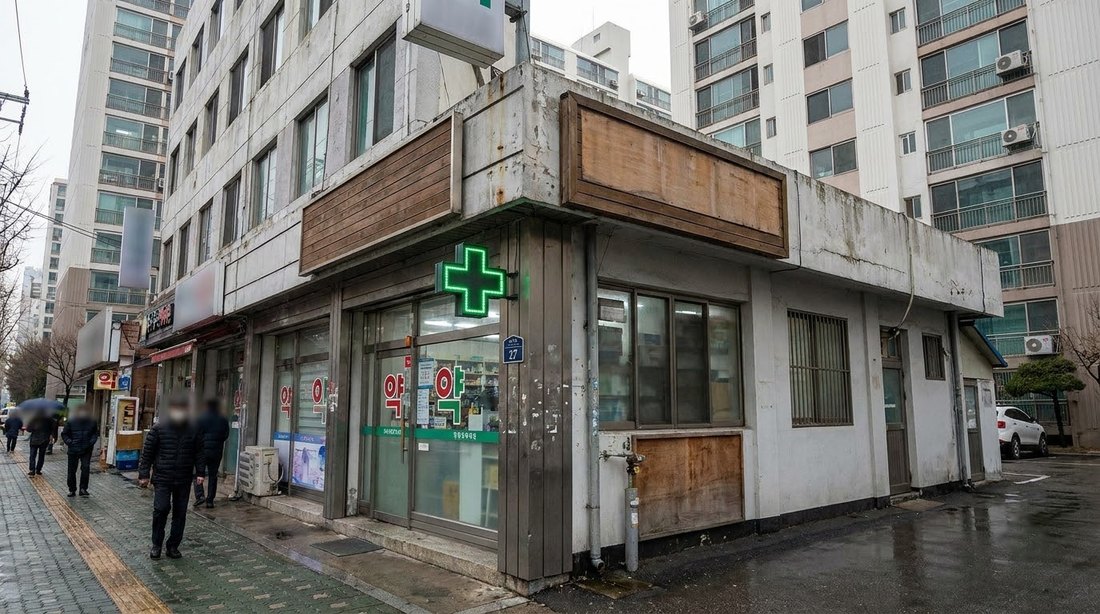
In Korea the pharmacy is downstairs from the clinic
Korea had 25,199 pharmacies as of October 2024, according to national health insurance claims data, and the count went up every single month that year — it started January at 24,933. Gyeonggi Province alone has 5,826. Seoul carries 61.13 pharmacies per 100,000 residents, the highest rate in the country; Daegu and North Jeolla are just behind at 58.79 and 57.88.
The physical arrangement matters more than the count. As Part 21 covered, Korean clinics stack vertically in commercial buildings, and the pharmacy takes the ground floor of the same building. You come down in the elevator holding a prescription and you are already there. Nobody drives anywhere.
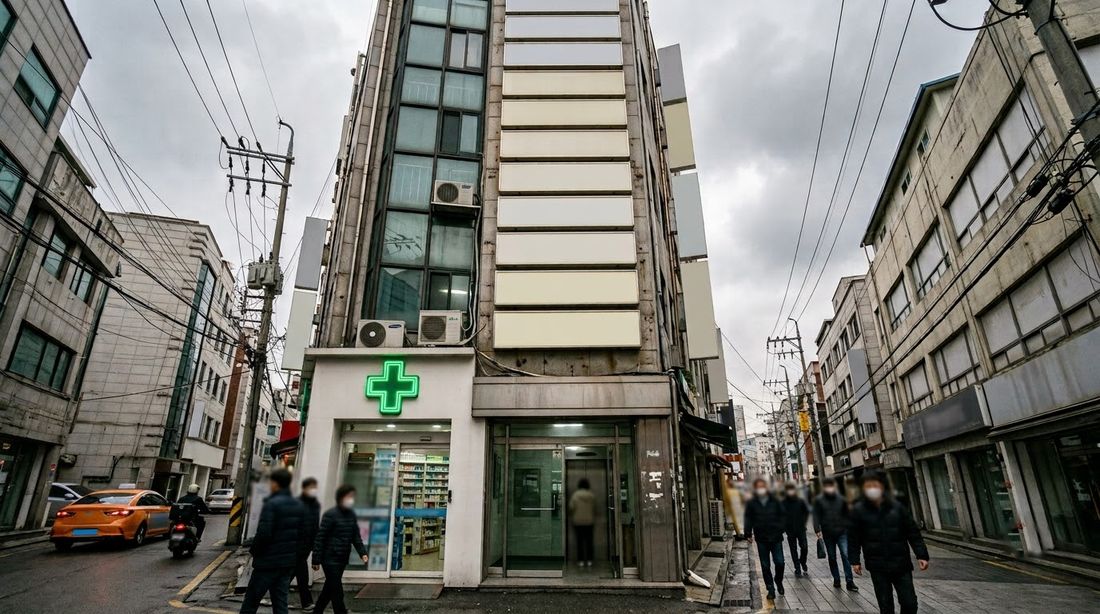
The price is decided before you arrive
This is the part that does not translate, because it is not a retail arrangement at all.
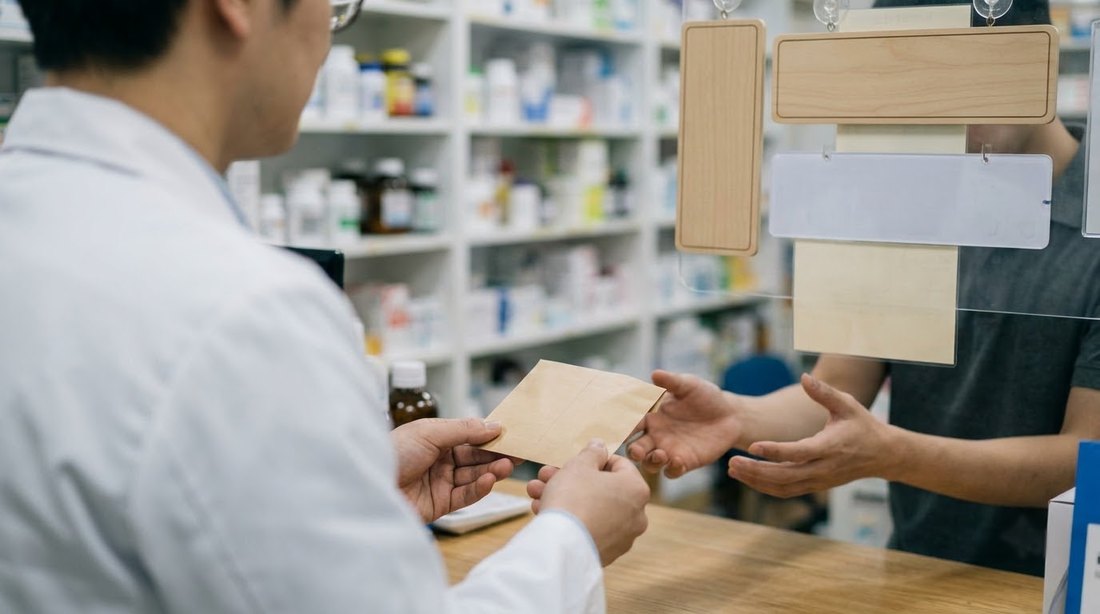
Since 1 July 2000, Korea has separated prescribing from dispensing: doctors write, pharmacists fill, and neither profits from the other's decision. What a pharmacy can charge is not a posted price. It is a fee schedule set by the national insurer, and the patient's share of an outpatient prescription is 30% — 30% of the drug cost plus 30% of a dispensing fee whose steps are also fixed by schedule. The pharmacist is not quoting you. The pharmacist is applying a number that already exists.
On top of that sits an annual ceiling. Under Korea's out-of-pocket cap, whatever a patient paid above their income-tiered limit in a year gets sent back to them. For the 2025 benefit year the insurer reported refunding about ₩3.08 trillion to 2.26 million people, averaging roughly ₩1.36 million each, with the highest tier's ceiling at ₩8.26 million. Most recipients did not apply. The money went to a registered account.
It is not that Koreans take fewer drugs
The obvious guess is that a cheap counter means a light one — that Korea keeps prescription spending down by prescribing less. That is the opposite of what happens. As Part 25 covered, Koreans see a doctor about 15.7 times a year, the highest rate in the OECD and roughly 2.6 times the OECD average. Nearly every one of those visits ends with a prescription and a walk downstairs. The volume is enormous. The per-transaction cost is small because the price was negotiated once, nationally, instead of 25,199 times at 25,199 counters.
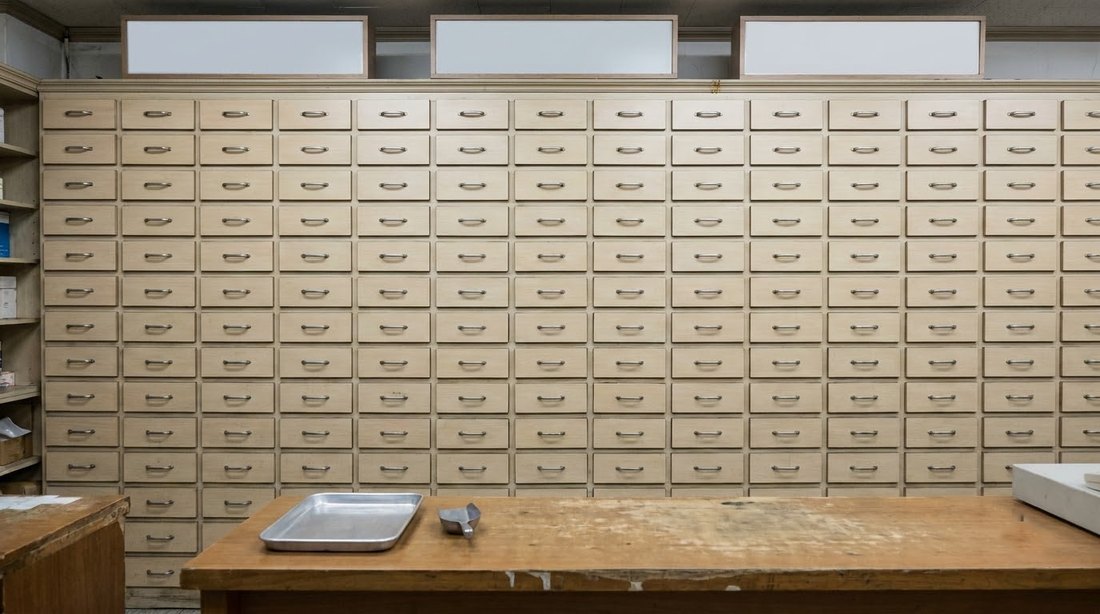
The honest part: try this at 2 a.m.
Twenty-five thousand pharmacies, and almost none of them are open when you actually panic.
Korean pharmacies keep clinic hours, because they are attached to clinics. Late at night, on Sundays, over the long holidays, the green crosses are dark. The government's answer is a designated late-night pharmacy program, and its size gives away how thin the coverage is: roughly 184 public late-night pharmacies nationwide — about 127 funded by local governments and 57 by the central government — with Seoul running 39 across its 25 districts. That is a nation of 51 million people served, after hours, by fewer pharmacies than a mid-sized American city has in total.
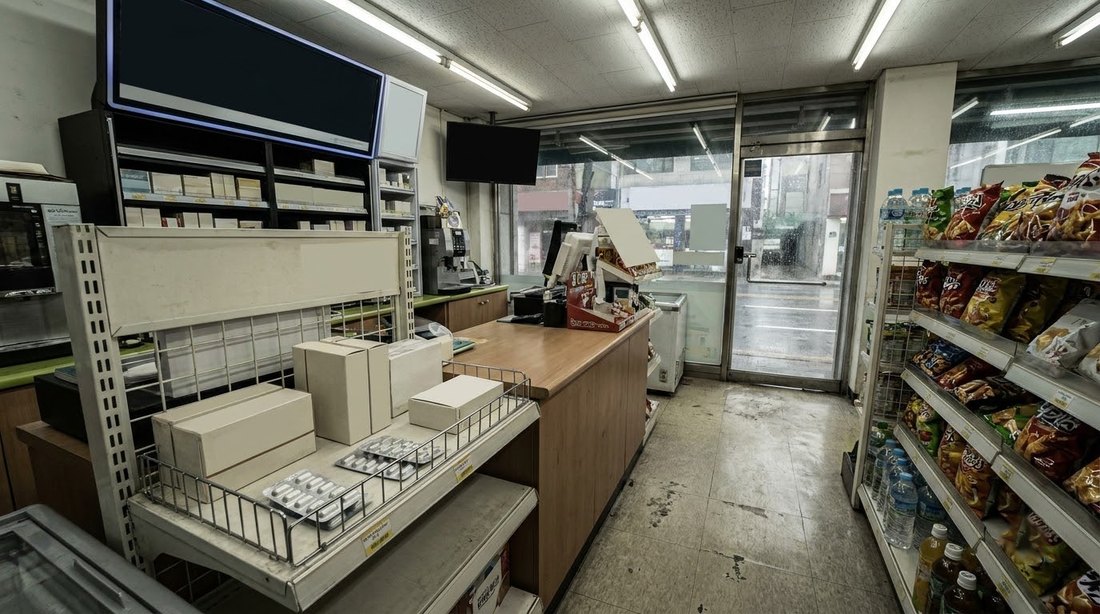
The stopgap is the convenience store. Since November 2012 a designated list of 13 over-the-counter items — painkillers, cold medicine, digestives, patches — can be sold outside a pharmacy, which is why the 24-hour shop from Part 1 doubles as the night pharmacy. The law permits up to 20 items. The list has not been expanded since it was set, and has effectively narrowed as individual products were discontinued.
Where the density comes back in
A pharmacy is a small business with a fixed cost and a catchment area. Whether it survives is arithmetic: how many prescriptions walk past the door in a day.
Put a pharmacy on the ground floor of a building whose upper floors hold four clinics, on a street where 54.5% of the country lives in apartment complexes within walking distance, and the catchment is a few hundred meters wide and very deep. Twenty-five thousand of those can exist because each one needs almost no territory. Put the same business in a county where the customers are spread across 400 square miles and the arithmetic changes: it needs a parking lot, a drive-thru, a chain's purchasing power, and a payer mix that a pharmacy benefit manager has not squeezed. When any of those fails, the whole county loses its counter.
And the price question is not cultural either. Korea did not persuade pharmacists to charge less. It removed the moment where a price is set in front of a patient, and put that decision somewhere the patient never sees. What is left at the window is a number, and the person handing it to you did not choose it.
This is part 31 of a series on why daily life in Korea feels so frictionless. Part 30 looked at the shopping arcades under Seoul's streets that were built as air-raid shelters. Earlier parts are here.
Next in this series: a Korean institution that is disappearing fast, for exactly the same reason the American version of it vanished sixty years earlier.


Comments
Post a Comment