Koreans See a Doctor 15.7 Times a Year. No Appointment, No Referral, No Network.
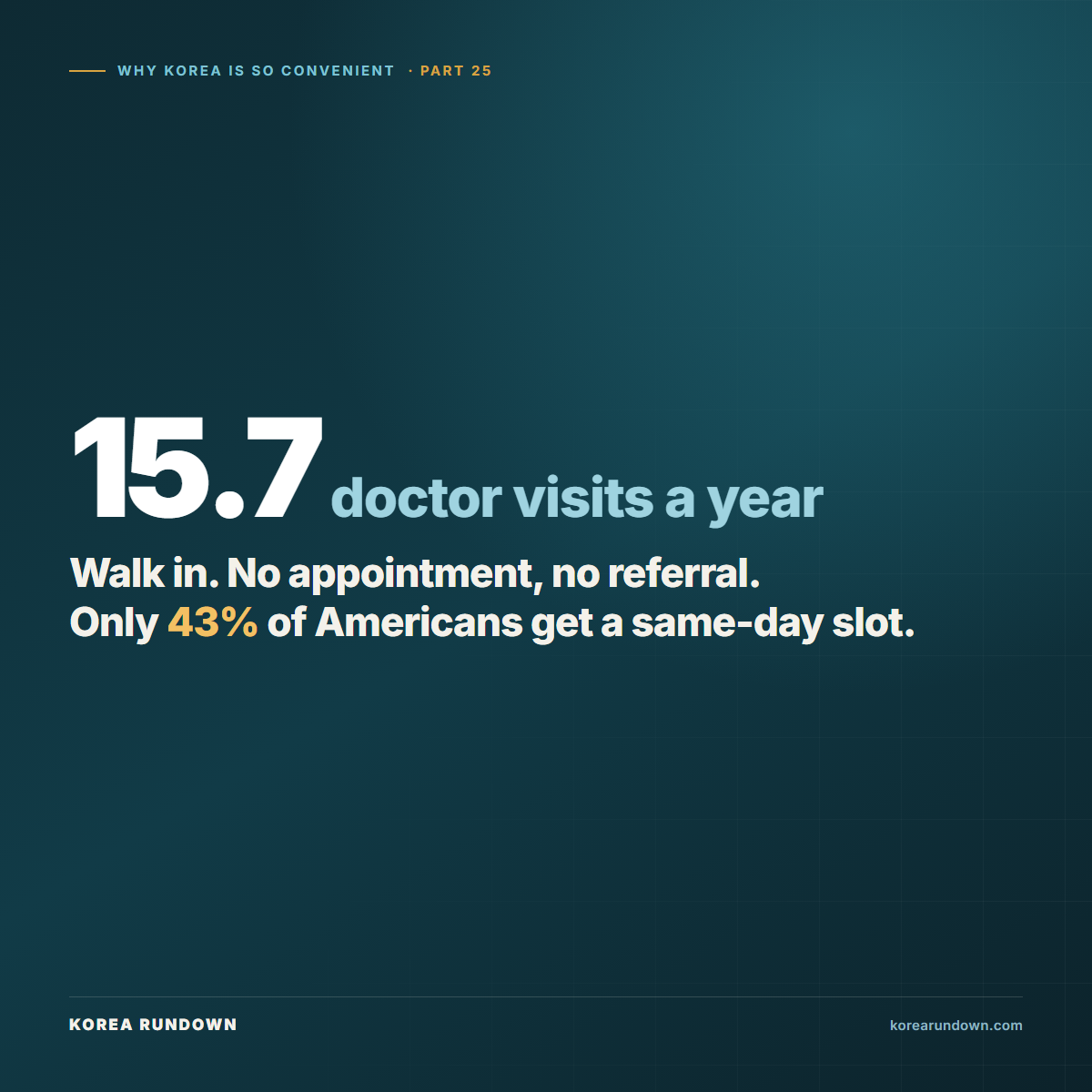
You wake up on a Monday with something that is probably nothing. A cough that has changed character, a rash, an ear that will not clear. You call your doctor's office, or you open the portal, and the first available slot is three weeks out. So you weigh it: wait it out, drive to urgent care and sit ninety minutes for a bill you cannot predict, or do nothing. This is not a story about a uniquely broken system. In the 2023 Commonwealth Fund International Health Policy Survey, 43% of American adults said they were able to get a same-day or next-day appointment the last time they were sick. That was mid-pack among the ten countries surveyed — the Netherlands led at 54%, Germany managed 51%, and Canada trailed at 26%. The striking part is not that America ranked poorly. It is that in every one of those countries, the majority answer was no.
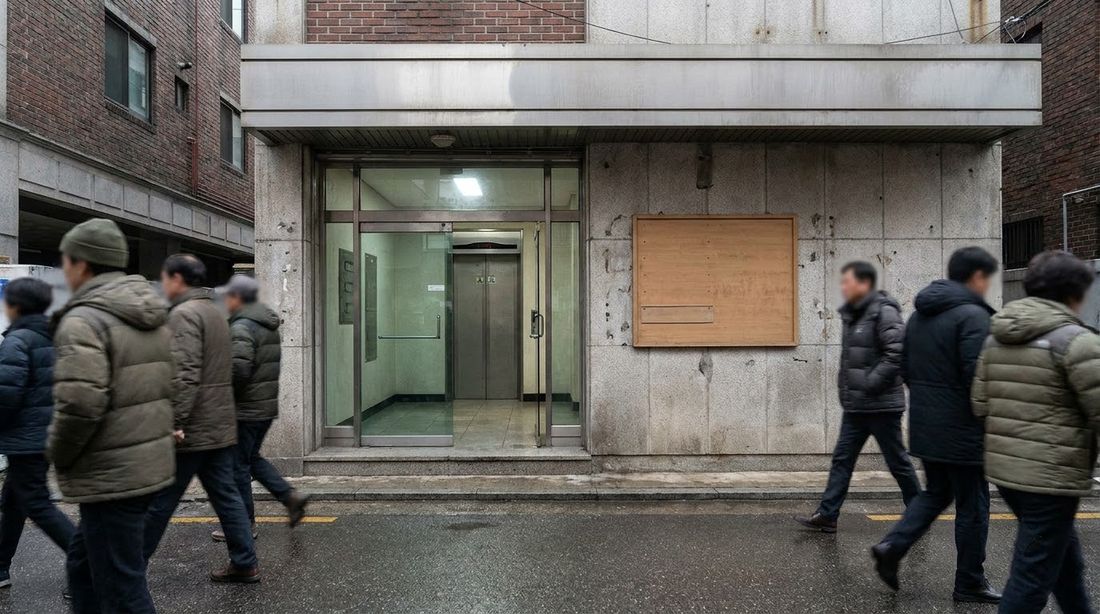
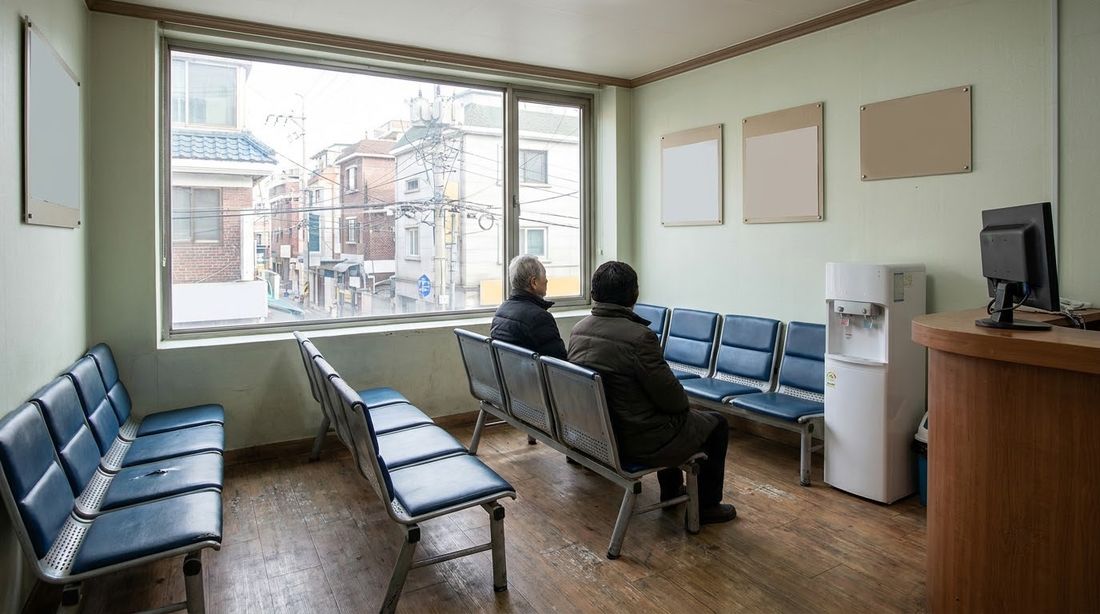
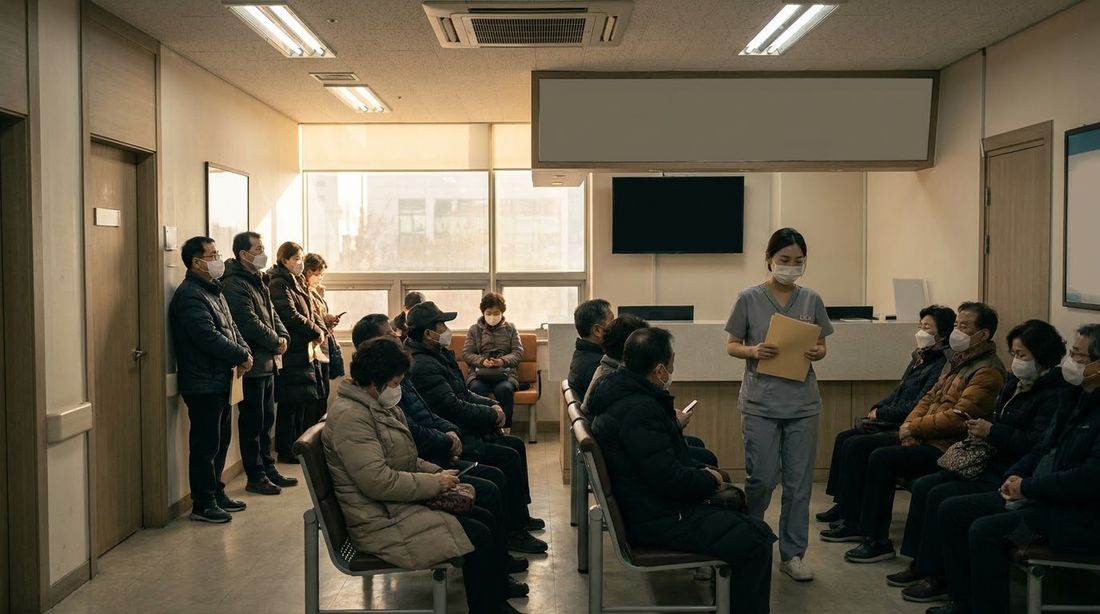
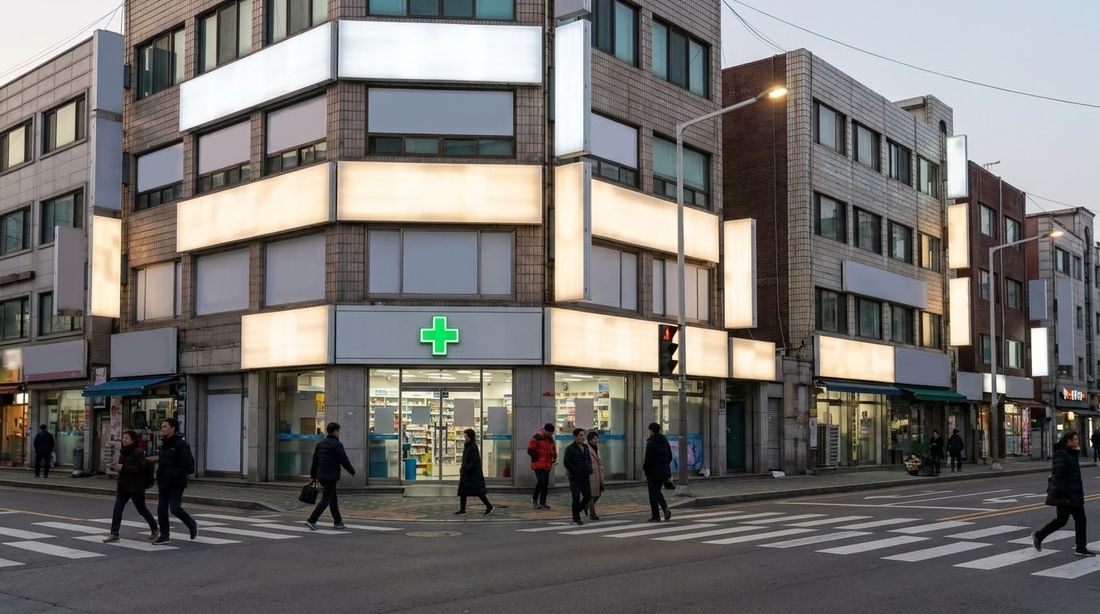
In Korea the question does not really arise. You walk into a commercial building on an ordinary street, ride the elevator to the third floor, hand your ID card to the desk, sit for perhaps fifteen minutes, see an internal medicine physician, and leave with a prescription you fill at the pharmacy on the ground floor of the same building. No appointment was made. No referral existed. Nobody checked whether the clinic was in your network, because there are no networks to be in.
The system is built to be entered from the bottom
Korean national health insurance formally divides care into two stages. Stage one is the uiwon and byeongwon — neighborhood clinics and general hospitals — and you may walk into any of them, anywhere in the country, without permission from anyone. Stage two is the tertiary academic hospital, and that one does have a gate: to have the visit covered, you generally need a referral document issued by a stage-one doctor, submitted within seven days of issue, not counting public holidays.
Both systems gatekeep. The difference is where the gate sits. Korea puts it between the neighborhood and the university hospital, so first contact with a doctor is unrestricted and the genuinely scarce resource — specialist capacity at a major center — is what gets rationed. The U.S. puts the gate at the very first step, where a primary care appointment is itself the thing you must qualify for, schedule around, and confirm is in-network before you are allowed to begin.
Price works the same way. A single public insurer sets one fee schedule for every clinic in the country, and for an ordinary outpatient visit at a neighborhood clinic the patient's share is 30%. Because the schedule is national, there is no such thing as the wrong door. Any clinic will take your card, and the amount is the amount.
The result is the most heavily used outpatient system in the developed world. According to the OECD, a person in Korea had 15.7 doctor consultations in 2021 — the highest figure in the OECD, and about 2.6 times the average of roughly 5.9.
It is not that Korea has more doctors
The intuitive explanation is that Korea must simply have more physicians to go around. It does not. Korea has about 2.66 clinical doctors per 1,000 people, one of the lowest ratios in the OECD, against an OECD average of 3.86. The United States sits at roughly 2.7 — essentially the same as Korea. Two countries with near-identical doctor supply produce completely different experiences of getting seen.
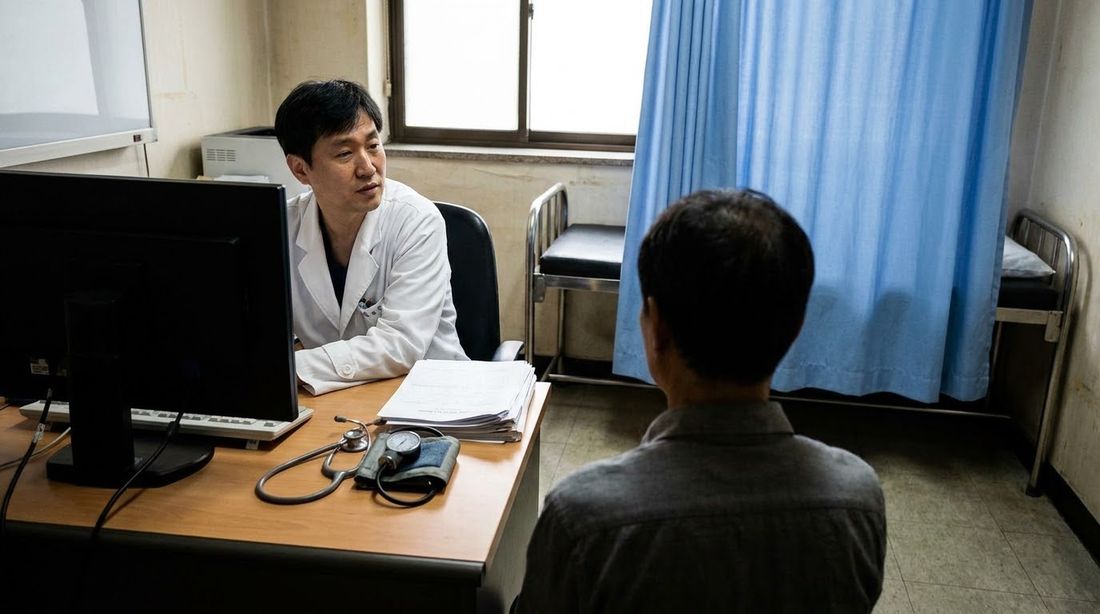
Instead, the Korean doctor absorbs the volume. In 2021 the average physician in Korea saw 6,113 patients over the year, about 3.4 times the OECD average of 1,788. Nobody conjured extra doctors. The same number of them were routed differently, at a pace that is itself a policy choice with consequences.
The honest part — Korea is now trying to slow this down
On September 8, 2026, the Korean cabinet approved an amendment to the enforcement decree of the National Health Insurance Act. Starting January 1 of next year, a patient who exceeds 300 outpatient visits in a single year will pay 90% of the cost from the 301st visit onward, rather than the usual 30%. The previous ceiling was 365. Children, pregnant women, and patients with severe, rare or intractable conditions are exempt, and a review committee can grant further exceptions.
Three hundred visits a year is roughly six a week, so this is not aimed at ordinary users. But a government does not write that rule unless the frictionless door has a cost on the other side. Unlimited first-contact access, combined with a doctor supply near the bottom of the OECD, produces very high volume per physician and correspondingly compressed visits — a complaint Korean patients make constantly. I could not find a national average for consultation length that I trusted enough to quote, so none appears here.
What density is actually doing here
Part 21 described where Korean clinics physically are: stacked on floors two through four of ordinary commercial buildings, several within a few minutes' walk of most apartment complexes. That geography is the mechanism. When a patient has four substitutable clinics inside a five-minute radius, the appointment book stops being necessary as a rationing device, because the queue clears across space instead of across time. If one waiting room is full, you walk to the next building.
Spread the same number of doctors across American suburban density and that substitution disappears. A practice serves a wide catchment, the nearest alternative is a fifteen-minute drive, and the only lever left for matching demand to capacity is the calendar. The appointment is not a cultural preference for orderliness. It is what rationing looks like when your substitutes are far apart.
This is part 25 of a series on why daily life in Korea feels so frictionless. Part 24 looked at the Korean lease that charges no monthly rent at all. Earlier parts are here.
Next in this series: what happens to childcare when the daycare is required by law to sit inside the apartment complex you already live in.


Comments
Post a Comment