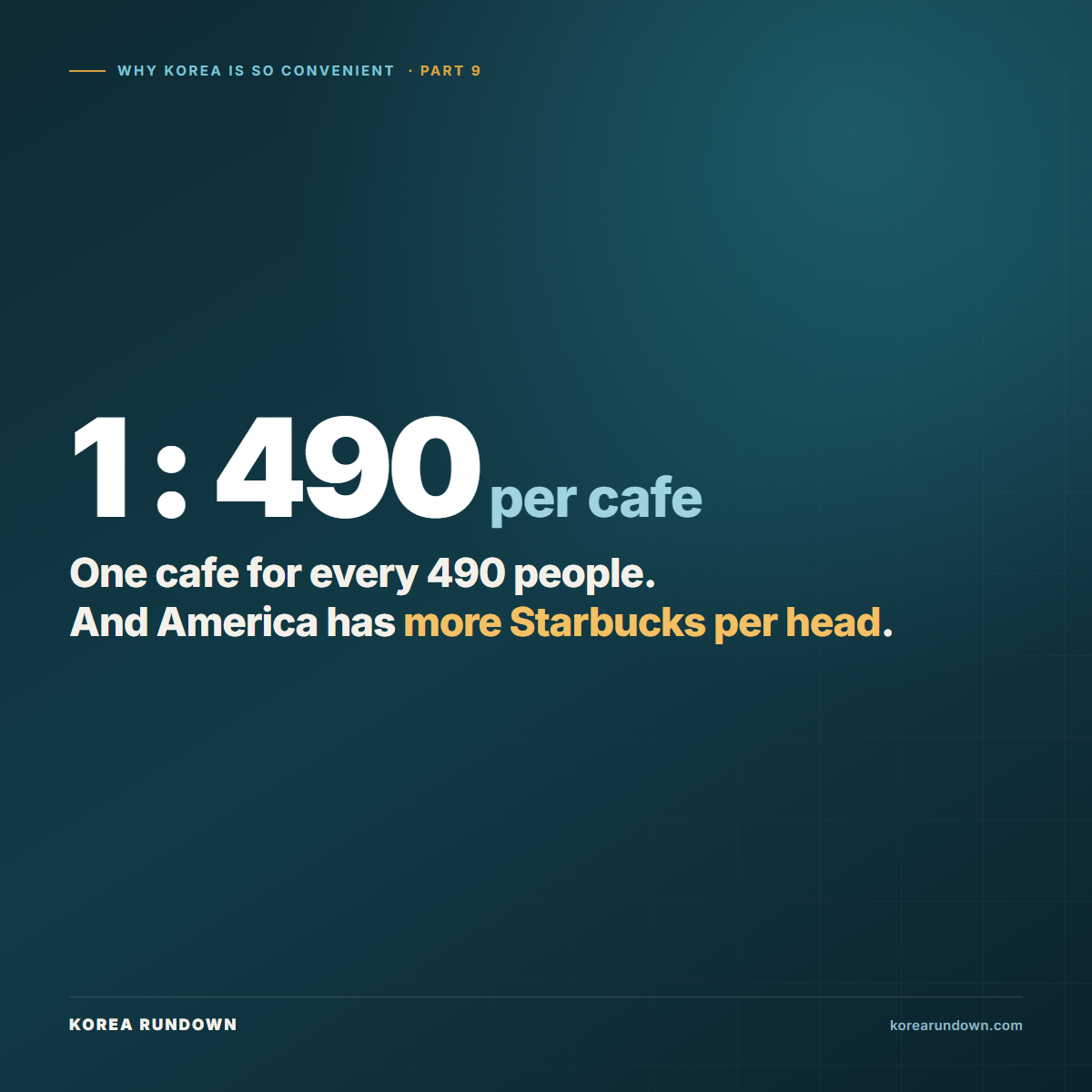
Korea Has One Cafe for Every 490 People. Here Is Why They Let You Sit All Day.
You have done the calculation. The laptop is open, the coffee is two-thirds gone, and you are working out how much longer you can sit here before you need to buy something else. The barista has not said anything. Nobody has said anything. But there is a queue forming, the tables are all taken, and you can feel the arithmetic of it — roughly one drink per hour of chair. At six the place closes anyway. If you need somewhere to work after that, the options thin out fast: a library that shuts earlier, a coworking membership you would have to pay for, or home.
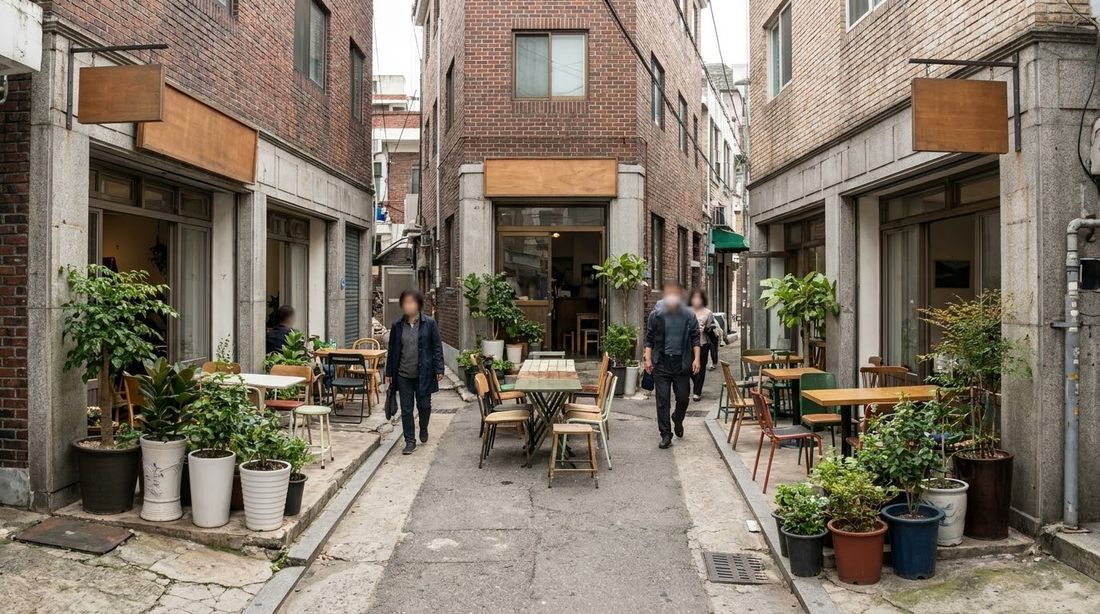
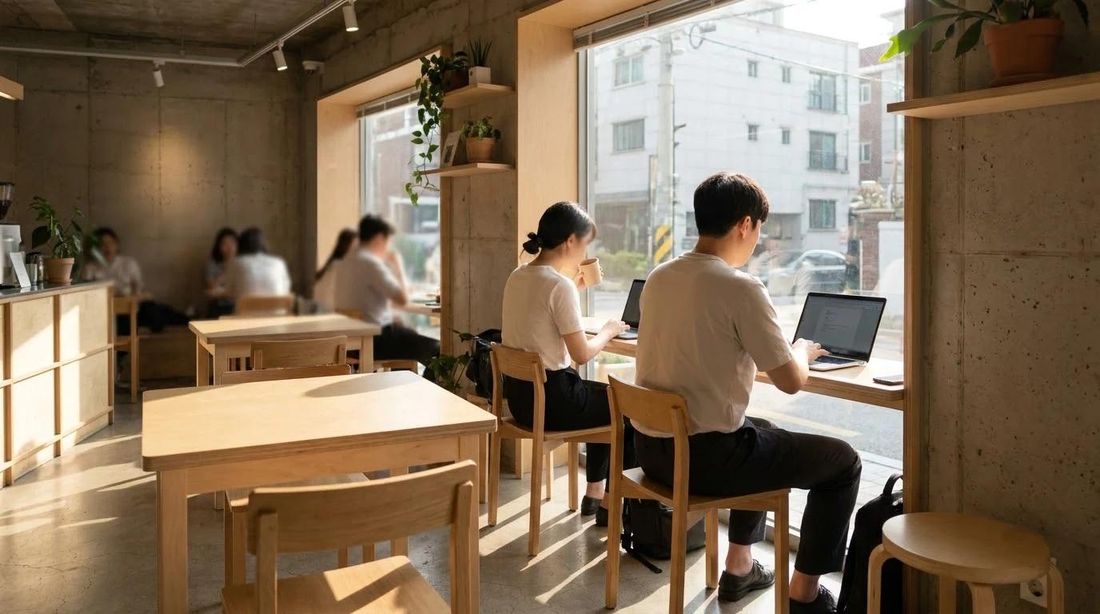
In Seoul the same afternoon looks different mostly because nobody is doing that math. A student has a textbook, a tablet and a highlighter spread across a two-top and has been there since eleven. Two seats over, someone is on their third hour of a laptop. There is an outlet under nearly every table because the place was built expecting this. There is a name for these customers — kagongjok, roughly “cafe study people” — and the fact that a word exists tells you it is normal rather than tolerated.
The part that is not what you would guess
The obvious explanation is that Korea simply has more coffee chains. That turns out to be wrong, and it is worth pausing on because it kills the easy answer.
Starbucks ended 2025 with about 2,115 stores in South Korea and about 16,911 in the United States. Against populations of roughly 52 million and 340 million, that works out to one Korean Starbucks per 24,000 people and one American Starbucks per 20,000. Per head, the United States has slightly more Starbucks, not fewer.
So the density you feel walking around Seoul is not coming from the chains. It is coming from everything else.
Why a tiny cafe can survive here
An independent cafe in an American suburb needs a parking lot, a lease on a standalone building or a strip-mall unit, and a catchment area measured in driving minutes. That is a lot of fixed cost, and it forces the math that produces the drink-per-hour rule. A customer occupying a table for three hours is occupying an expensive table.
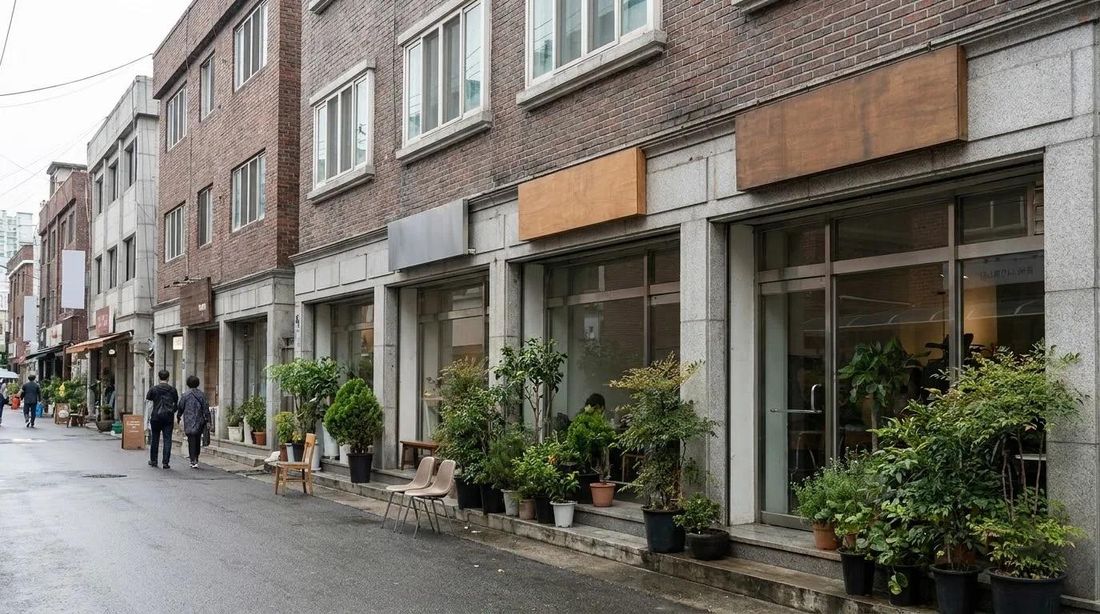
A Korean cafe is usually the ground floor of a residential building, or the second floor above one, in a neighborhood where several thousand people live within a five-minute walk. The unit is small. There is no parking to build. The catchment is not a driving radius, it is the tower across the street. Under those conditions a cafe can survive on a much smaller footprint and a much smaller trade area — and a customer sitting for three hours is not consuming a scarce resource in the same way.
This is the same structure that has run through this whole series. When housing and commerce are stacked on the same lot instead of zoned into separate districts, the ground floor fills with small businesses that live off foot traffic from directly above. Convenience stores were one expression of it. Cafes are another, and the sheer number — roughly twice the convenience store count of the four big chains — is what a saturated ground floor looks like.
The honest part
None of this means the arrangement is comfortable for the cafes. A customer who buys one americano and stays four hours is not a good customer, and Korean cafe owners say so. Some shops post time limits during busy hours, some restrict outlets, and a parallel industry of paid study cafes exists precisely because sitting somewhere for a long time has a real cost that someone has to cover.
It is also a crowded, difficult business. With more than a hundred thousand coffee shops competing, the failure rate is not gentle. Anyone reading this as “Korea solved the third place” is reading it too warmly — what Korea has is an oversupplied market where the customer temporarily holds the advantage.
One thing worth flagging: we could not find a public dataset measuring how much long-stay customers actually cost Korean cafes, or how many shops enforce time limits. Those claims circulate in Korean media as owner testimony rather than as measured numbers, so we have not put a figure on them here.
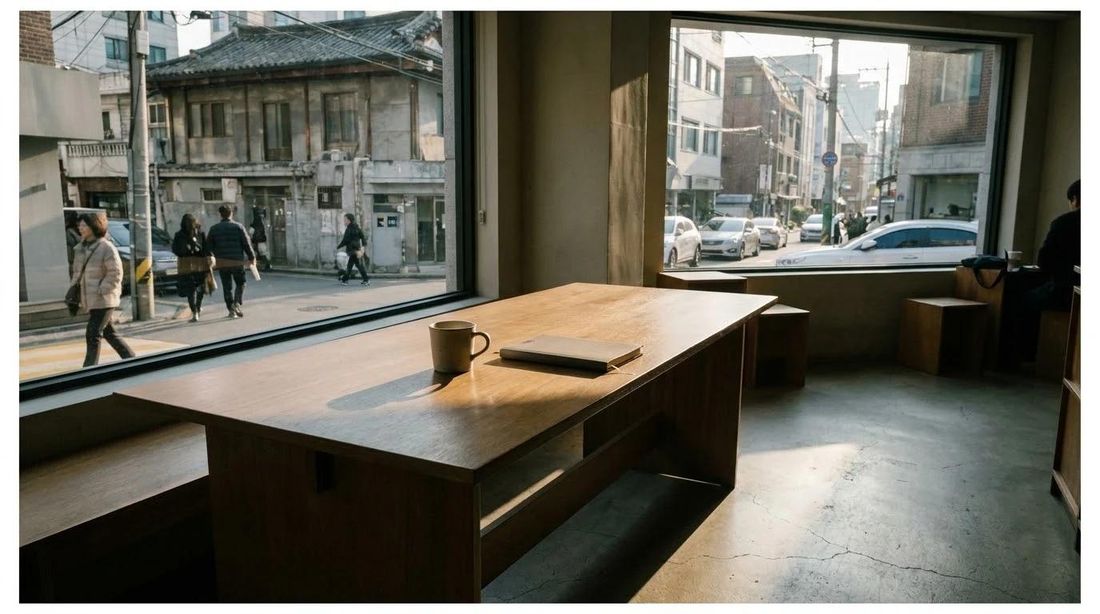
What density actually buys you
The seat is the point. Not the coffee, which is fine and not remarkable, and not the chains, which are thinner on the ground per person than America’s. What Korean urban form produces is an enormous number of very small businesses that each need only a very small number of people to survive — and a business like that can afford to let you sit.
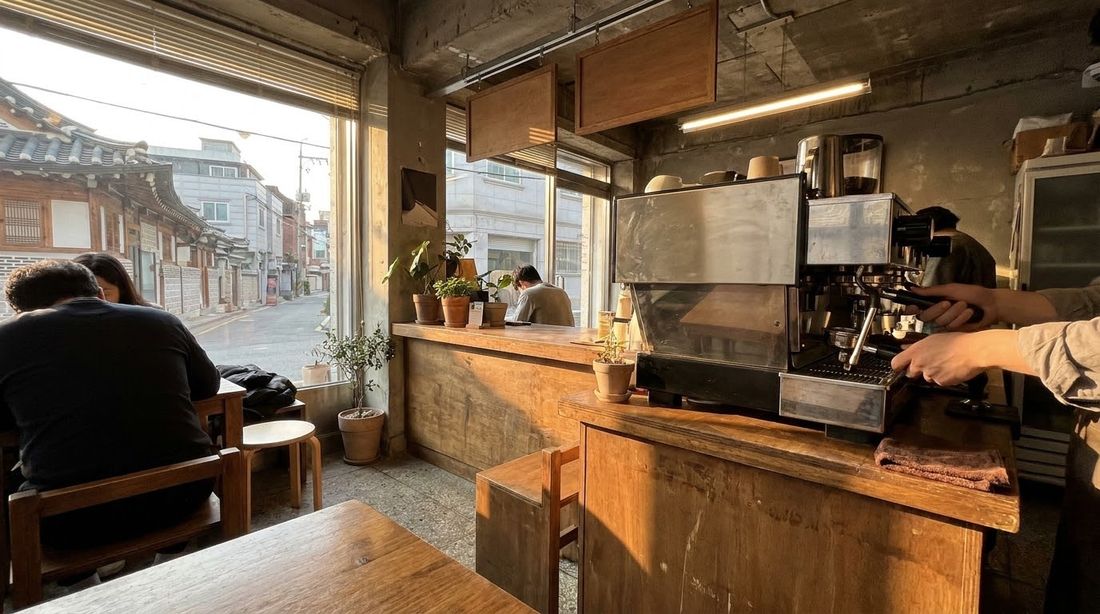
That is not hospitality as a national trait. It is what happens when you put fifty thousand people in a square kilometre and let the ground floor fill in.
This is part 9 of a series on why daily life in Korea feels so frictionless. Part 8 covered what is left of the country’s 24-hour culture. Earlier parts are here.
Next in this series: why a transit card, a coffee, and a convenience store lunch all run off the same tap — and what Korea gave up to get there.


Comments
Post a Comment