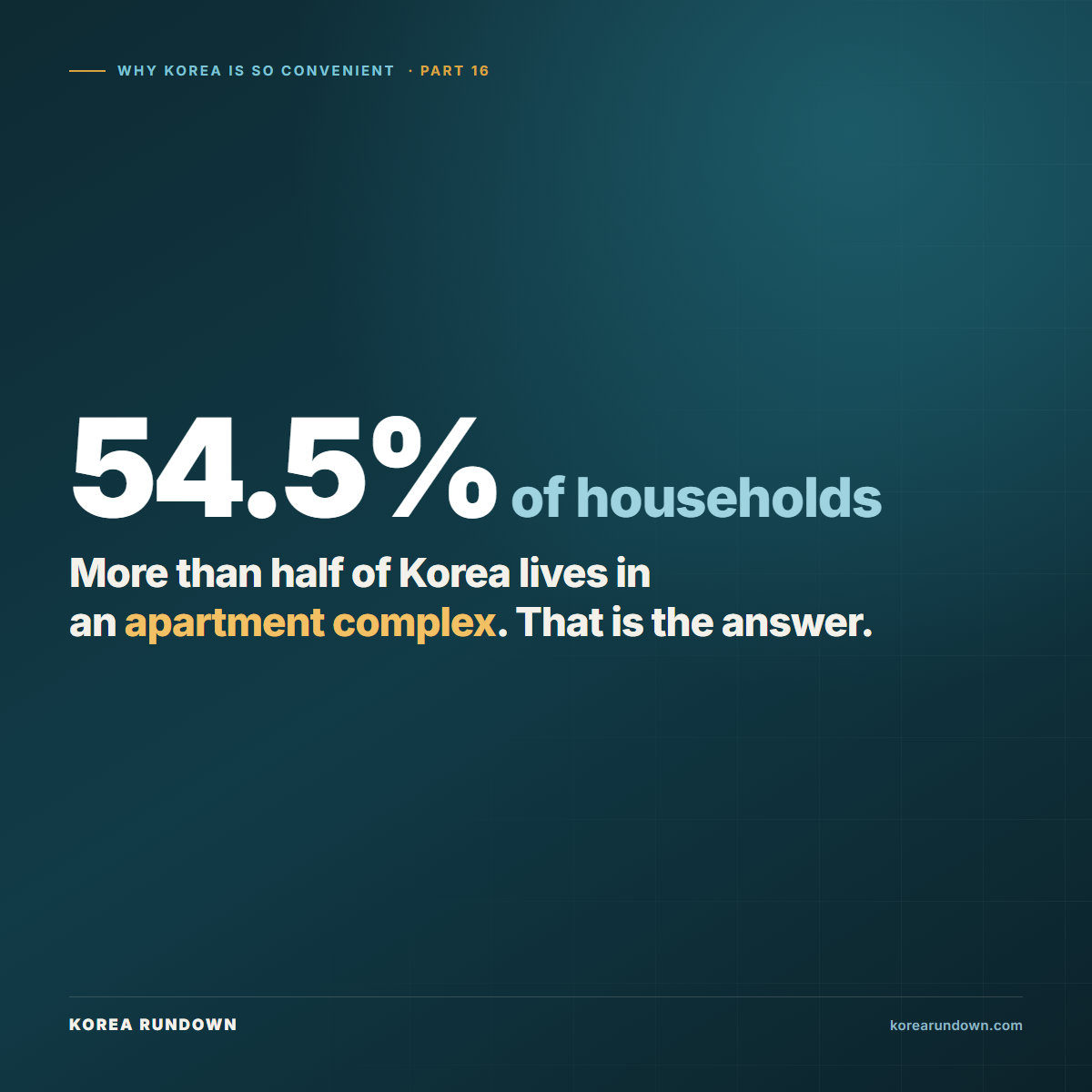
54.5% of Korea Lives in an Apartment Complex. That Single Fact Explains This Whole Series.
In American English, apartment is a stage. It is where you live before the house, or after the divorce, or because the city is expensive. Nobody grows up planning to end in one. The listing photos of an American life go the other way: more square feet, more yard, more distance from the neighbors, and eventually a driveway long enough that you cannot hear anyone else at all.
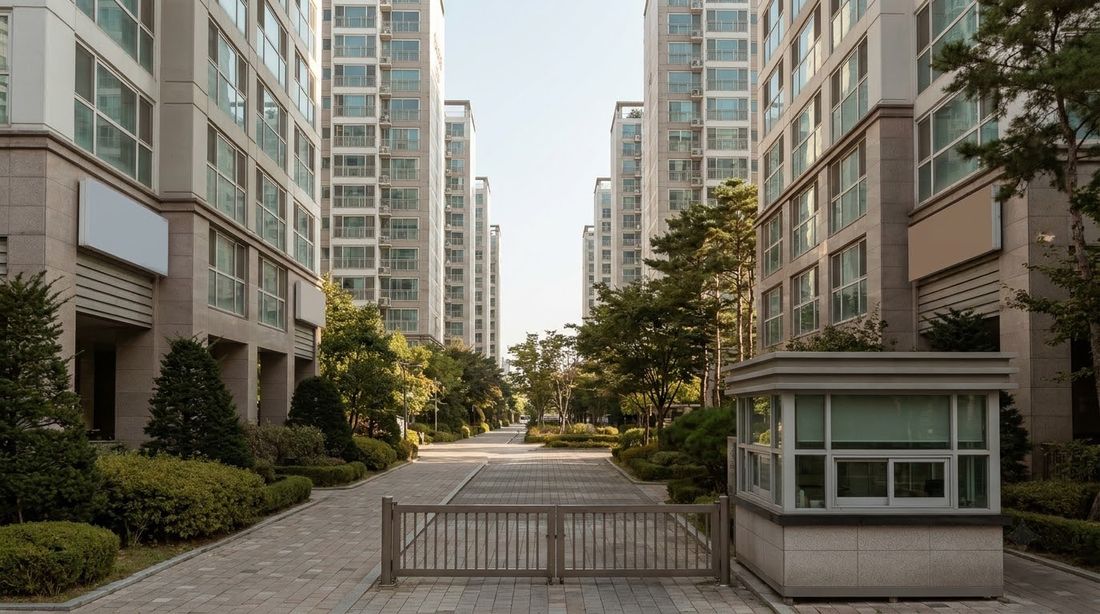
In Korea the arrow points the opposite direction, and the most expensive residential real estate in the country is a flat in a tower with several hundred identical flats in it. The house with the yard is what you leave behind, not what you arrive at.
Fifteen parts of this series have kept pointing at density without ever describing the object that produces it. This is that object.
The scale of it
Korea’s 2024 census counted 12.26 million households living in apartments — 54.5% of all ordinary households, the largest category by a distance. That share was 48.1% in 2015 and has climbed every year since. Detached houses went the other way over the same period, from 35.3% of households to 27.2%.
Counted as buildings rather than households, multi-unit housing crossed a threshold: 80% of Korea’s entire housing stock is now some form of shared building. The country has 23.0 million households and 19.87 million homes, and four out of five of those homes are stacked on top of another one.
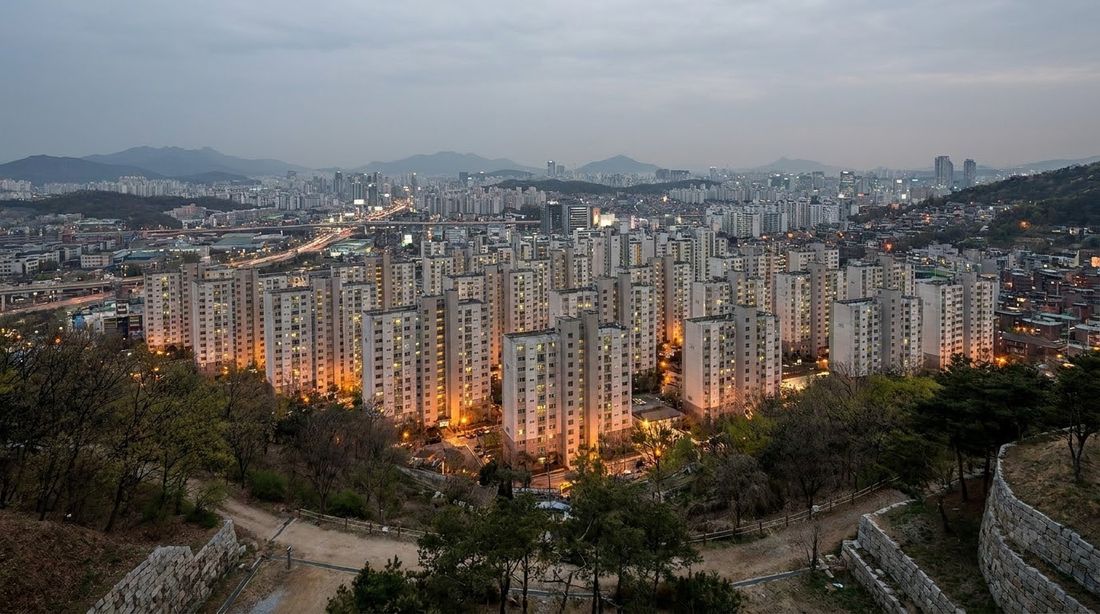
Then add where they are stacked. 50.8% of the population lives in the capital region as of 2024. Seoul itself runs at roughly sixteen thousand people per square kilometre.
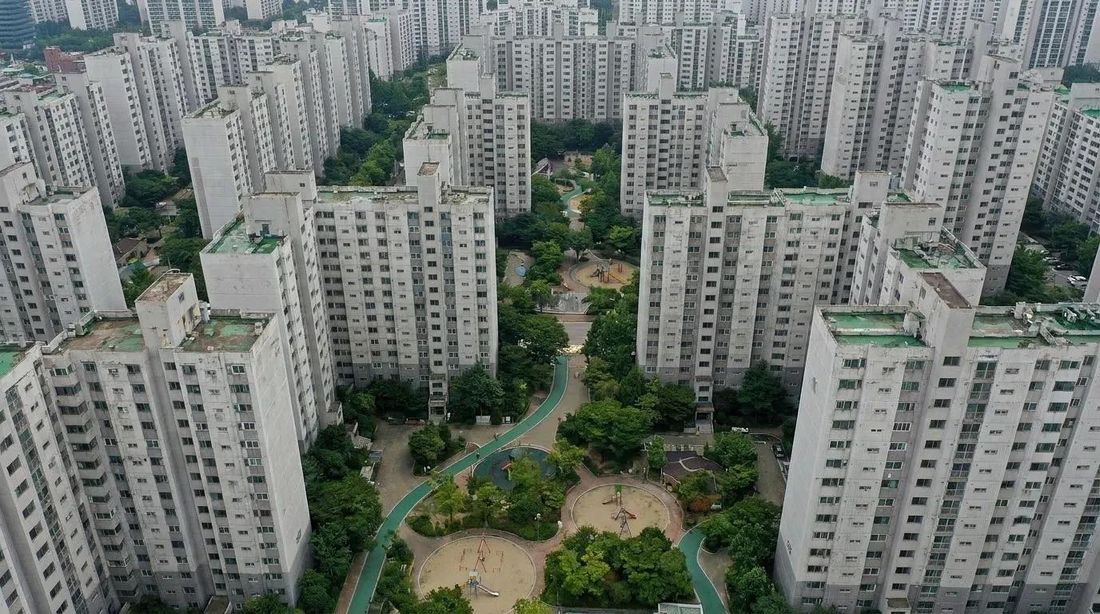
The complex is not a building. It is a unit of infrastructure.
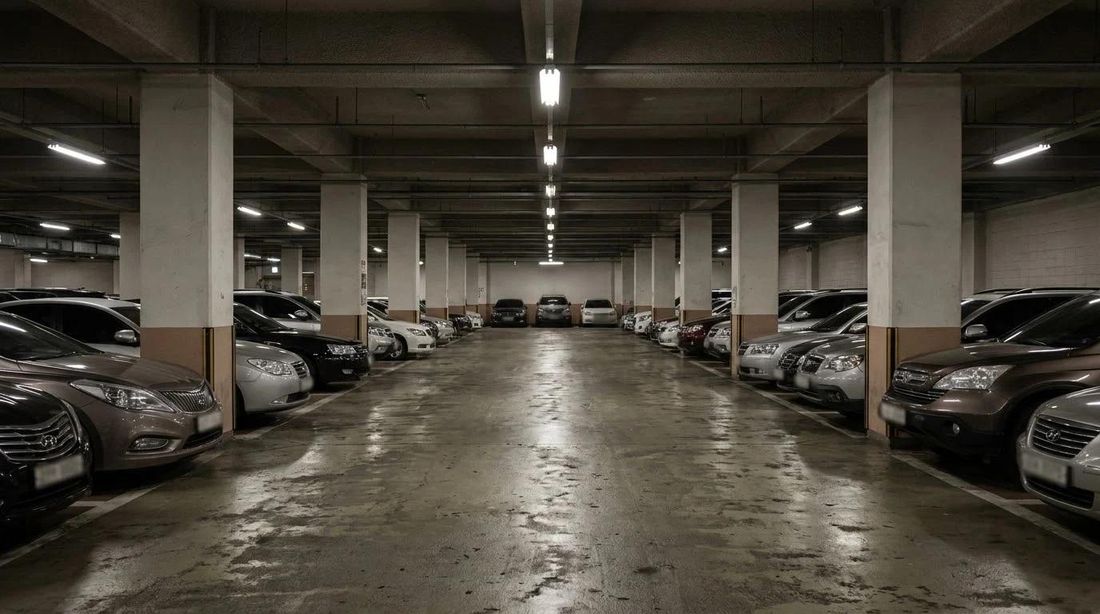
An American apartment building is a building. A Korean danji — a complex — is a walled block containing several towers, a management office with paid staff, a guard post at the vehicle gate, underground parking, a children’s playground, a daycare, often a gym and a small library, a sorted recycling yard, unattended parcel lockers, and a row of shops at ground level facing the street outside.
Now read back through this series and notice that almost every part of it was secretly about that list.
The convenience store on the corner in Part 1 exists because several thousand people live within a four-minute walk of it. The delivery rider in Part 2 covers a hundred orders without leaving one block. The subway fare in Part 3 works because the station catchment is measured in towers rather than in driving minutes. The clinics in Part 4 sit on the second and third floors of the commercial building across the road. The cafes in Part 9 fill the ground floor because the ground floor is where the foot traffic from above lands. The courier in Part 11 leaves the parcel in an interior corridor behind a locked lobby. The camera in Part 14 watches a street where sixteen thousand people per square kilometre pass. The food waste scale in Part 15 is bolted to a bin that three hundred households already share.
Every one of those is a fixed cost divided by the number of people who walk past it. The complex is the machine that makes that denominator large.
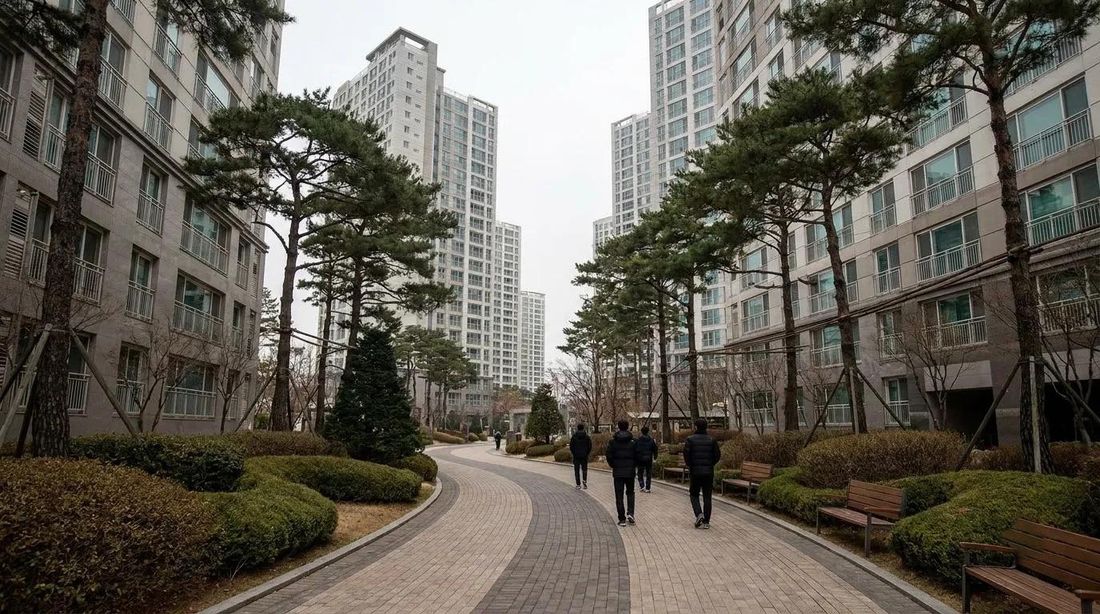
Nobody chose this because they love towers
The cultural explanation — that Koreans simply prefer apartment living — gets the causation backwards.
Korea urbanized in a compressed few decades, into a country that is largely mountainous, with a state that needed to house an enormous inflow of people quickly and had strong tools for doing it. The apartment complex was the standardized industrial answer: a repeatable product, buildable at scale on assembled land, financed through presales, delivered by a handful of large construction groups. It became the default not because of taste but because it was the unit the system could mass-produce.
Taste followed. Once the newest housing, the best schools, the closest transit and the most liquid resale market were all inside complexes, preferring one stopped being a preference and became simple arithmetic.
The honest part
This is the least comfortable episode to end warmly, so we will not.
A standardized housing product also standardizes the asset. Korean apartments are close to fungible — same layouts, same brands, published price per pyeong, transparent transaction records — and an asset that fungible behaves like a financial instrument. Korean housing debate is dominated by that fact: apartment prices are the central axis of household wealth and household inequality in a way that a heterogeneous market of individual houses is not.
The physical texture has a cost too. Complexes are inward-facing and walled, and their spread has eaten low-rise neighborhoods with fine-grained street life. Redevelopment cycles displace tenants and small shopkeepers on a schedule set by construction economics. And homogeneity is real: enormous stretches of the country now look identical, because they were built from the same catalog.
One thing we will flag but not claim. It is frequently argued that dense, expensive, competitive metropolitan life is implicated in Korea’s birth rate, which was 0.75 in 2024 — the world’s lowest, though it rose for the first time in nine years, driven mostly by a surge in marriages. That is a real correlation and a genuine national alarm. It is not something this series can establish as a causal effect of the housing form, and we are not going to imply that it is.
What density actually buys you
The whole series reduces to one sentence: Korea is convenient because more than half of it lives inside a machine designed to put several hundred households behind one entrance, on top of one commercial ground floor, within one walk of one transit station.
That machine makes couriers cheap, clinics close, cafes plentiful, restrooms fundable and cameras affordable. It also makes the housing market the country’s biggest fault line and the landscape repetitive, and it hands each household a share of the sorting that a landfill somewhere else would otherwise absorb.
None of it is a national character trait. It is a shape. The shape has consequences, and every part of this series has been one of them.
The series continues. If there is a piece of Korean daily life you want taken apart this way — with the numbers checked and the unflattering half left in — leave it in the comments.
This is part 16 of a series on why daily life in Korea feels so frictionless. Part 15 covered the one chore Korea makes harder. Earlier parts are here.


Comments
Post a Comment