Korea Convenience Store Guide: Why They Feel Like a Different Planet
The first time an American visitor walks into a Korean convenience store past midnight, the reaction is usually the same: wait, this is normal here?
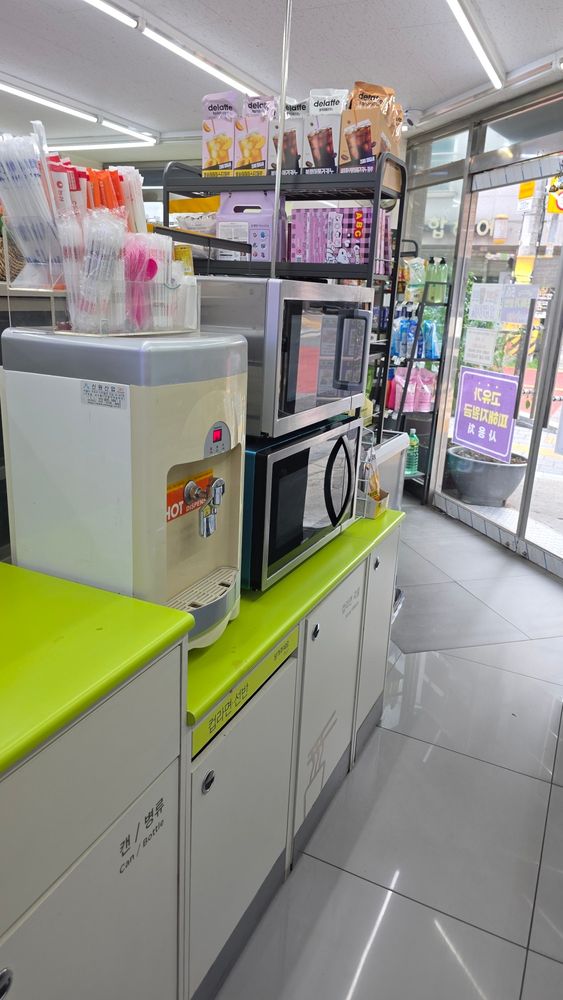
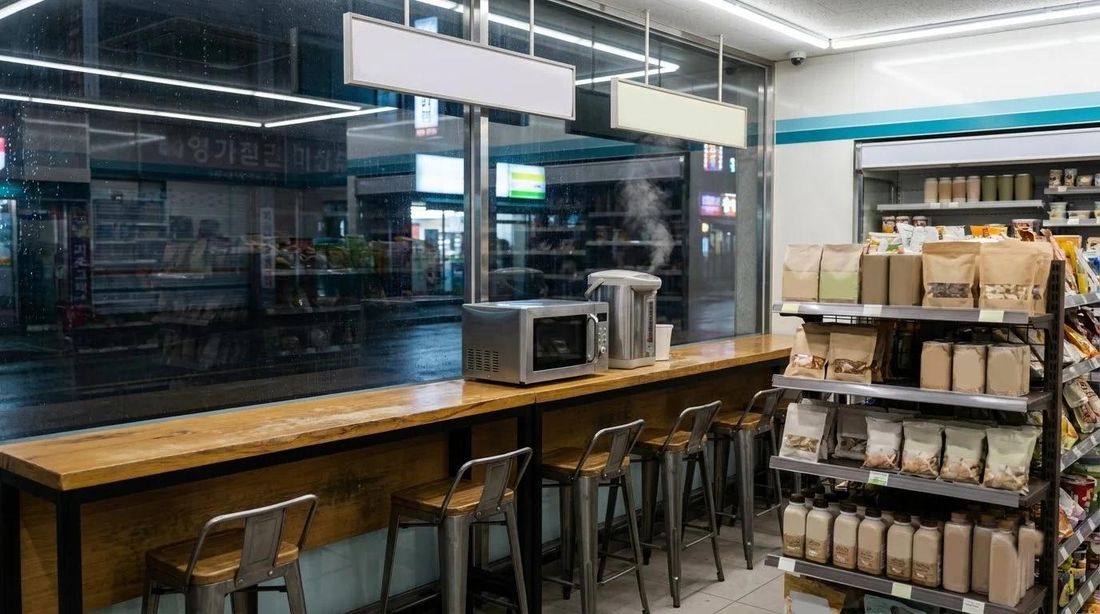
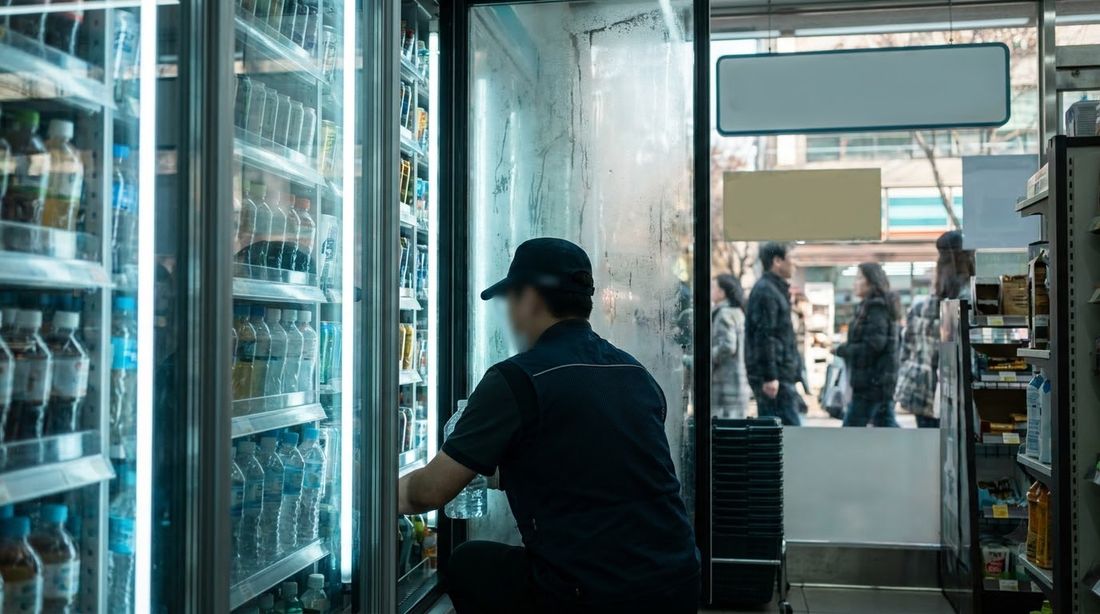
Back home, a convenience store after 11 p.m. means fluorescent lights, a bored clerk behind glass, and gas station hot dogs. In Seoul, you can walk into a CU or a GS25 at 2 a.m., sit down at a little plastic table by the window, heat up a tray of instant ramen with hot water from a machine, add a triangle kimbap and a canned coffee, and eat like it is the most ordinary thing in the world. Because it is.
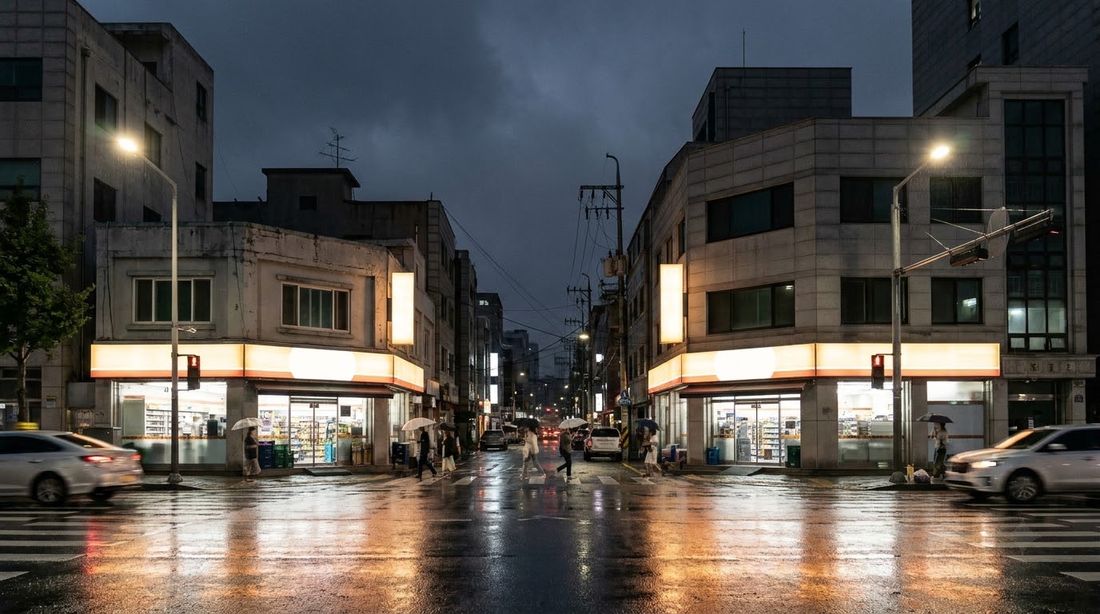
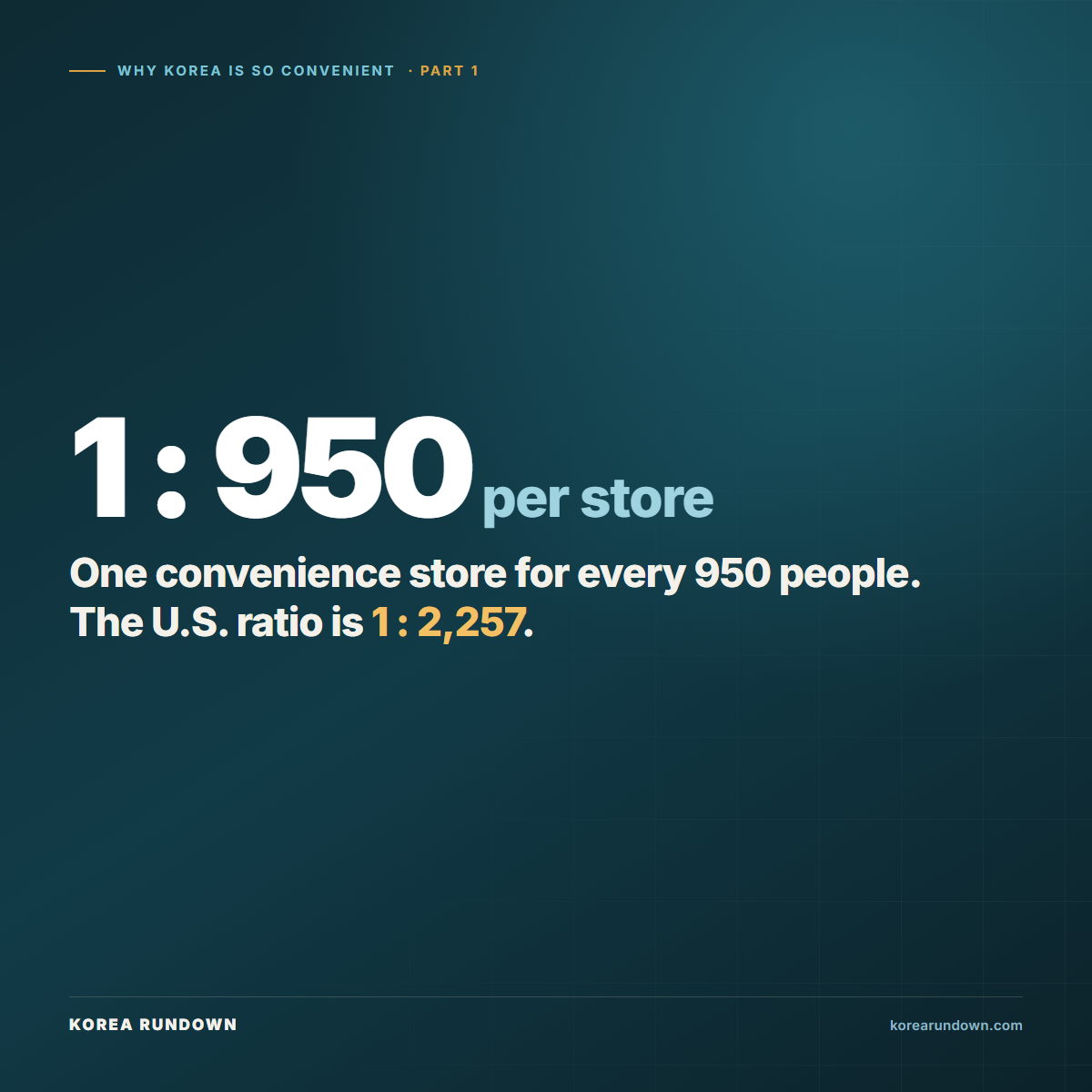
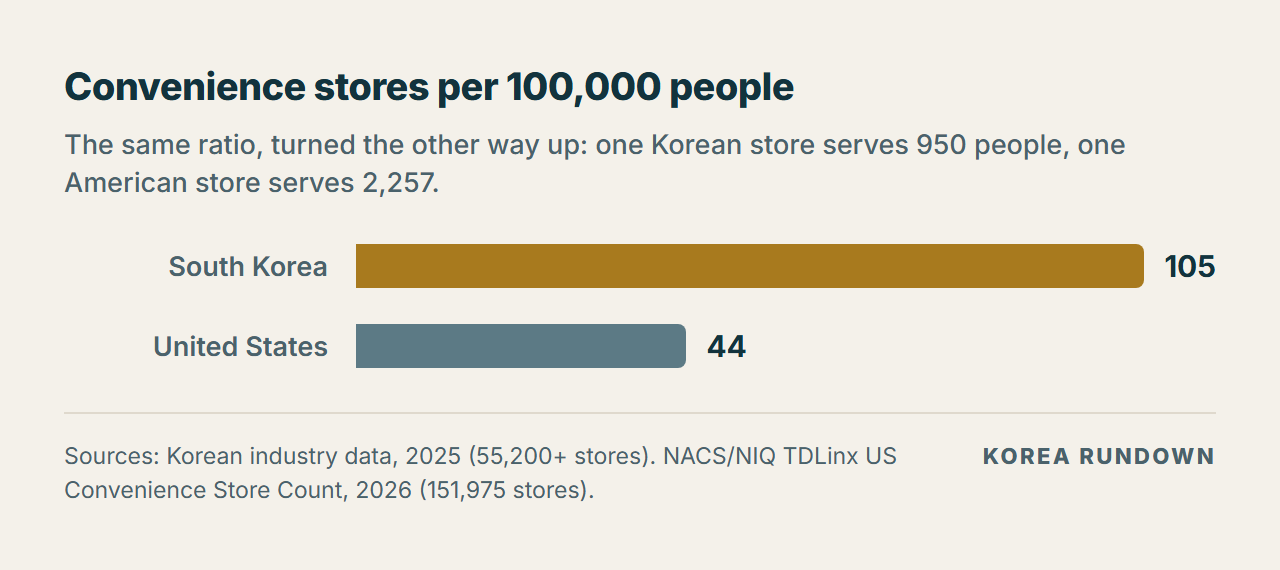
South Korea has more than 55,000 convenience stores nationwide as of 2025 — roughly one for every 950 people. The two biggest chains alone, CU and GS25, run about 35,000 stores between them. For comparison, the entire United States, with more than six times the population, has far fewer convenience stores per capita.
Sources: Korean industry data, 2025; NACS/NIQ TDLinx U.S. Convenience Store Count, 2026.
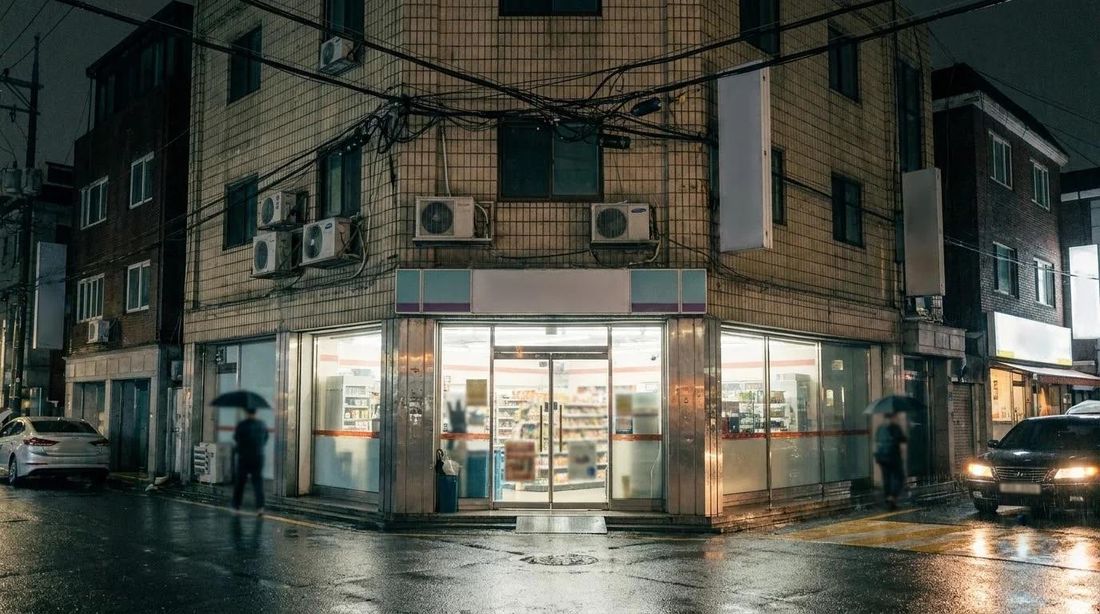
So why are they everywhere, and why does using one feel so different?
They are not actually cheap
This is the part that surprises people once they start paying attention to prices. A bottle of water or a snack at a Korean convenience store often costs more than the same item at a supermarket down the street. That is not a coincidence — it is the business model.
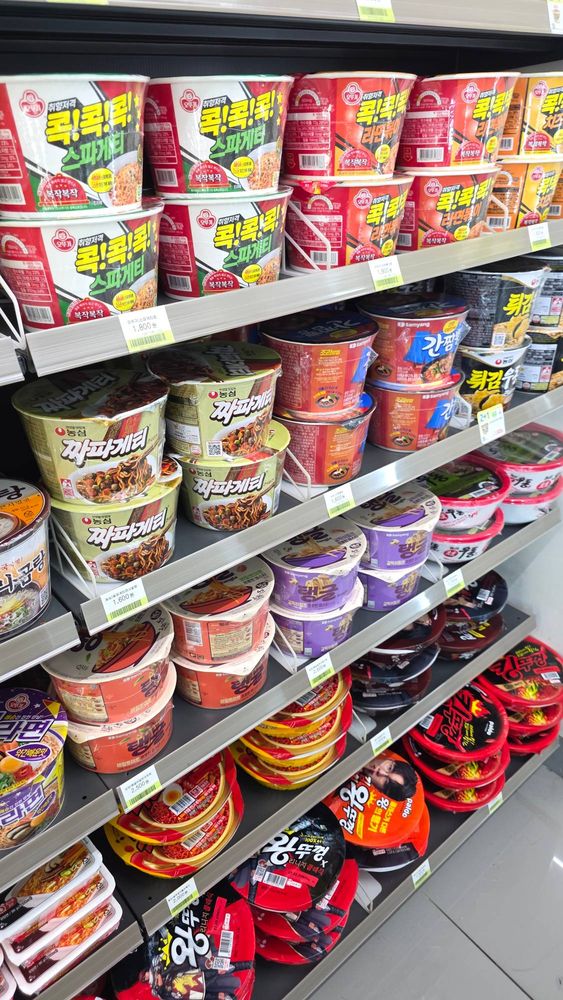
Three things drive the markup. First, rent. These stores are wedged into tiny footprints on some of the most expensive street-level real estate in Seoul, often on corners with the highest foot traffic. Second, staffing. Unlike a supermarket, a convenience store commits to having a human being behind the counter 24 hours a day, 365 days a year — someone has to work the 4 a.m. shift. Third, the delivery model itself: small, frequent restocking trips to thousands of tiny stores cost more per item than the giant trucks that supply a hypermarket once a week.
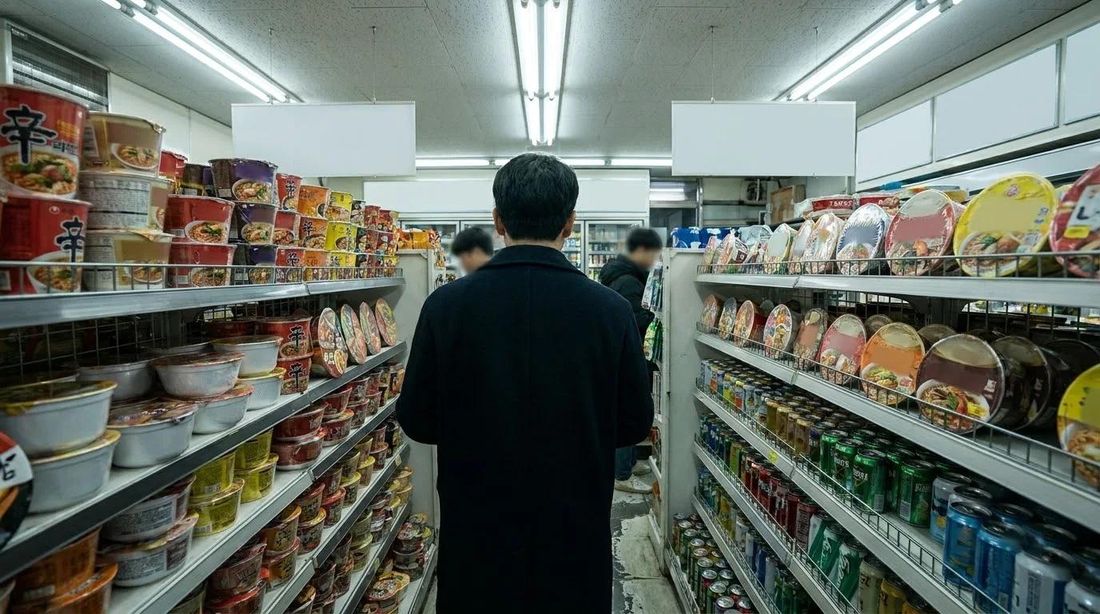
Koreans know this. Ask anyone and they will tell you they do their real grocery shopping at a supermarket or on a delivery app, not at the convenience store on the corner. The convenience store is not where you stock up — it is where you go when stocking up is not the point.
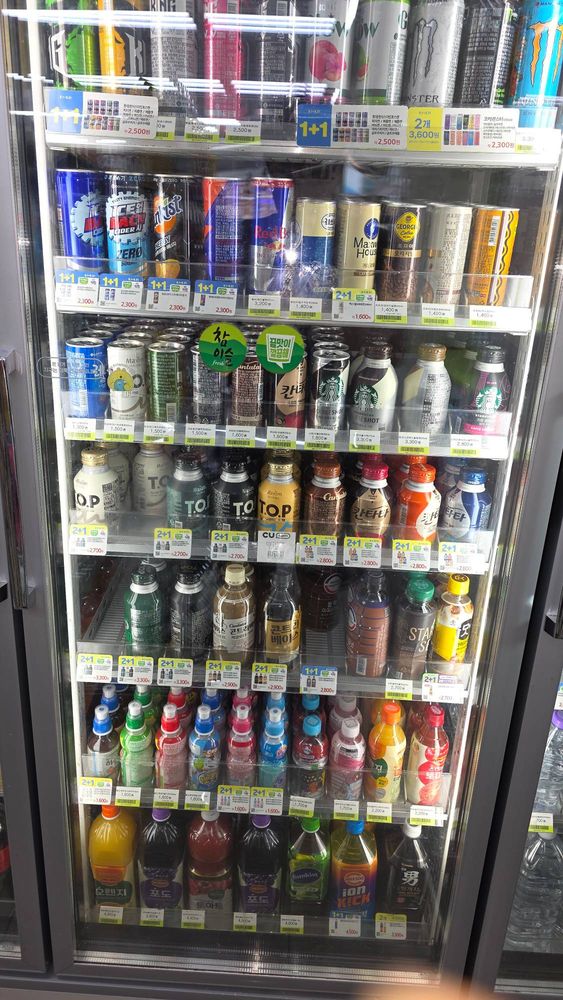
So why does everyone go anyway?
Because the thing you are actually paying for is not the item — it is the five minutes you did not spend getting there. In a country where most people live in dense apartment blocks, there is a real chance the nearest convenience store is closer than the elevator ride down to your own parking garage. You are not planning a trip. You are grabbing a canned coffee on the way to the subway, or picking up instant noodles for a study session at 1 a.m., or realizing you are out of phone chargers and finding one on a shelf by the register.
There is also the ritual side of it. The little seating counter by the window has become a genuine social fixture. It is where a lot of Korean youth culture actually happens: cheap beer after work, a quick meal between classes, a stop on a night out that has nothing to do with convenience and everything to do with it being open, close, and judgment-free at any hour.
It comes down to density, not culture
It is tempting to chalk this up to some cultural trait — Koreans just like convenience stores more. But the more accurate explanation is structural. Seoul is one of the most densely populated major cities in the world, and the vast majority of residents live in apartment complexes rather than detached houses. That density is exactly what makes the convenience store math work: a single store can profitably serve thousands of people within a two-minute walk, something that is basically impossible in most American suburbs, where the nearest 7-Eleven often requires a car.
It also matters that more Koreans than ever are living alone. Single-person households made up a record 36.6% of all households in 2025, and that share keeps climbing. A convenience store two minutes from your door is not a backup plan for someone living solo — it is closer to a second kitchen.
None of this is an accident. It is what happens when you take a country that builds vertically instead of horizontally, add a culture that runs late, and add a population where more and more people are cooking for one.
And once you understand that logic, the next piece falls into place almost automatically — because the same density that makes a convenience store profitable on every corner is exactly what makes something else possible here: getting fried chicken delivered to a blanket in a park at midnight. That is next.


Comments
Post a Comment