A Korean Subway Tunnel Never Drops Your Signal. New York Has 418 Track Miles Left to Wire.
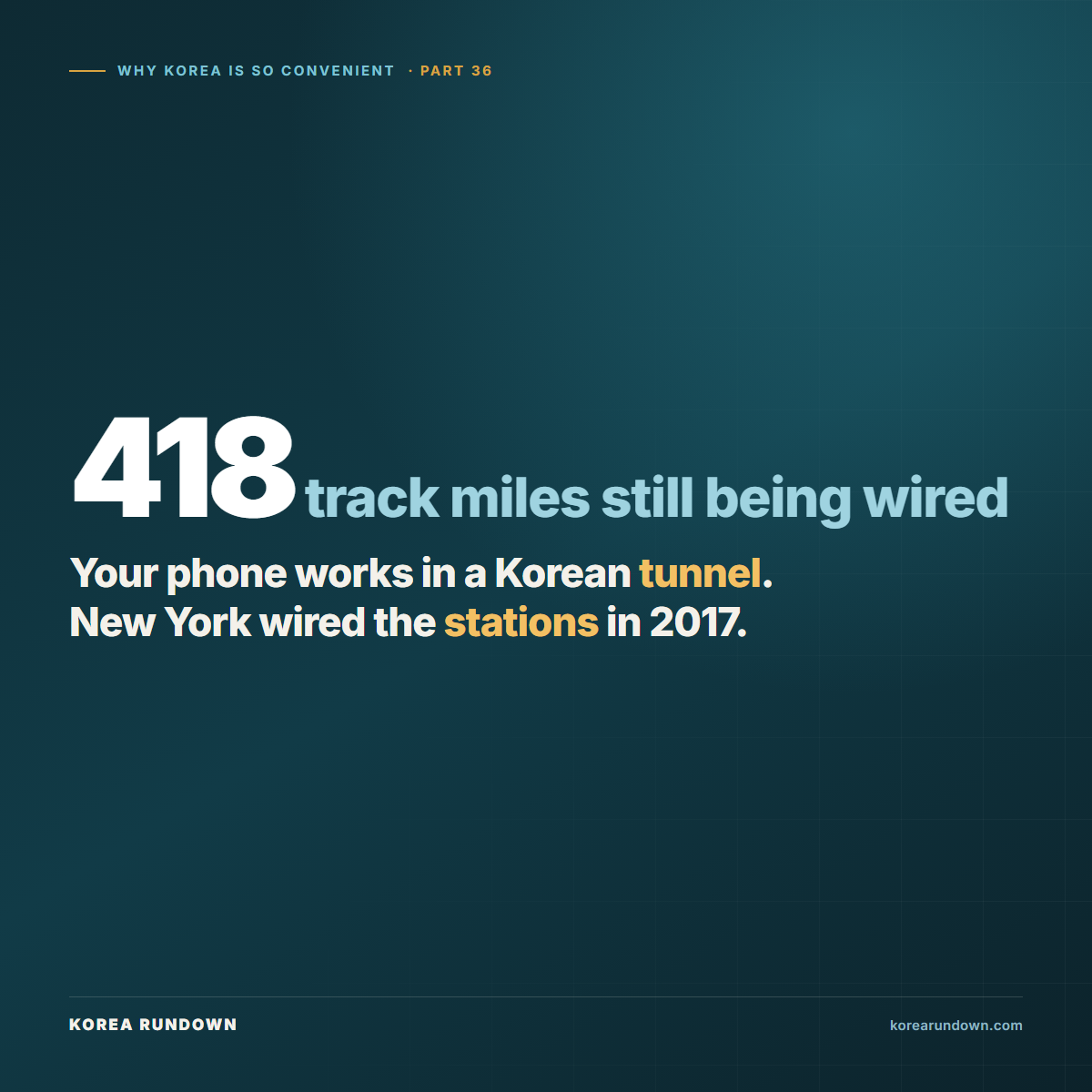
You know the moment. The train pulls out of the station, the bars collapse to nothing, the song stops buffering, and the message you were typing sits there with a spinning circle for the next four minutes until the next platform. Everyone in the car has learned to download first and read offline.
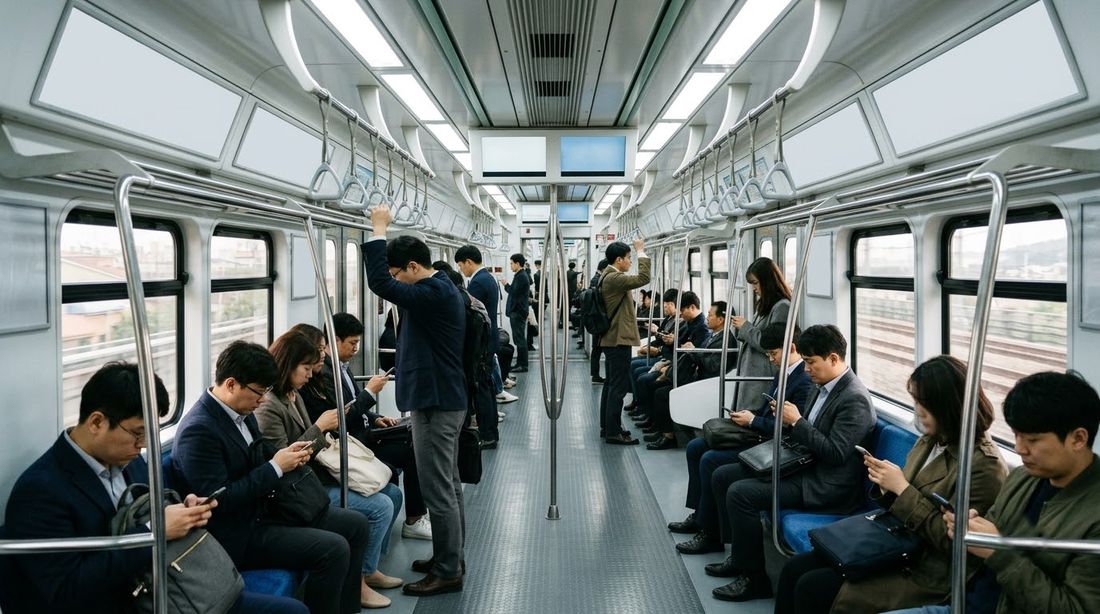
On a Korean subway there is no such moment. The signal does not drop between stations, the video keeps playing through the tunnel, and people take work calls underground without mentioning it, because there is nothing to mention.
The usual explanation is that Korea is further ahead technologically. That is not what the record shows.
New York finished the stations years ago
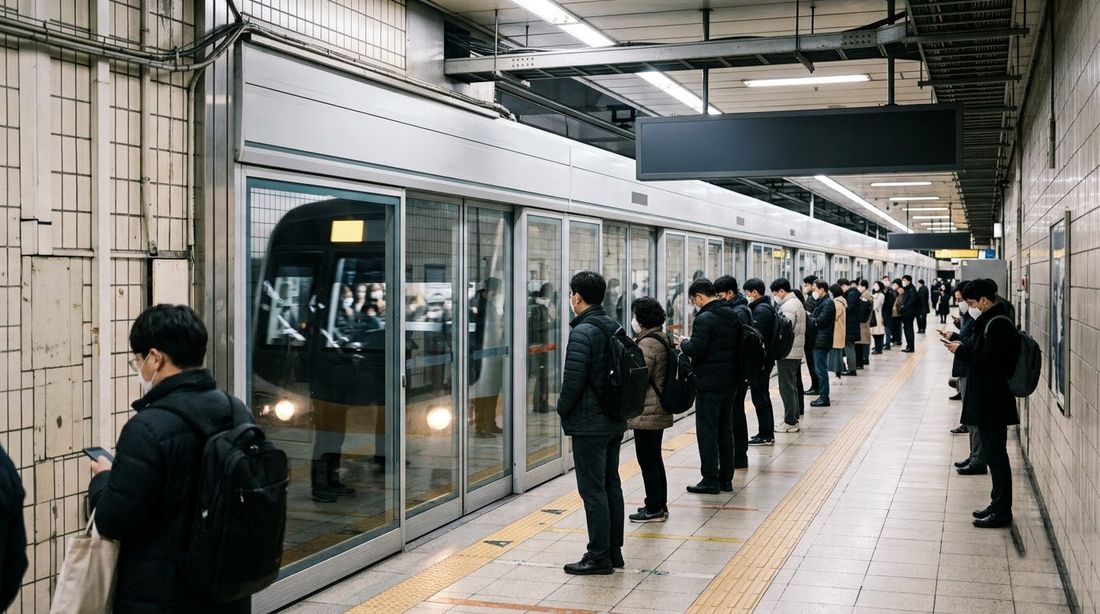
All 281 underground stations in the New York City subway have had cellular service and free Wi-Fi since the station buildout was completed in 2017, a year ahead of schedule. Anyone who says American transit never got connected is describing a system that stopped existing almost a decade ago.
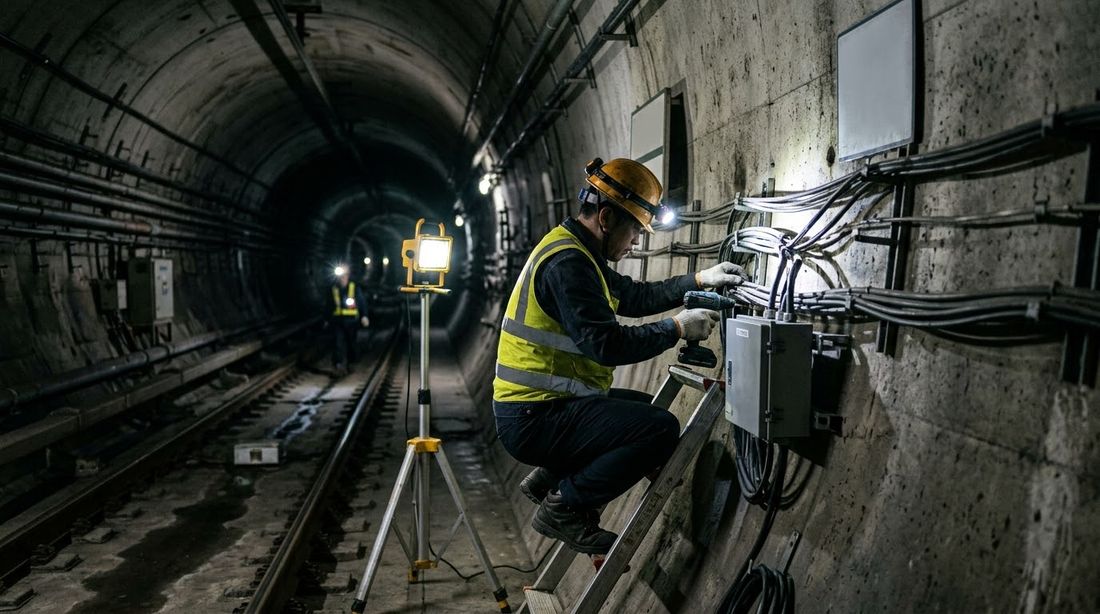
What is still missing is everything between the platforms. Under a public-private agreement with Boldyn Networks, the MTA is now wiring 418 track miles of tunnel, plus Wi-Fi for 191 above-ground stations and 21 Staten Island Railway stations. It is going out line segment by line segment: the 42nd Street Shuttle went live as the first Manhattan line with full underground service, then the Canarsie tunnel, then the Joralemon Street tunnel, a 1.1-mile crossing between Manhattan and Brooklyn. No public completion date has been announced for the rest.
So the difference is not stations versus no stations. It is the tunnel, and the tunnel is the part that costs real money.
A station is a room. A tunnel is a distance.
Wiring a station is a finite job. It has walls, power, a ceiling to hang equipment from, and a fixed number of square feet. Once it is done, thousands of people a day stand inside it.
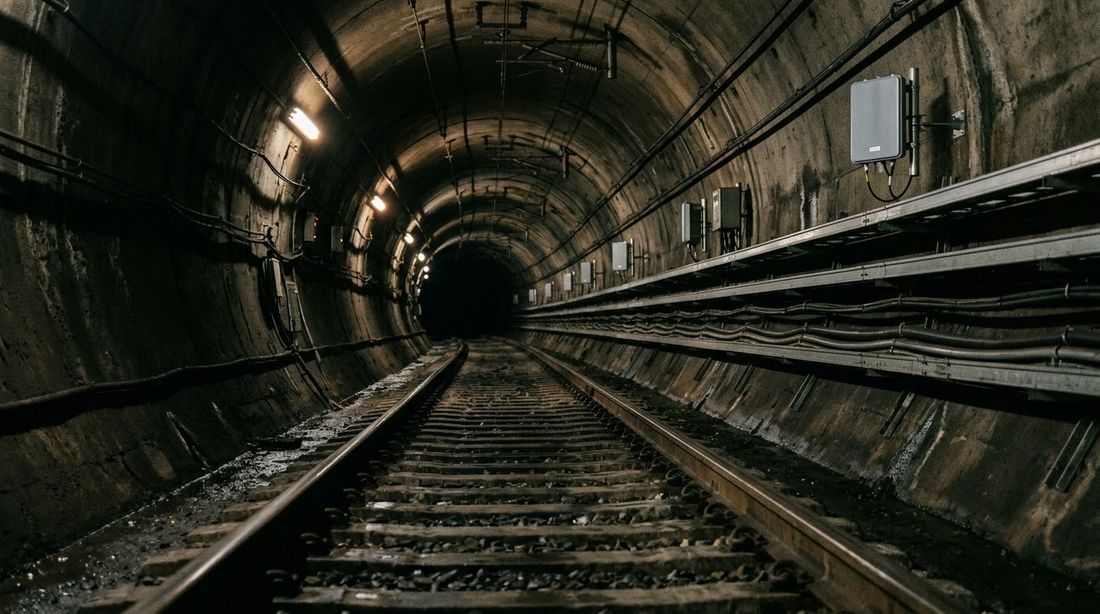
A tunnel is priced per mile. Radiating cable or a line of small antennas has to run the whole length, every carrier needs to be on it, and the installation happens in the few hours a night when trains are not moving. The bill scales with distance. The benefit scales with how many people travel that distance.
That ratio is the whole story, and it is the same ratio behind every other post in this series.
What the Korean subway signal cost, and who paid for the rest
The tunnels were a carrier decision, made on a small dense network where coverage is a competitive weapon. Public Wi-Fi was a government one, and it has a paper trail.
From 2019 the science and ICT ministry funded free Wi-Fi in public places — community centers, bus stops, parks, welfare facilities — against a target of 41,000 sites. The yearly rollout ran 7,141 in 2019, 10,022 in 2020, 15,000 in 2021, 10,412 in 2022 and 5,223 in 2023, and the ministry reports roughly 48,000 locations built in total, past the original target.
Notice what that is. It is not a technology; it is a subsidy for equipment in places where the population passing by is dense enough for one access point to serve a lot of people.
The honest part: it is not finished, and the money stopped
Two things cut against the clean version of this story.
First, the buildout program is over. The 2025 budget for new public Wi-Fi construction was cut, with the ministry's position being that equipment replacement should be paid by local governments and carriers rather than the national budget, and that the program was shifting from construction to quality management. Whatever exists now is what there is; keeping it working is somebody else's line item.
Second, the tunnels are not uniformly good. In the 2025 telecom quality evaluation, regulators re-measured 57 subway segments that had previously been flagged as inadequate. Forty-nine had improved. Eight had not. On the 5G side, 12 of 13 flagged segments were fixed, with the remaining one in an area where carriers share a network. Nationwide, LTE met the video-conference speed threshold only 74.2% of the time.
That is a meaningful admission, and it also shows what kind of country this is in data terms: the published list is a list of quality failures, not coverage gaps. The regulator's baseline assumption is that the signal is there and the question is how fast.
Where the density comes in
Every network in this series is built on the same arithmetic. A cable costs what it costs per kilometer. What differs is how many people are standing on top of it.
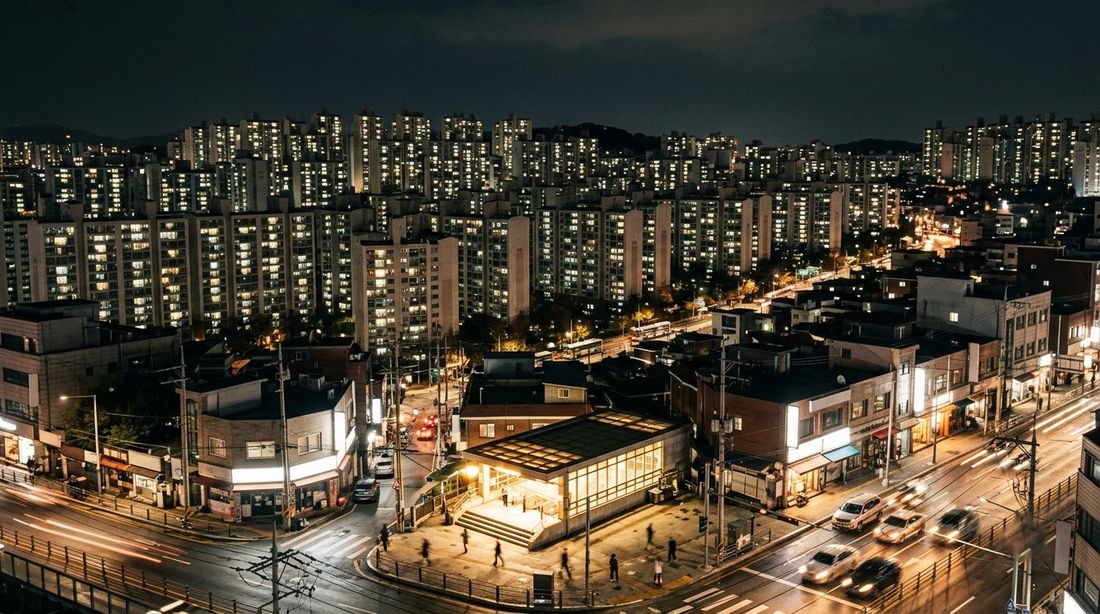
Seoul's eight numbered lines move 6.6 million people a day through tunnels running under a metropolitan area where more than half the country's population lives. Every mile of that tunnel is under apartment districts, and every mile of it carries trains most of the day. Spend on it and the payback is immediate, whether the payback is measured in subscriber retention or in votes.
Spread the same riders across a network with twice the tunnel and half the passengers, and the same investment takes twice as long to justify per mile, which is exactly what a phased, segment-by-segment, no-announced-end-date rollout looks like. New York is not behind because it lacks the idea. It is behind because the sum comes out differently when the people are further apart.
This is part 36 of a series on why daily life in Korea feels so frictionless. Part 35 looked at why Korean coin laundries sell dryers rather than washing machines. Earlier parts are here.
Next in this series: another piece of ordinary Korean infrastructure that turns out to be priced by how many people live within a short walk of it.


Comments
Post a Comment