Korea Parking: Why 94% of Seoul's Home Parking Is Inside a Building
Fourth time around the block. There is a space, but it is a permit zone and you do not have the permit. There is another one, but the pole above it carries three signs stacked on top of each other, and one of those rules starts in twenty minutes. In San Francisco the permit that would solve half of this costs $224 a year — and it reserves you nothing. It exempts you from the time limit. Finding the space is still your problem.
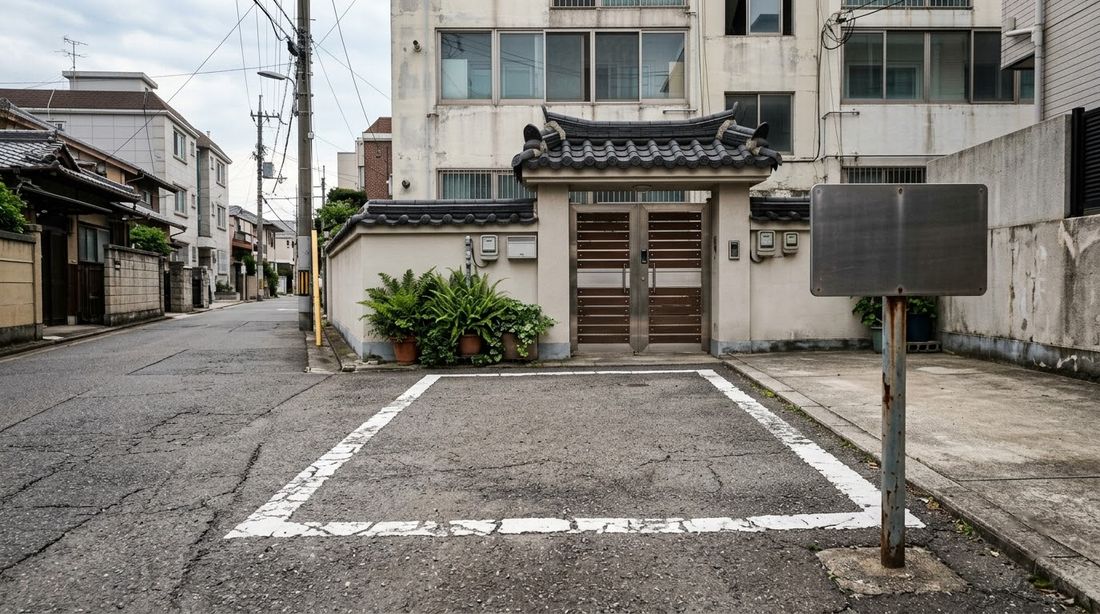
On an older residential street in a Korean city, the asphalt is painted with numbered rectangles. Box 14 belongs to one household. Not "residents generally" — that household, for the month it has paid for. A car that is not box 14 gets a phone call, and then a tow truck.
The easy reading is that Korea simply built more parking. That is almost exactly backwards, and the backwards part is the interesting part.
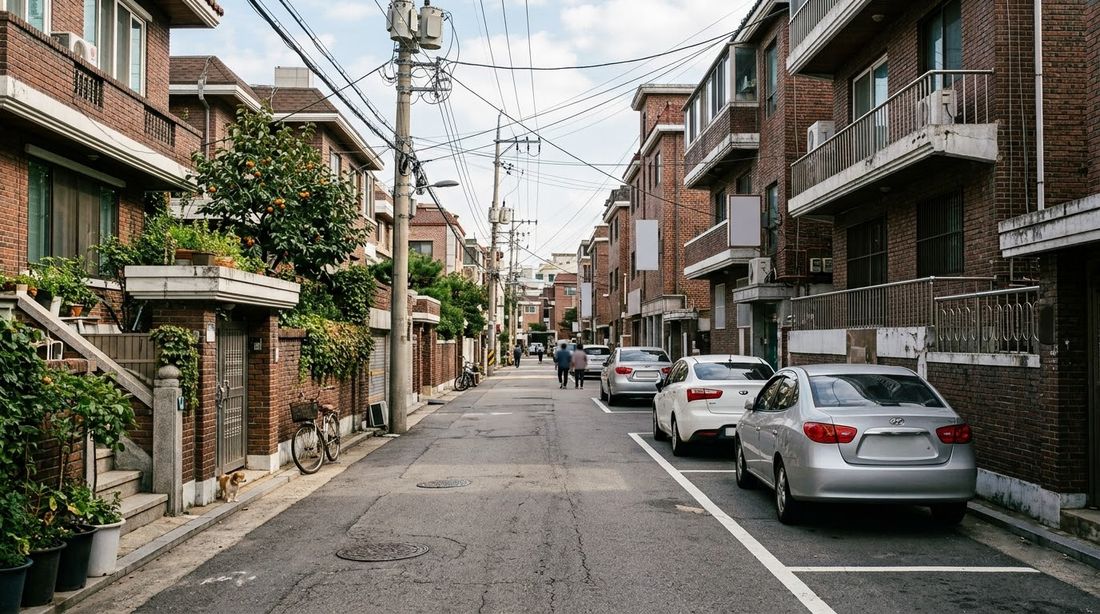
Almost none of Korea's parking is on the street
Seoul counts its residential parking supply every year. The 2024 figure is 2,835,706 spaces. Of those, 102,059 are district-run spaces painted on the street, 58,308 are district-run lots off the street, and 2,675,339 are attached to buildings.
That is 94 percent of a city's home parking sitting inside or underneath private structures. The street contributes about three and a half percent.
This is not an accident of how the city grew. Korean law makes the building carry its own parking. A residential complex has to provide at least one space per household, dropping to 0.7 spaces for units of 60 square meters or less, and local governments can tighten that further. So for the 54.5% of Koreans who live in an apartment complex, parking is a ramp going down under their own building, priced into the apartment they already bought or rented.
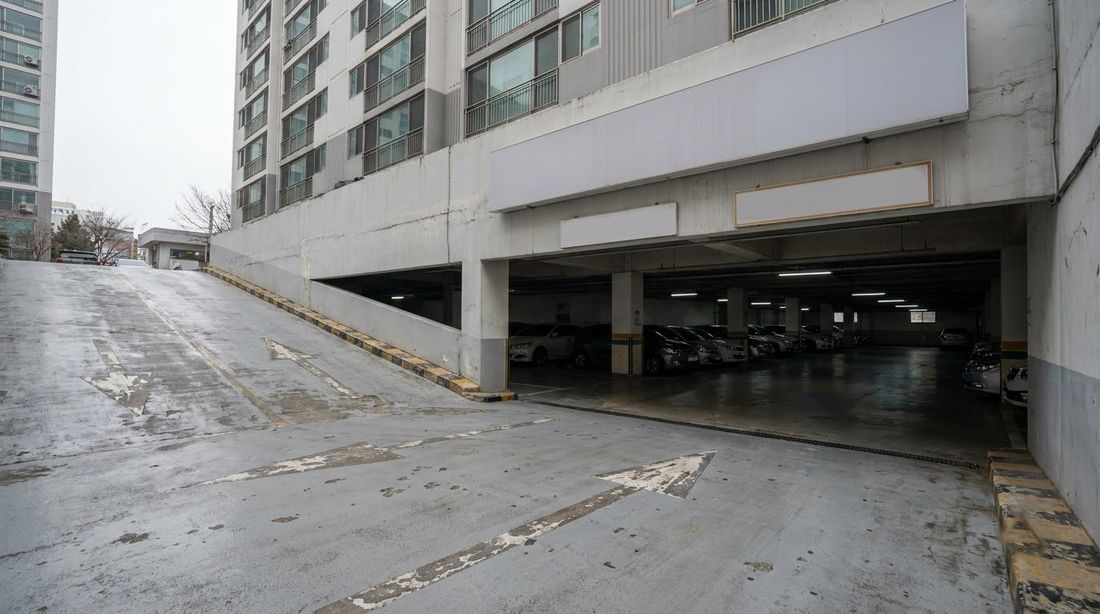
The street is whatever is left over
The neighborhoods that are not apartment complexes — low-rise, older, built when the standard was weaker or did not exist — have close to nothing. So the district government treats the public street as a rationed asset. It paints numbered boxes, and rents them monthly to one household each.
The rate is set district by district, which means there is no single national number to quote. One published example: Seo-gu in Daejeon charges 13,000 won a month — roughly $10 — for a resident-priority box, with a cheaper 8,000-won version for the space directly in front of your own house, and a 50% reduction for compact cars, low-emission vehicles and registered disability vehicles. Permits come in full-day, daytime-only and overnight-only versions, because a daytime commuter and a night-shift nurse do not need the same hours.
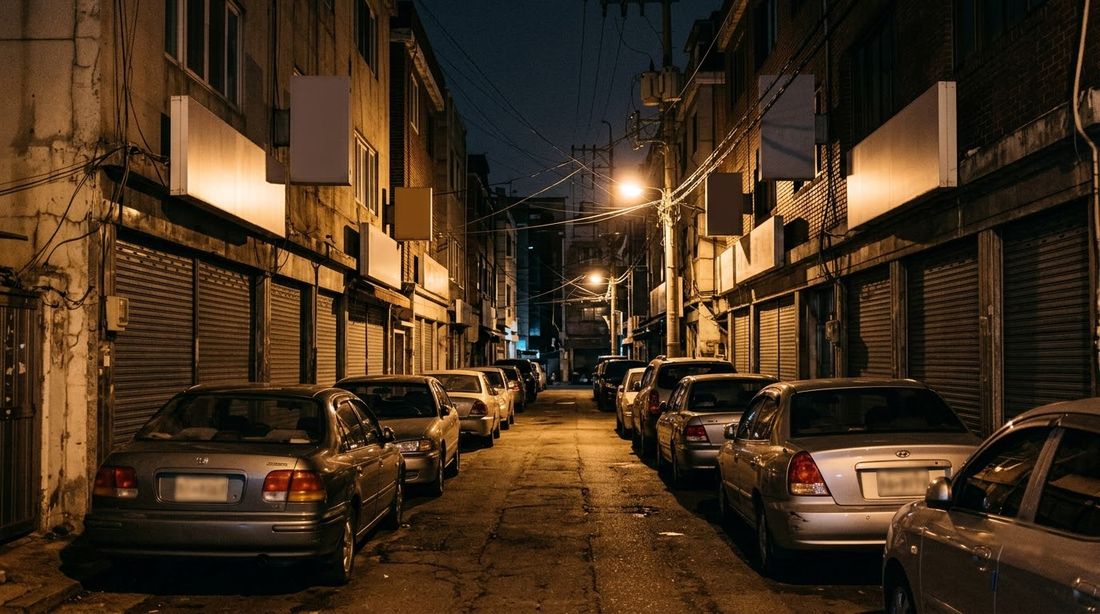
It is not that Korea bought more asphalt
Seoul's city government directly operates 125 public parking facilities holding 18,253 spaces, as of 30 June 2026 — for a city of roughly nine million people. The twenty-five district governments run more on top of that, but the municipality is plainly not in the business of storing everybody's car.
Nor is it cheap when it does. A monthly pass at a city-run lot runs from 70,000 won in the outer fee grade to 280,000 won in the innermost one — about $52 to $209 at roughly 1,340 won to the dollar.
So Korea did not out-build America on parking. It moved the obligation from the public street onto the private building, then rationed the remainder by name.
The honest part: this is the chapter where Korea is worse
A permit is not a right. There are fewer boxes than households that want one, so you apply, you wait, and you take an opening on your block when somebody moves out. Plenty of people never get one.
What fills the gap is the thing every Korean driver recognizes: a car left in neutral across two other cars with a phone number on the dashboard, so strangers can call you at eleven at night to move it. Parking is one of the most reliable sources of neighborhood friction in the country, and the reason is simple arithmetic — the cars outnumber the boxes.
Two numbers are missing from this piece on purpose. There is no nationwide resident-permit fee, because each district sets its own. And the count of American cities that have repealed their parking minimums is somewhere between about 100 and more than 200 depending on which organization is counting and what counts as "repealed," so it is not stated here as a fact.
Where the density comes in
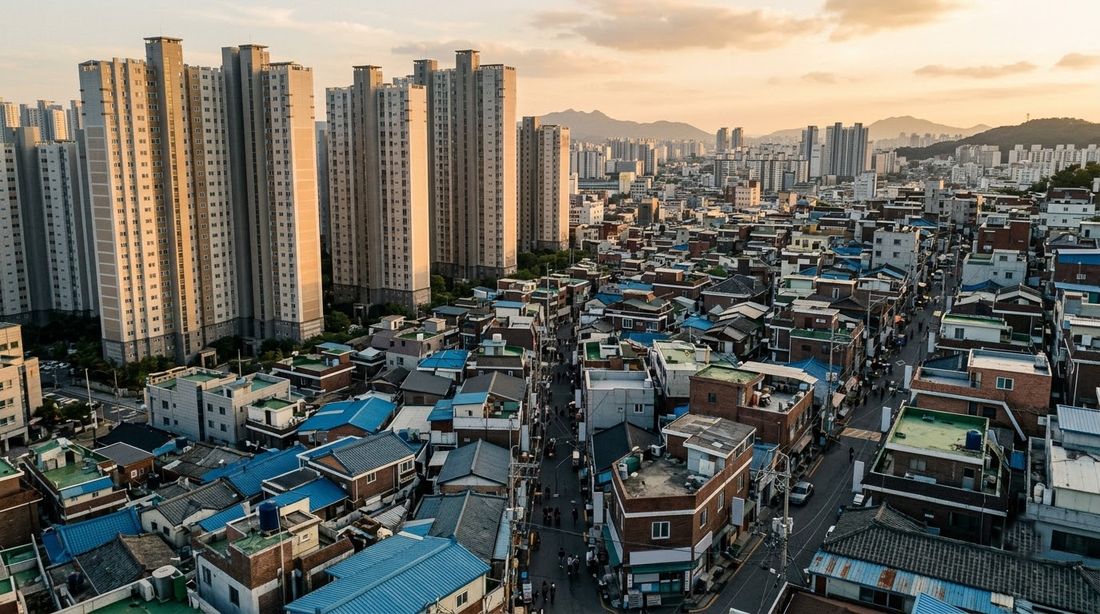
This is the bill for the rest of the series. The pharmacy downstairs, the bus in four minutes, the clinic two floors up, the grocery delivery before dawn — all of that depends on buildings standing close together. Buildings standing close together means there is no ground left over for cars at rest.
American parking abundance is the same trade running the other way. Space between buildings makes room for the surface lot, the lot makes the drive necessary, and the drive makes the lot necessary. Korea took the other branch and pays for it at eleven at night, when somebody has to go move a car.
Neither country decided this out of national character. They decided it out of how much ground there was to put things on.
This is part 39 of a series on why daily life in Korea feels so frictionless. Part 38 looked at why a Seoul taxi meter reads the same number at every hour of the day. Earlier parts are here.
Next in this series: the lit sign at the bus stop that tells you the bus is four minutes away — why Korea puts one on the pole and most American cities put it on your phone instead.


Comments
Post a Comment