Korea's Public Bathhouses Peaked at 9,919 in 2003. New York's Last One Closed in 1975.
An American who hears about the jjimjilbang usually meets it as a destination. Korean spas across the U.S. are marketed the way a resort is: heated floors, themed sauna rooms, an afternoon of it. The prices match. Entry runs from about $10 at a small city location to a $65 weekday day pass at one of the large suburban complexes in Texas, more on weekends. It reads as an occasion.
In Korea it is not an occasion, and for most of its history it was not a luxury. It was where you went because your apartment did not have a hot bath.
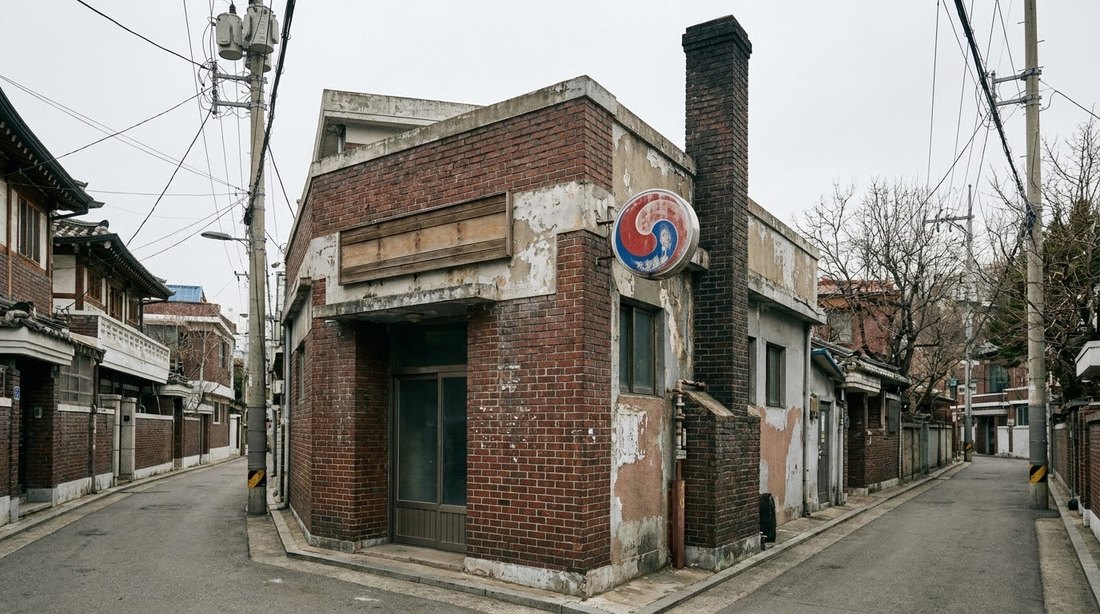
A neighborhood bath costs about seven dollars
As of January 2024 the going rate for an adult at an ordinary Seoul public bath was ₩10,077 — roughly $7.30 at about ₩1,386 to the dollar in mid-September 2026. A jjimjilbang, which adds the clothed sauna floors and the sleeping areas on top of the baths, runs higher: the better Seoul ones sit around ₩12,000 to ₩19,000, with the cotton uniform sometimes billed separately.
That is the whole product. No appointment, no membership, no treatment upsell — towels, hot water, a tiled room, and in most neighborhoods an elderly clientele who have used the same one for thirty years.
It was never about a bathing culture
The tempting explanation is a cultural one — that Koreans simply like communal bathing, the way the sauna is said to be Finnish. The licensing record does not support a long tradition. It supports a very short boom.
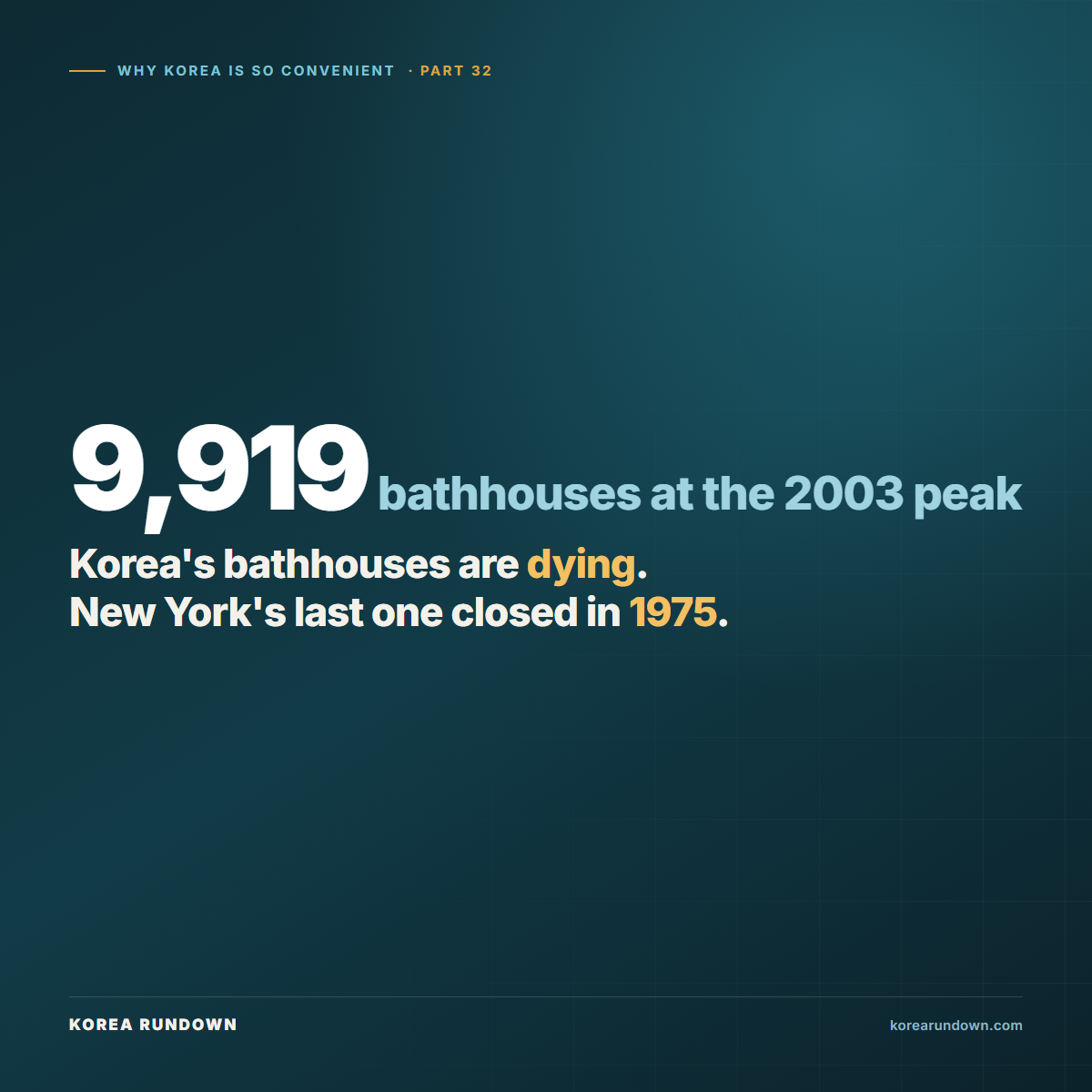
Korea's bathhouse count, tracked through local-government business licences, peaked in 2003 at 9,919 businesses. That year alone 1,442 new ones opened. The very next year, 2004, closures outran openings for the first time — 639 opened, 725 shut — and the line has gone one direction ever since: under 8,000 by 2013, under 7,000 by 2018, 6,012 in 2022, and 5,714 at the end of 2024. Seoul alone went from 1,764 in 1995 to about 510 in 2025, with 242 of those closing during the three pandemic years.
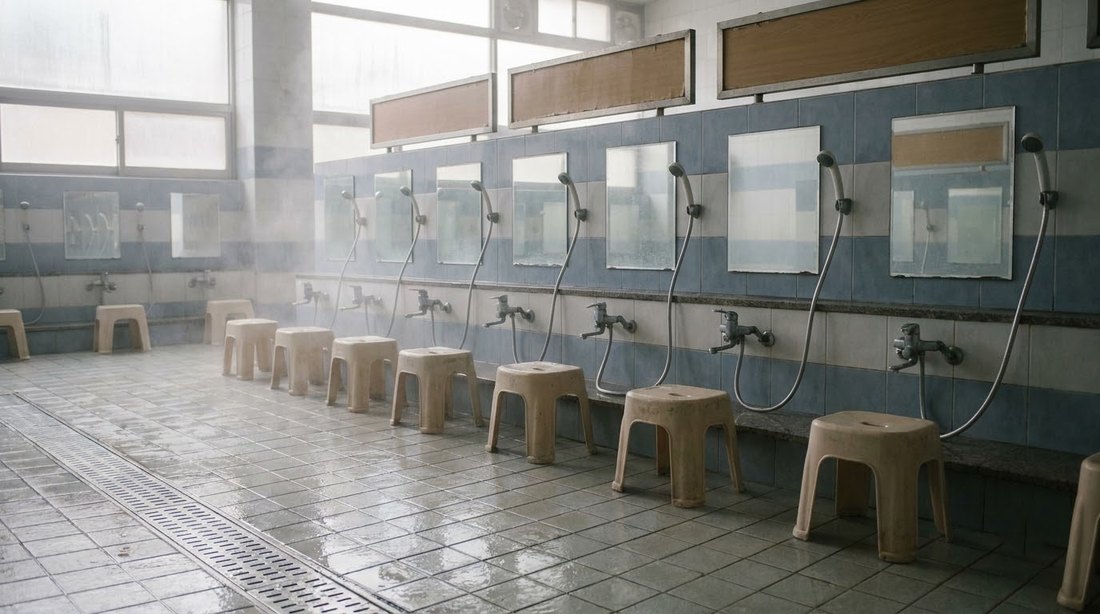
A boom that lasts one generation and then reverses is not a tradition. It is an industry serving a condition that went away.
America ran exactly the same arc, sixty years earlier
This is the part that makes the cultural reading collapse, and it is worth stating plainly: the United States built public bathhouses too, for the same reason, and closed them for the same reason.
New York passed a state law in 1895 requiring public bathing facilities in its largest cities. The first true municipal bath opened on Rivington Street in 1901, and 26 municipal and charity baths went up in the city between 1901 and 1914. In 1920 roughly 7.5 million baths were taken in them. They existed because tenement apartments had no tubs. The 1901 Tenement House Act began requiring toilet facilities in new buildings; plumbing spread; the baths emptied. The last, on Allen Street, closed in 1975.
So why does Korea still have 5,714 of them?
Because the Korean bathhouse got a second job that the American one never had a chance to take.
When private bathrooms arrived, Korean operators converted upward rather than closing: jjimjilbang floors, a snack bar, a sleeping room, a 24-hour licence. The bath became a place you go for a reason other than being dirty — to sleep for ₩15,000 after a missed last subway, to park a family on a cold Sunday. American municipal baths were city-run welfare facilities with one function and a budget line. When the function expired the line was cut. There was no business there to pivot.
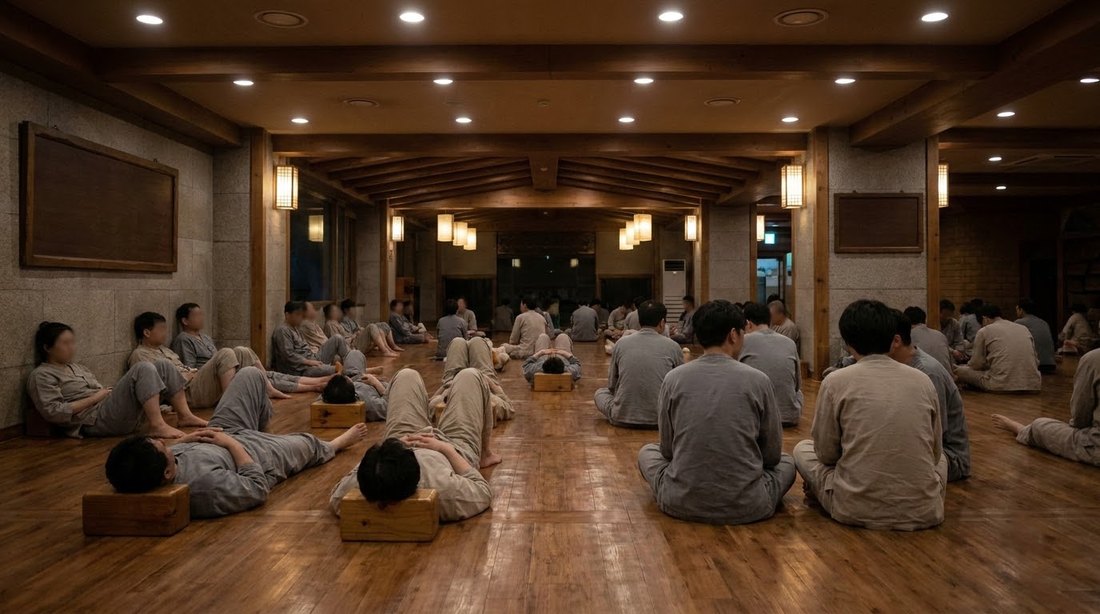
And the pivot only works at a certain population density. A 24-hour facility has to be staffed and heated all night whether or not anybody walks in, which means it needs a stream of people passing the door at 1 a.m. In a city where 54.5% of households live in apartment complexes and the subway stops running around midnight, that stream exists. In a suburb where everyone drove home at nine, it does not, which is why the American version of the jjimjilbang had to be rebuilt as a $65 destination with a parking lot — the only shape the business can take there.
The honest part: it is losing anyway
The second job is not enough to save it, and the reason is the utility bill.
A bathhouse heats a large volume of water around the clock for a room that is frequently empty. Fuel and utilities run somewhere between 30% and 50% of revenue in the sector. When Korean public energy prices jumped, the pass-through was brutal: the bathing-fee component of the consumer price index rose 12.7% in 2023, the steepest annual increase since 1998. Seoul's adult fee went from ₩8,769 to ₩10,077 in a single year, about 15%.
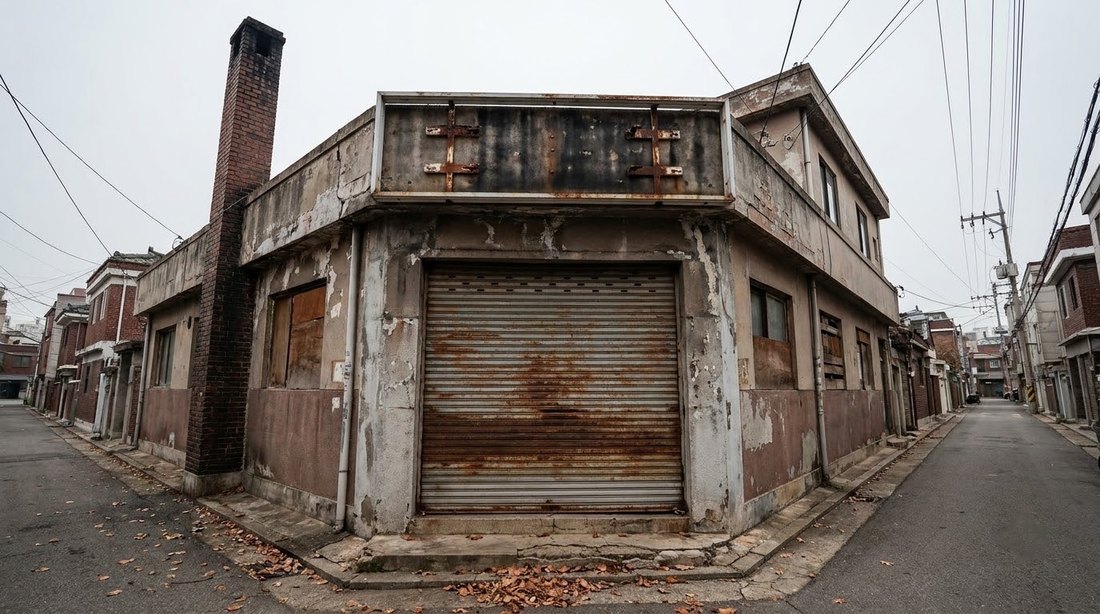
That is the squeeze in one line. The customers who most depend on the neighborhood bath — older people in old buildings, often living alone — are the least able to absorb a 15% increase, and they are also the ones for whom the nearest alternative is a bus ride away now instead of a walk. Every closure lengthens that walk for everyone who is left.
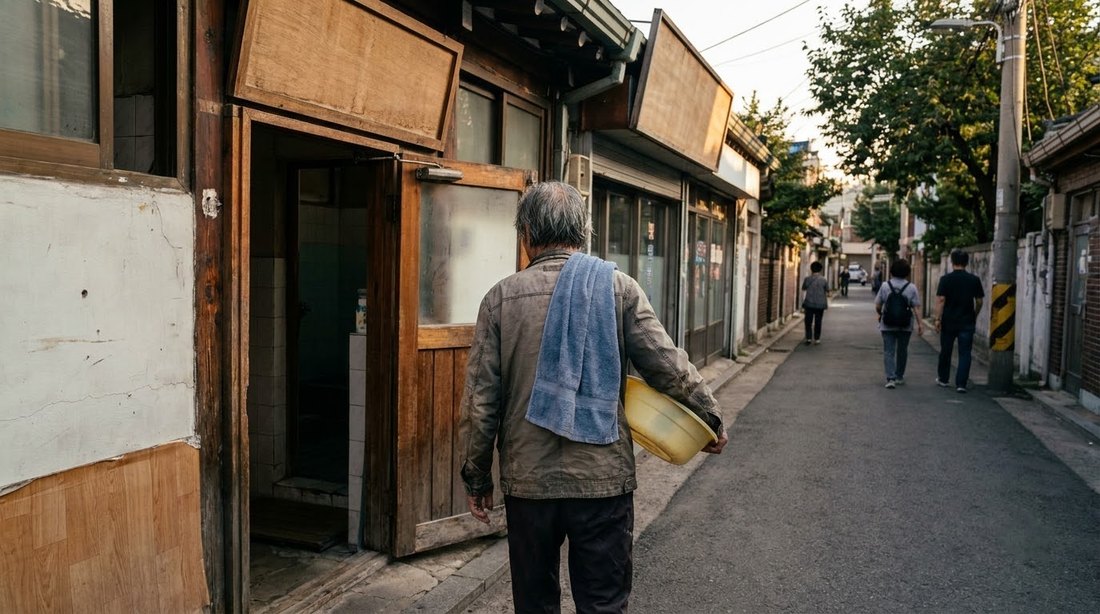
Where the density comes back in
Nothing here is a story about a nation that loves to bathe. Two countries built the same institution at the same point in their housing history, and both are dismantling it at the same point in their plumbing history. America finished in 1975. Korea started in 2004 and is roughly 42% of the way down from its peak.
The only real divergence is how long the descent takes, and that is a density question. Density gave Korean bathhouses a second market — enough foot traffic within walking distance to justify staying open all night for people who were not there to wash. It did not make them permanent. It bought them about thirty years. What is happening in Seoul right now is the end of that extension, arriving one neighborhood at a time, priced in gas bills.
This is part 32 of a series on why daily life in Korea feels so frictionless. Part 31 looked at why a Korean pharmacy counter never has to quote you a price. Earlier parts are here.
Next in this series: another piece of Korean daily life that looks like a national preference and turns out to be a consequence of what the buildings are and where they sit.


Comments
Post a Comment