America Has Twice as Many Libraries per Person as Korea. Korea's Are the Ones People Walk To.
It is a Tuesday evening and you have an hour free. You would like to swim. The nearest public pool is a fifteen-minute drive, lap hours run early on alternate weekdays, and the membership is an annual decision you have to make before you can find out whether you will actually go. Most people run that arithmetic once, decide they probably will not, and never swim again.
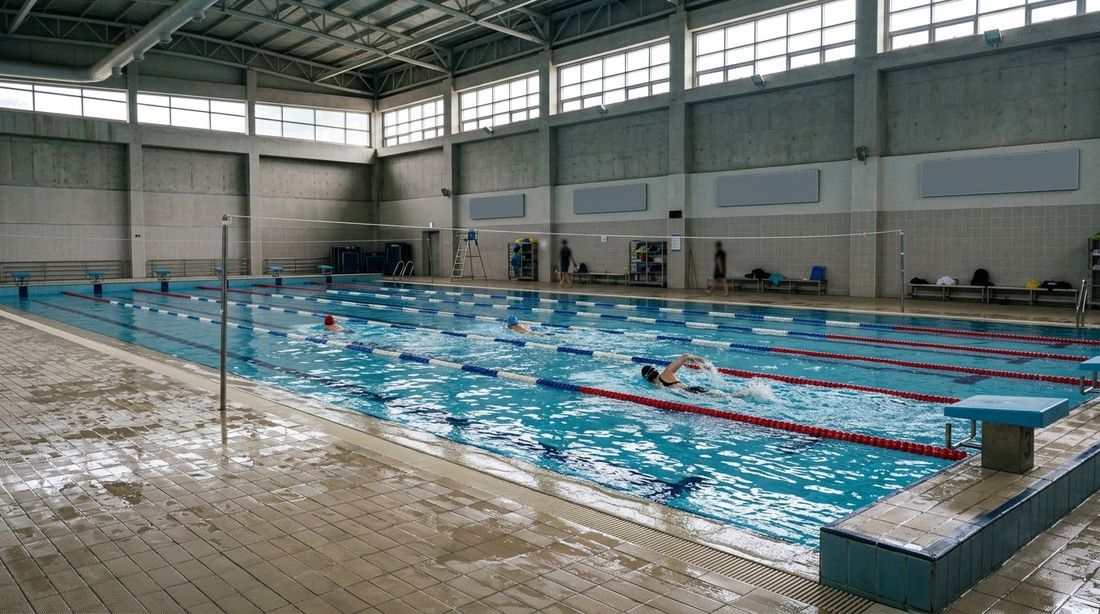
In a Korean city the same hour goes differently. The pool is inside a building called the district sports center, the district being an administrative unit of a few hundred thousand people. You walk there. You pay at the door for that one visit — 4,000 won on a weekday at Seoul's city-run Jamsil pool, a little under three dollars — and you go home.
The obvious explanation is that Korea simply funds this more heavily. The numbers do not support that, and the way they fail to support it is the interesting part.
America is not short of buildings
The Institute of Museum and Library Services counts 17,329 active public library outlets across the fifty states and the District of Columbia in its FY2022 survey — central libraries, branches and bookmobiles. Set that against the Census Bureau's resident population for July 2022, 333,287,557, and you get roughly one outlet for every 19,200 people.
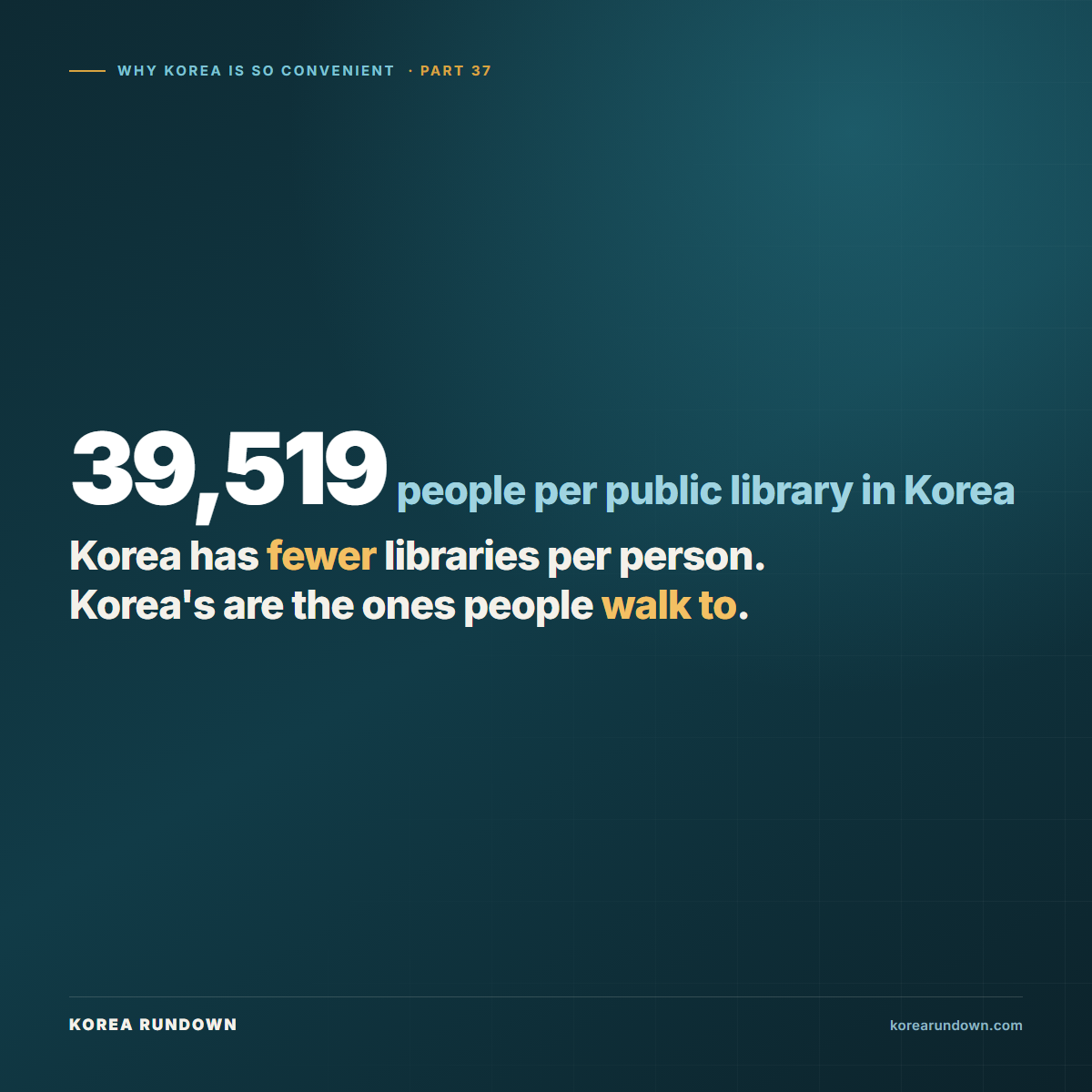
Korea's culture ministry counted 1,296 public libraries as of 2024, up 2.0% from 1,271 the year before, and reported the population served per library as 39,519.
Read those two numbers next to each other. Per person, the United States has about twice as many public library outlets as Korea does. Whatever is happening here, it is not that Korea built more.
And it is not short of cheap memberships either
New York City's rules set the price of a recreation center membership in black and white. Under the city's parks rules, an annual adult membership at a recreation center with an indoor pool is $150 — $135 with a municipal ID card — and $100 at a center without a pool. Children pay nothing, young adults pay $25, and seniors, veterans and people with disabilities pay $25.
Now price the Korean side honestly. A monthly open-swim pass for an adult at that same Seoul city pool is 80,000 won. Lessons five mornings a week are 85,000 won a month. Keep either of those going for a year and you are well past $150.
On the cost of the facility itself, New York wins, and it is not close.
What is actually different is the trip, not the ticket
Every one of these facilities has two prices. There is the one printed at the counter, and there is the one you pay in time and distance — the drive, the parking, the hour you lose either side of the hour you wanted.
The printed price is the one governments argue about. The trip price is the one that decides whether you go. A $150 annual membership fifteen minutes away is more expensive, in the only currency that matters on a Tuesday evening, than a $3 walk-in eight minutes away.
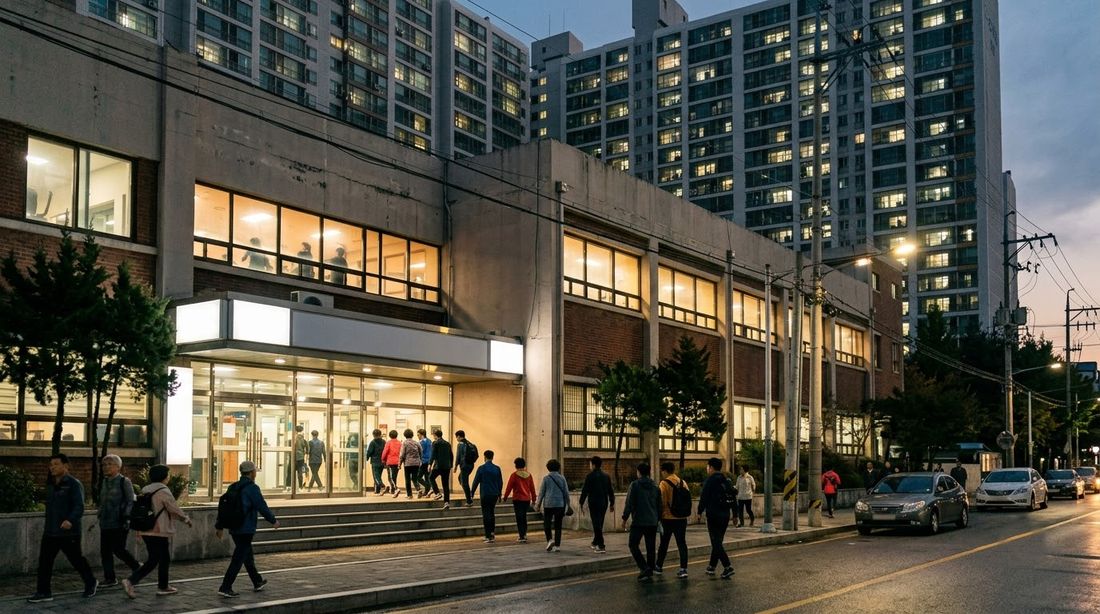
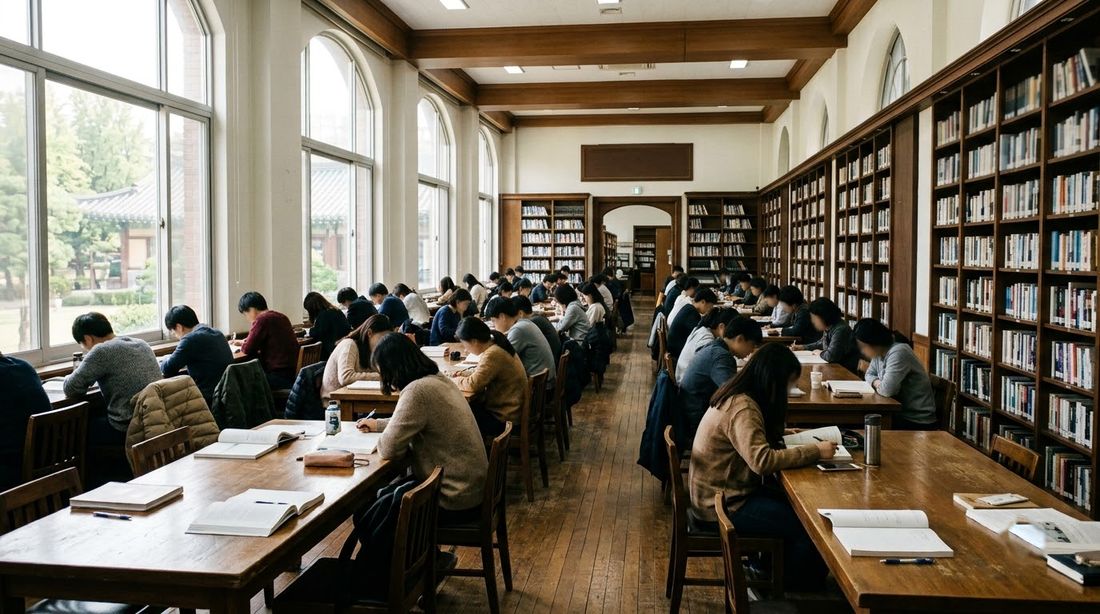
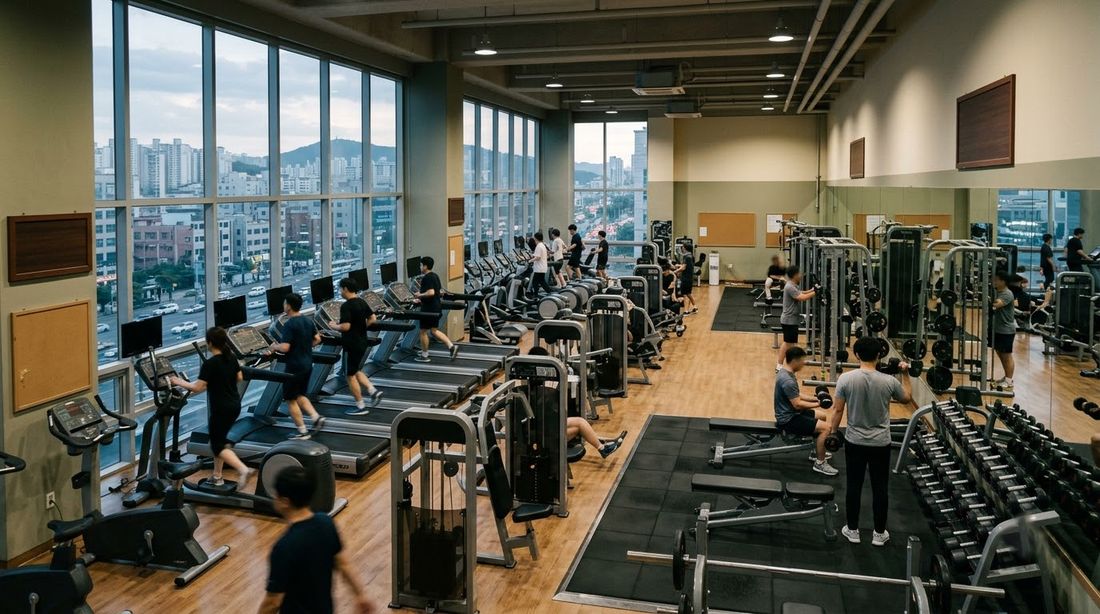
And the Korean building is stacked. The pool is on one floor, the weight room is above it, the program rooms are above that, and the whole thing frequently shares a block with the district office and the district library. You are not choosing between the gym and the library. They are the same errand.
The honest part: the Korean count is padded
Korea's culture ministry reports 38,603 public sports facilities nationwide as of the end of 2024, up 1,427 in a year. That number gets quoted a lot and it is misleading.
27,850 of them are neighborhood exercise grounds — an outdoor patch with a few pieces of fixed equipment on it, the sort of thing wedged between apartment blocks. Strip those out and what remains is 1,530 gymnasiums, 579 swimming pools, 1,163 football pitches, 915 tennis courts, 373 baseball fields and 249 athletics stadiums.
579 pools, in a country of roughly 51 million, is one pool for about every 88,000 people. Korea is not swimming in swimming pools. It has a modest number of them, placed where the walking is short.
Where the density comes in
This is the same arithmetic as every other post in this series, pointed at a building instead of a cable or a delivery van. A pool costs what a pool costs. What varies is how many people can reach it without starting a car.
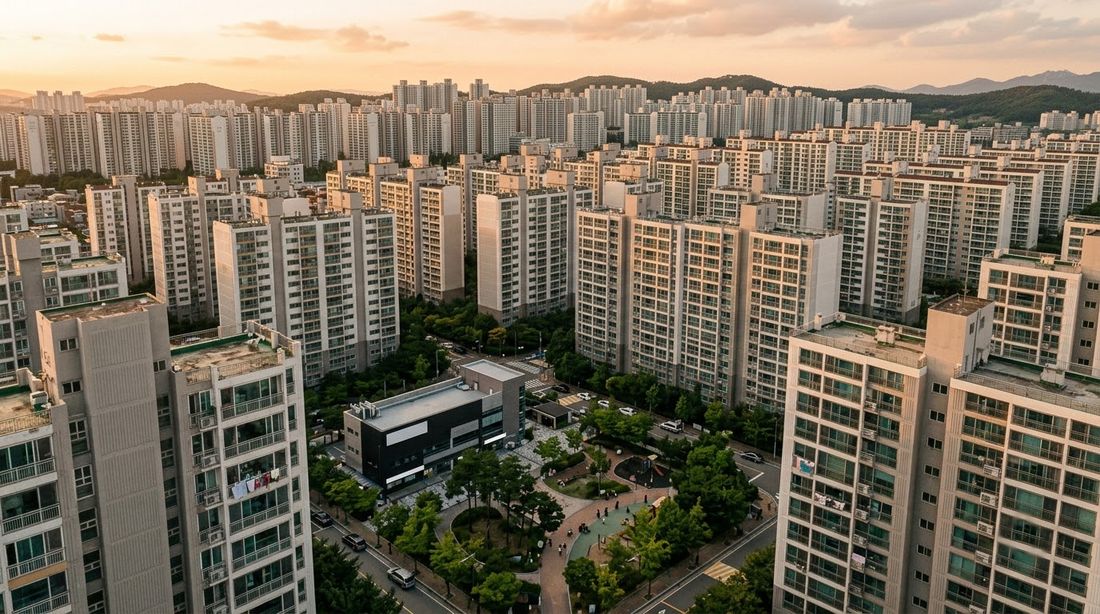
When more than half a country lives in apartment complexes, a single facility sits inside a walkable catchment of tens of thousands. It runs full on a weekday evening, which is what lets it sell a three-dollar entry instead of an annual membership. Spread the identical building across a suburb and the same capacity needs a parking lot, a longer opening schedule and a membership model, because nobody is dropping in for forty minutes.
America did not underbuild this. It built more of them, further apart, and the distance ate the benefit.
This is part 37 of a series on why daily life in Korea feels so frictionless. Part 36 looked at why a Korean subway tunnel never drops your phone signal. Earlier parts are here.
Next in this series: the price on the meter when you get into a Korean taxi, and why it is the same number at six in the evening as it was at noon.


Comments
Post a Comment