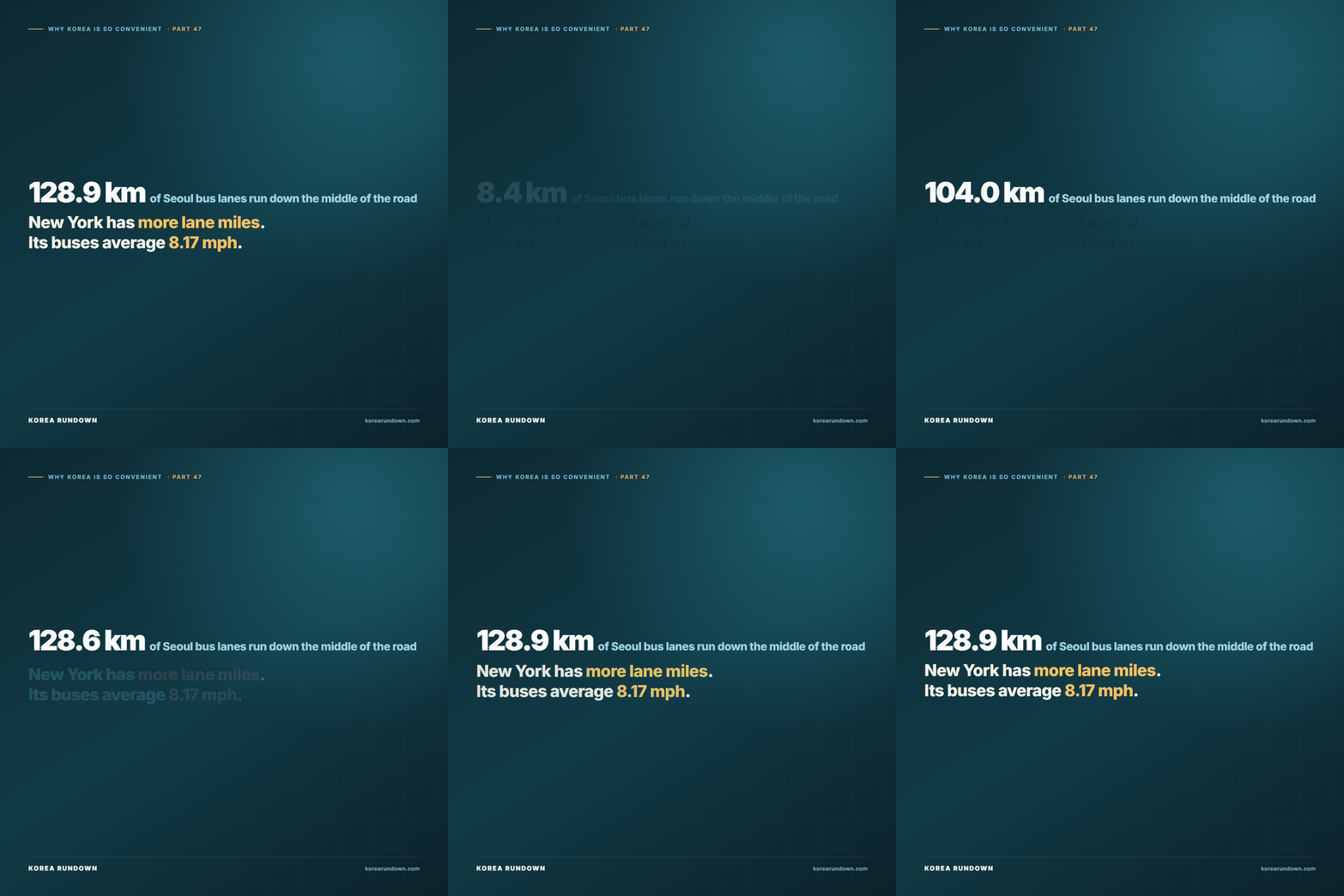
Seoul Bus Lanes Run Down the Middle of the Road. New York Has More Lane Miles and 8 mph Buses.
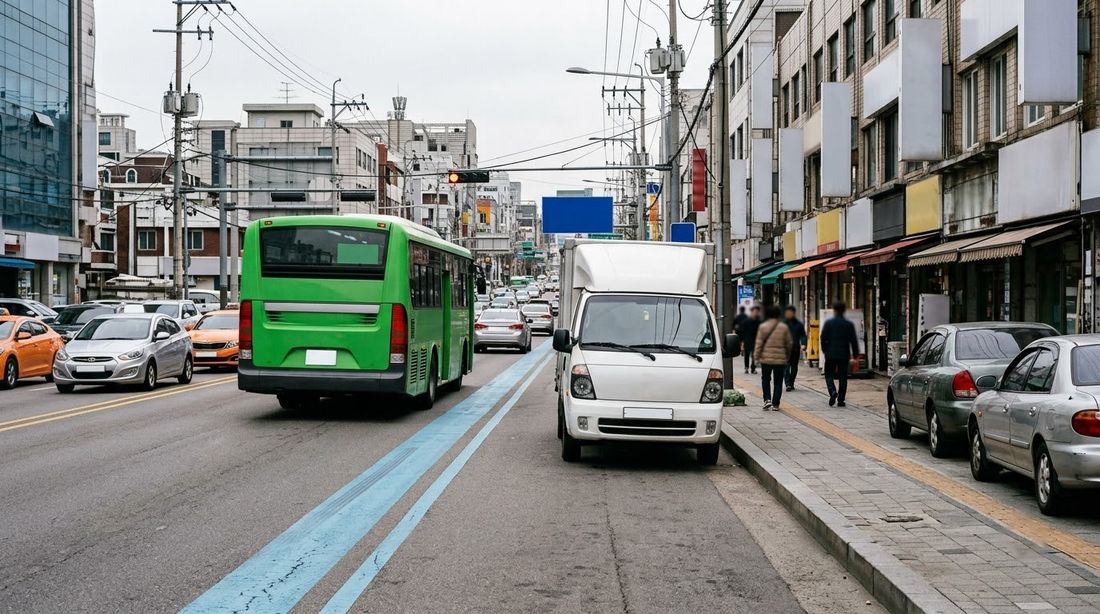
The bus lane is right there, painted red, with the words BUS ONLY stenciled every half block. A delivery van is parked in it. Two cars are using it to turn right. Your bus pulls out around them, merges back into traffic, and sits through the same light as everyone else. The ride that the schedule says takes twenty minutes takes thirty-five, and on the way home you start thinking about whether the car is worth it after all.
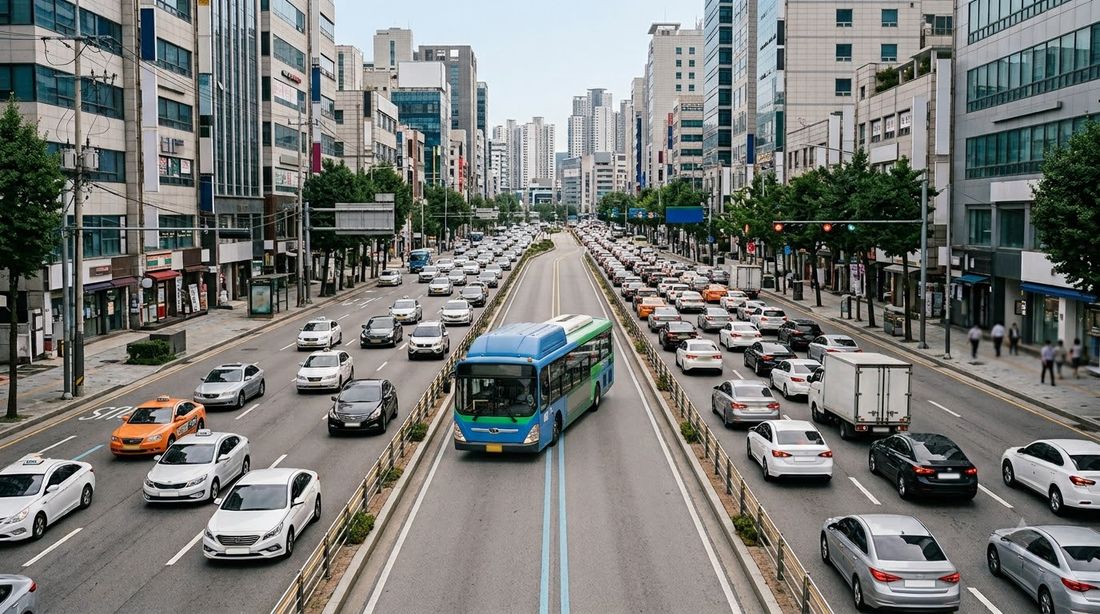
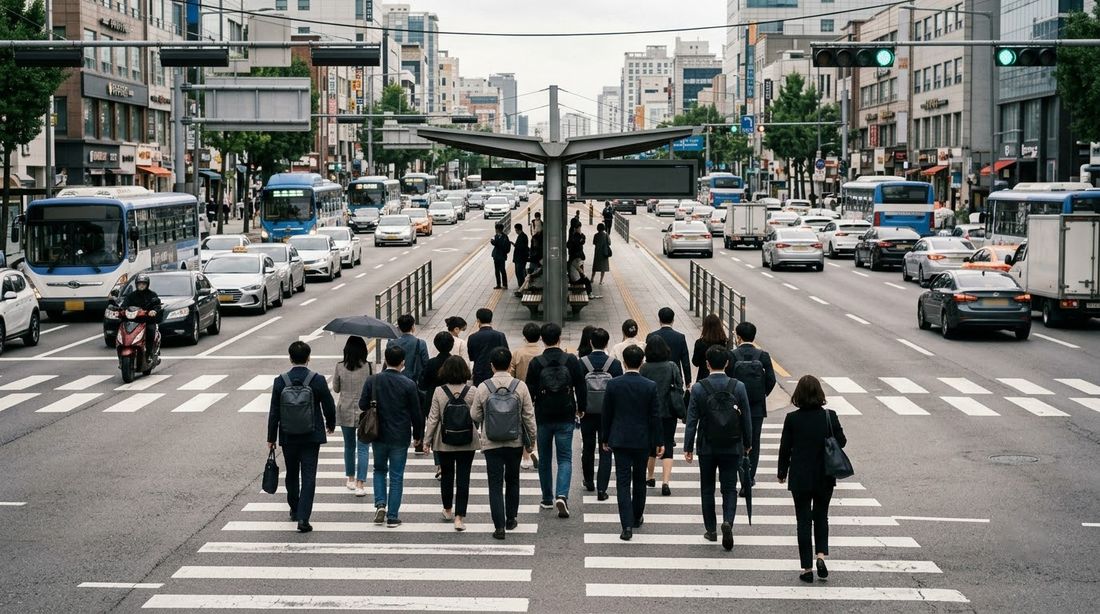
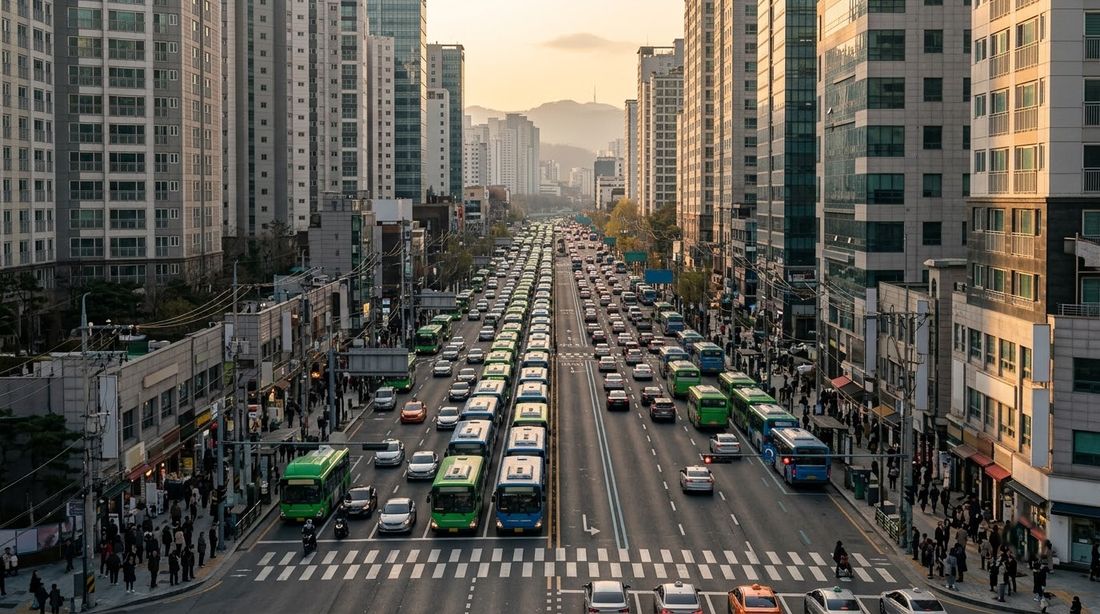
Seoul's bus lanes look different. On its busiest avenues they do not run along the curb at all. They run down the middle of the road, separated from car traffic by a raised strip, with bus stops built as islands between the lanes. The bus never has to pull over to a curb at all.
What Seoul's median bus lanes actually are
Seoul calls them central bus-only lanes, and they operate 24 hours a day. According to the Seoul Metropolitan Government's own lane inventory, the network ran 60.9 kilometers across 7 corridors in 2007. By 2025 it had grown to 128.9 kilometers, about 80 miles, across 13 corridors.
The design matters more than the paint. A curbside lane competes with everything that happens at a curb: deliveries, taxis dropping off, cars turning right into driveways. A median lane has no curb. The only vehicles that can easily enter it are other buses.
Seoul measured what that change did on Cheonho-daero, one of the first avenues converted. The city reported bus speeds rising from 18.2 to 35 km/h, while car traffic on the same road also got slightly faster, from 18.8 to 21.6 km/h. Those were early measurements on a showcase corridor, published in January 2004, so treat them as the best case rather than the citywide average. The citywide reform that followed came on July 1, 2004.
How New York's bus lanes compare to Seoul's
Here is the part most comparisons get wrong. New York City is not short on bus lanes. The New York City Comptroller counted approximately 163 miles of bus lanes in the city as of 2024. Seoul's median and curbside lanes together come to about 123 miles. By length alone, New York is ahead.
Citywide average bus speed, 2024: 8.17 mph
Dedicated bus lanes required by city law, 2022–2023: 50 miles; built or upgraded: 27.6 miles
The difference is the type of lane. Look at what Seoul did with its curbside lanes over the same years: it cut them from 130.9 kilometers to 69.8. The city was not just adding bus lanes. It was moving them from the curb, where they get blocked, to the center, where they mostly do not.
New York has run into the curb problem directly. The same Comptroller report put the citywide average bus speed at 8.17 mph in 2024. It also found that the city's transportation department built or upgraded just 27.6 of the 50 miles of dedicated bus lanes required by the Streets Plan law for 2022 and 2023, and painted just under 5.5 miles of new bus lanes in 2024.
A common assumption: Korean drivers simply obey the rules
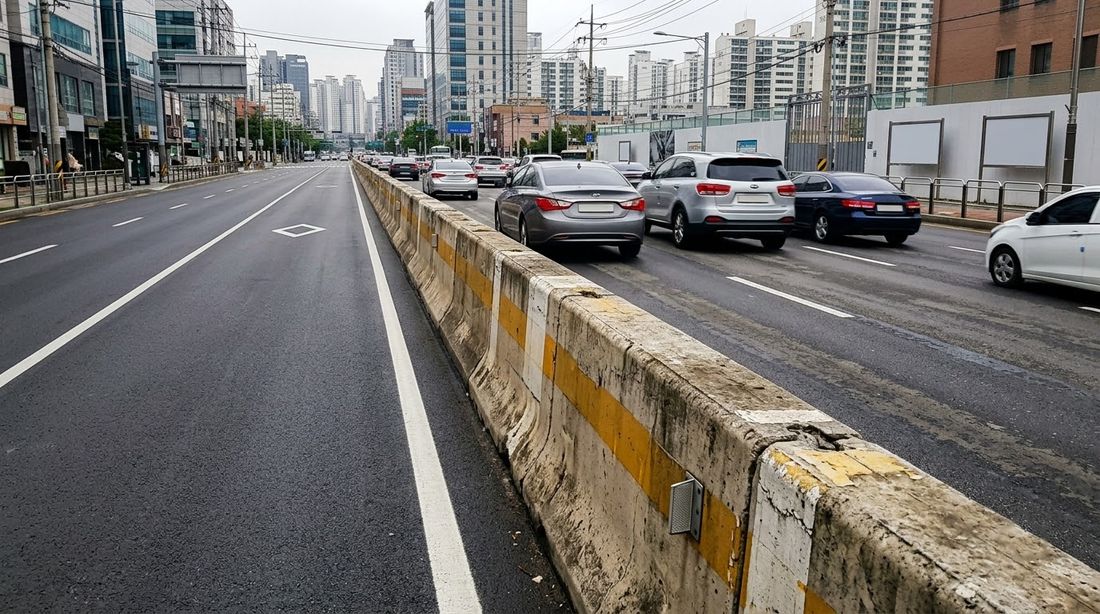
It is tempting to explain this as a difference in driver behavior, as if Seoul drivers are simply more willing to stay out of a lane marked for buses. But a median lane does not depend much on good behavior. Getting into it means crossing a raised divider, and there is no reason to: no curb to park at, no driveway to turn into, no storefront to unload at. The lane is respected mostly because it is useless to anyone who is not driving a bus.
The honest part: the middle of the road has a cost
Median lanes are not free. Building them means taking one or two lanes from car traffic on the busiest roads in the city, rebuilding stops as islands, and adding crosswalks so riders can reach them. Every bus rider has to cross half of a large avenue at a signal to board. And the lane is only as fast as its intersections. Buses in a median lane still stop at red lights, so the gains are largest on long, wide avenues and smaller on narrow streets with short blocks.
Seoul also did not convert everything. Nearly 70 kilometers of curbside lanes remain, and a number of them only operate during rush hours. On those streets, Seoul has the same blocked-lane problem as everyone else.
Why bus lanes in the middle of the road depend on density
The median lane works when it works because enough buses use it to justify taking a car lane away. On a Seoul trunk avenue, buses arrive in a near-continuous line, so a lane reserved for them is never empty. On a road with a bus every fifteen minutes, the same lane would sit empty most of the time.
That is the real trade Seoul made. It did not invent a new kind of driver. It had enough riders on enough buses along the same avenues to make giving them the middle of the road an easy argument, and then it built the lane so that nobody else had a reason to be in it.
This is part 47 of a series on why daily life in Korea feels so frictionless. Part 46 looked at the law that puts a senior hall inside nearly every large Korean apartment complex. Earlier parts are here.
Next in this series: what a monthly transit cap looks like when it is set at a commuter's month instead of a tourist's week.


Comments
Post a Comment