Korean Law Puts a Senior Hall in Every 150-Home Apartment Complex. There Are 68,180 of Them.
Your father stopped driving last spring. The decision was the right one, and nobody argued. But the senior center with the card games and the Tuesday lunch is four miles away on a road with no sidewalk, the bus comes once an hour, and after a few months of asking for rides he stopped asking. Now most of his conversations happen on the phone.
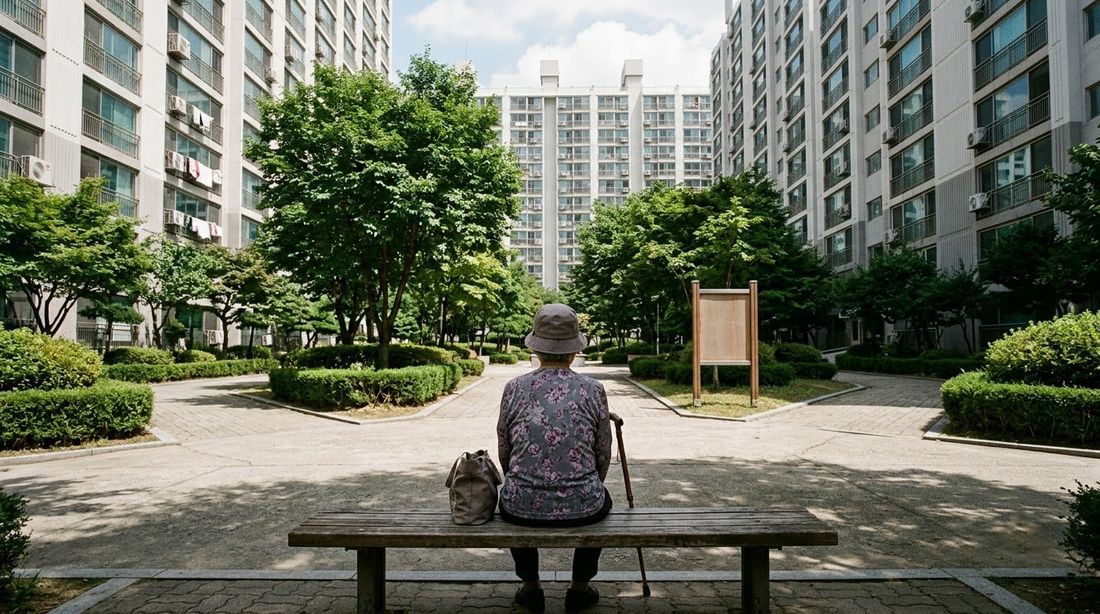
In a Korean apartment complex, the equivalent room is usually on the ground floor of one of the buildings, or in a small low building beside the playground. It is called a gyeongrodang, roughly "hall for honoring elders," and on a weekday afternoon you will often find a few retirees inside playing baduk, watching television, splitting a pot of rice and arguing about the news. Getting there takes an elevator and a short walk across the courtyard.
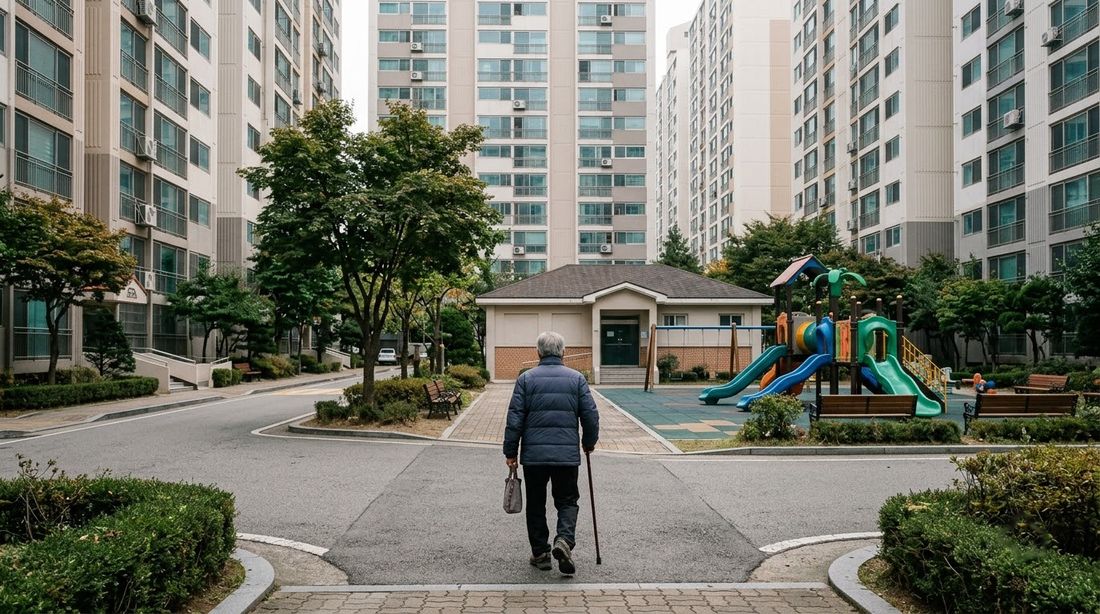
What a Korean senior center, or gyeongrodang, actually is
A gyeongrodang is not a clinic or a care facility. Korean welfare law classifies it as a leisure facility for healthy older people, alongside larger district senior welfare centers and senior classes. It is usually run by the residents who use it, with modest support from national and local budgets.
There are a lot of them. According to Korea's Ministry of Health and Welfare, the country had 68,180 gyeongrodang at the end of 2022, up from 65,604 five years earlier. Korea had about 9.94 million people aged 65 or older in 2024, which works out to very roughly one senior hall for every 150 older residents. (The two counts come from different years, so treat that ratio as an order of magnitude, not a precise figure.)
The building rule that puts one downstairs
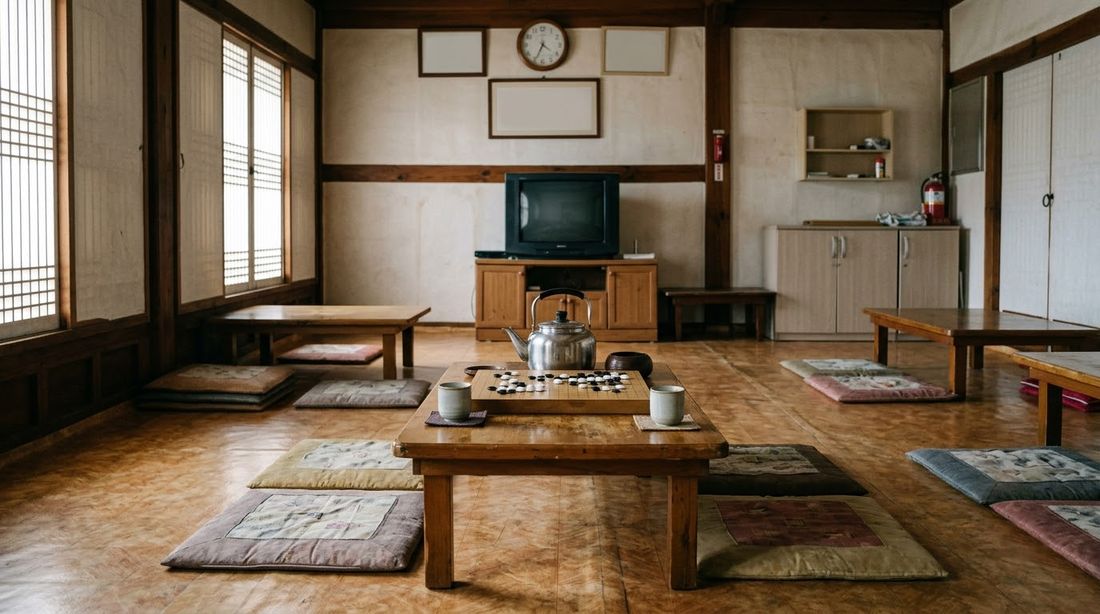
The reason so many of them sit inside apartment complexes is a single clause in Korea's housing construction standards. Article 55-2 of the Regulations on Housing Construction Standards sets out which shared facilities a new complex must include, by size:
The rule does not require a large room, and a local permitting authority can waive a facility if a similar one already exists nearby. But for any new complex above that size, the default is a senior hall on site. Part 33 of this series looked at the same article from the other end, the gyms and libraries that large complexes must include.
A common assumption: Korean elders are never alone
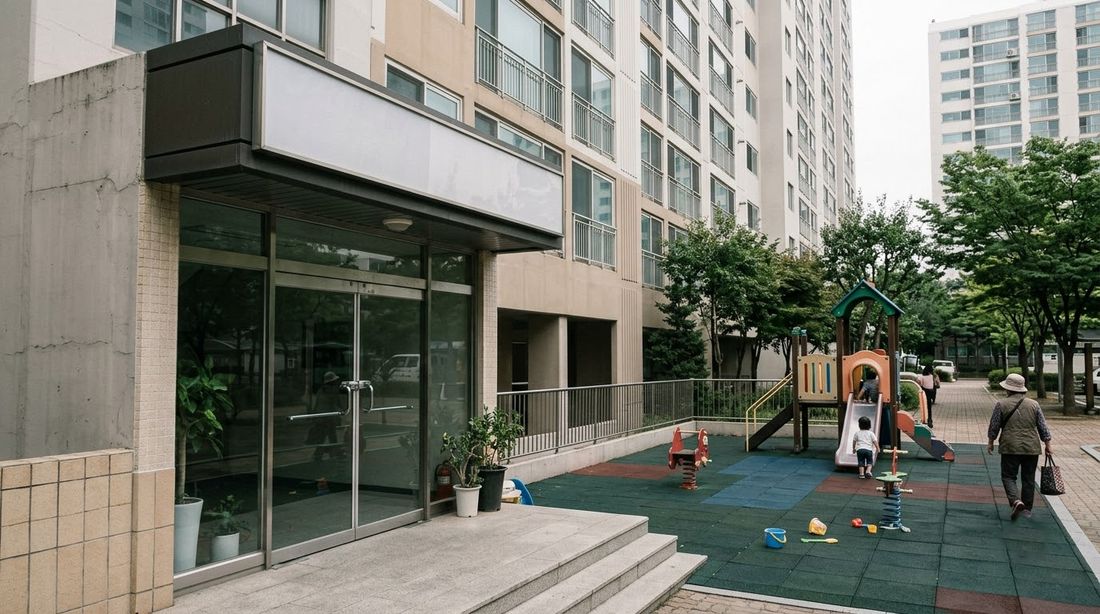
It is tempting to assume the gyeongrodang exists because Korean grandparents live with their children and families are simply closer. The data no longer supports that. In the government's 2023 survey of older Koreans, 32.8% lived alone, up 13.0 percentage points from 2020, and the share living with an adult child fell from 20.1% to 10.3% over the same three years. In America, according to the Census Bureau, nearly three in ten adults 65 or older lived alone in 2022.
In other words, older people in both countries live alone at similar rates. What differs is what is within walking distance of the door.
The honest part: the room is emptier than it used to be
The gyeongrodang has a problem, and the same survey shows it. Only 26.5% of older Koreans said they used one in 2023, down from 28.1% in 2020. Over the same period, the share who took part in social clubs and friendship groups rose from 44.1% to 54.2%. The same survey found that the age older Koreans themselves consider "old" has risen to an average of 71.6, so many people in their late sixties may simply not see the senior hall as a room meant for them.
So Korea keeps building more halls while a smaller share of older people use them. A mandated room guarantees that a place exists. It cannot guarantee that anyone wants to spend the afternoon there.
Why a senior center in the building depends on density
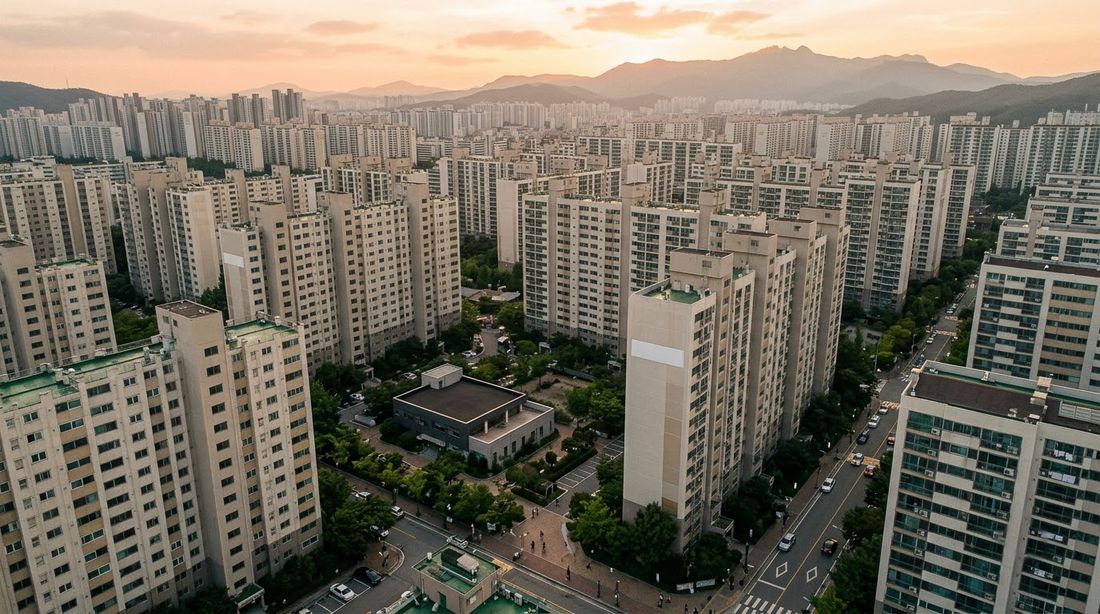
The gyeongrodang works when it works because of arithmetic. A complex of several hundred households, most of them sharing one courtyard, contains enough older residents to fill a small room every day without anyone driving. A cul-de-sac of twenty houses does not, and a single senior center serving a whole county has to be reached by car, which is exactly what many older adults eventually cannot do.
Korea did not solve loneliness in old age. Its elders live alone about as often as America's do. What it did was put a room with the lights on at the bottom of the elevator, where a retiree who has stopped driving can still get to it on a bad knee. That is a housing decision, not a cultural one.
This is part 46 of a series on why daily life in Korea feels so frictionless. Part 45 looked at why most Korean city dwellers can walk to a grocery store while most Korean villages have no shop at all. Earlier parts are here.
Next in this series: another everyday Korean convenience that turns out to be less about national character than about how many people live on the same block.


Comments
Post a Comment