Korea Transportation Card for Tourist: T-money or Climate Card?
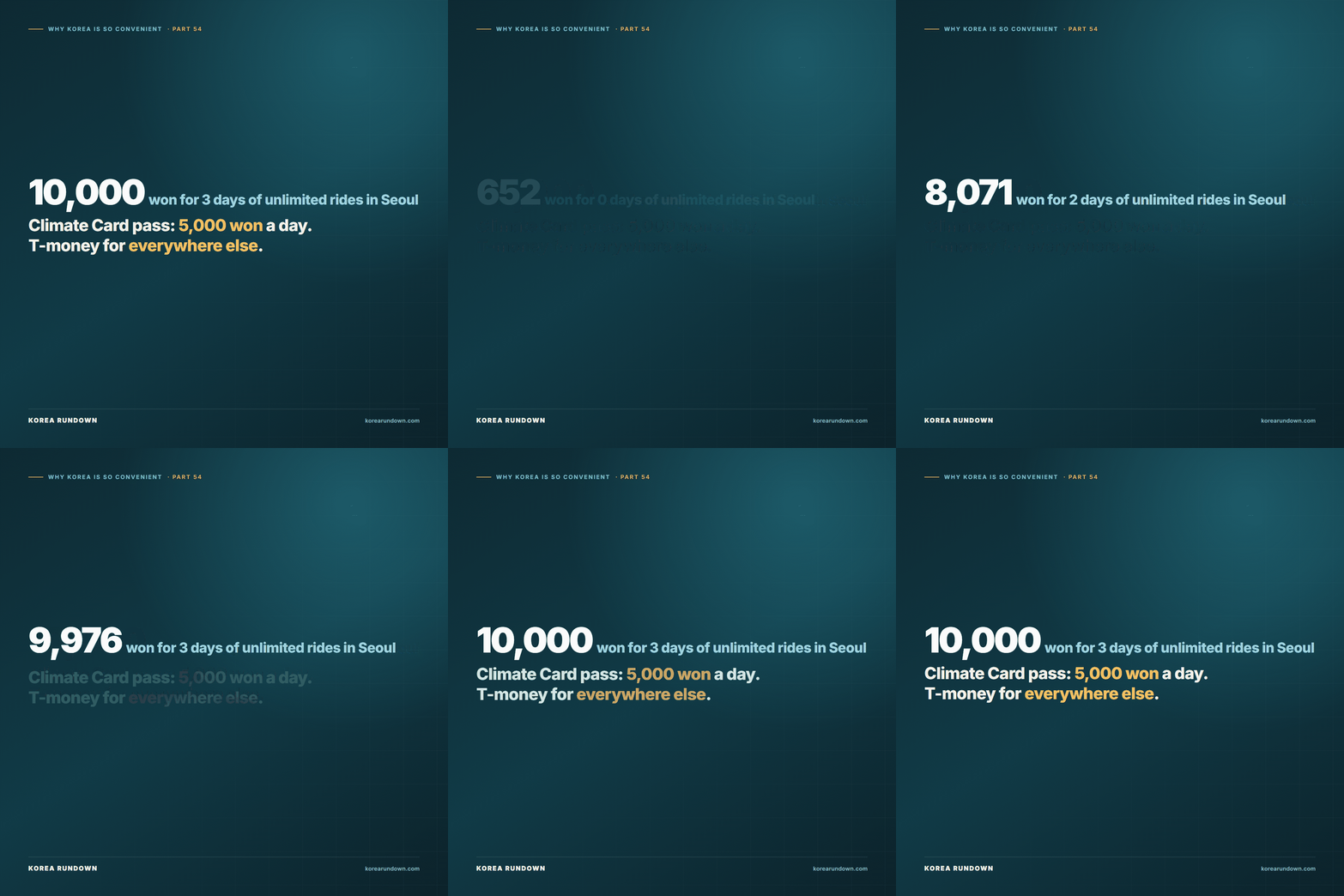
The best Korea transportation card for tourist use is, for most visitors, a plain T-money card: buy it at a convenience store or a subway ticket machine, load it with cash, and it works on subways, buses and card-reading taxis across the country. If you are staying inside Seoul and riding a lot, Seoul's Climate Card short-term pass can be cheaper: 5,000 won for one day, 10,000 won for three days and 20,000 won for seven, as of October 2026.
The old Korea Tour Card is gone. T-money says it has been discontinued; the Tmoney Travel Card, listed at 4,000 won, now carries the same partner benefits.
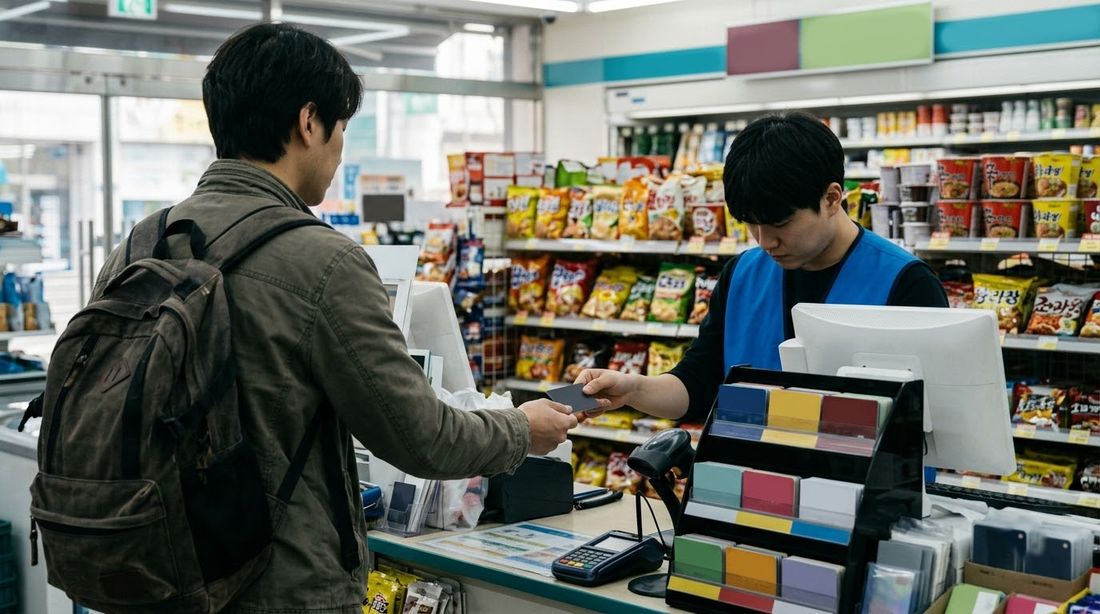
Which Korea transportation card for tourist trips should I buy?
| Card | What it costs | Best for |
|---|---|---|
| T-money card | A few thousand won for the card, then pay per ride (1,550 won subway, 1,500 won bus) | Any trip, including outside Seoul |
| Tmoney Travel Card | 4,000 won (6,000 won for the Plus version with WOWPASS payment) | Same rides as T-money, plus partner discounts |
| Climate Card short-term pass | 3,000 won physical card, then a pass of 5,000 to 20,000 won | Unlimited rides inside Seoul |
If your plans include Busan, Gyeonggi suburbs or anywhere outside Seoul even once, the T-money card is the safer pick.
When does the Climate Card pass pay off?
Divide the pass price by the 1,550-won subway fare and you get the number of trips needed to break even. A transfer within 30 minutes on a T-money card already costs little or nothing extra, so count trips, not vehicles.
Where does the Climate Card work, and where does it not?
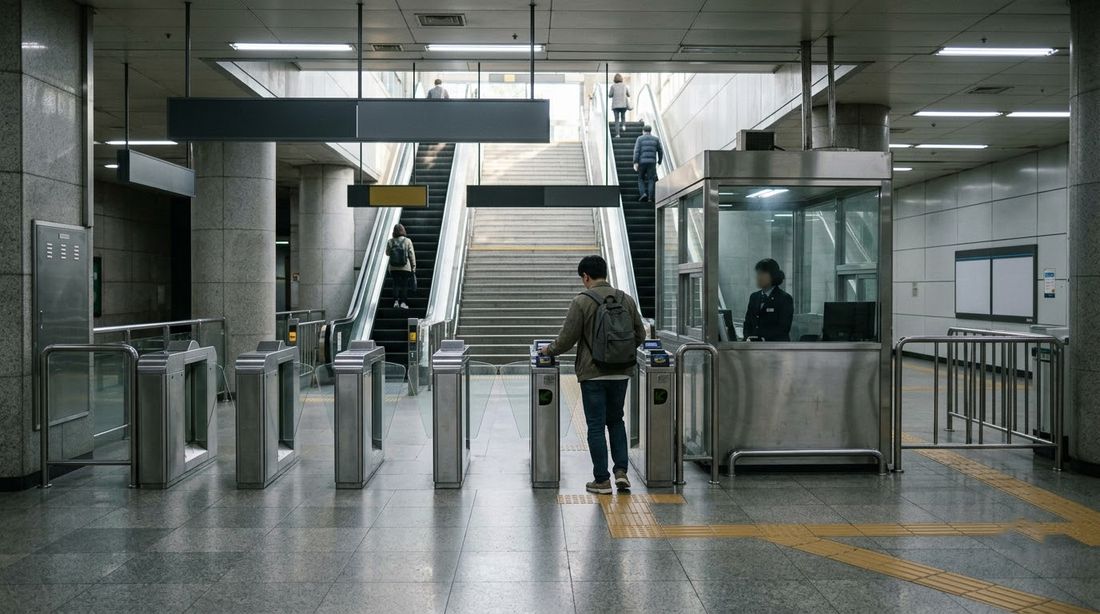
Since Oct. 1, 2026, the short-term pass covers subway stations inside Seoul, getting off at Incheon Airport Terminal 1 or 2, and buses licensed by the city of Seoul, including night and village buses. It does not cover the Shinbundang Line, GTX, airport buses, or subway stations outside Seoul. Board inside Seoul and get off outside it, and staff at the exit station will charge the full fare.
Two timing rules catch visitors. The pass starts on the day you charge it, so it cannot be loaded in advance. And it runs from the first train at 4 a.m. to the last train on its final day.
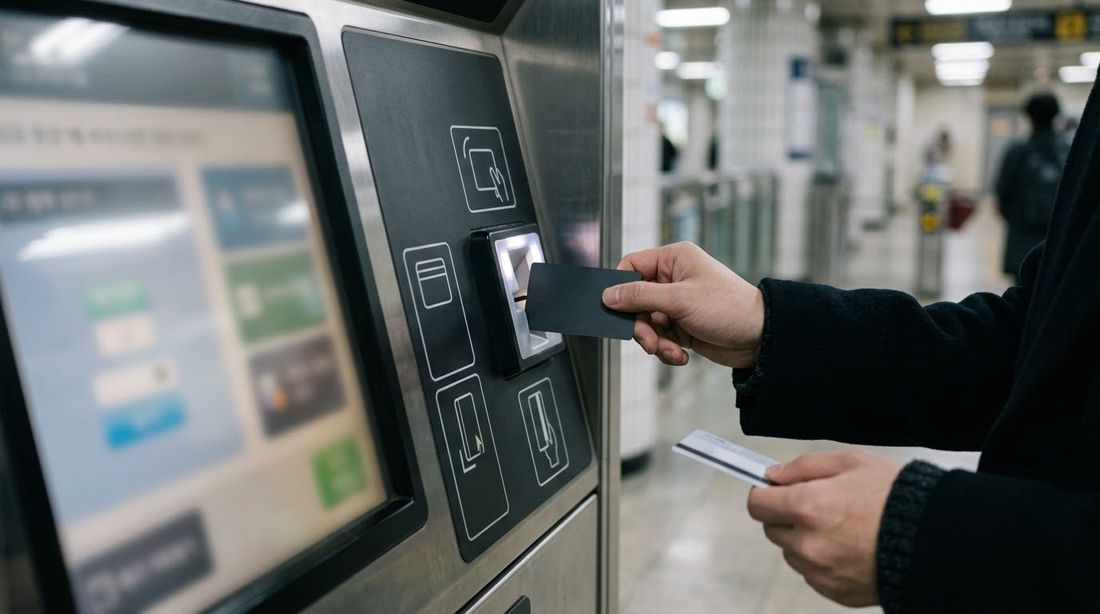
Can I buy a Korea transportation card for tourist use with a foreign credit card?
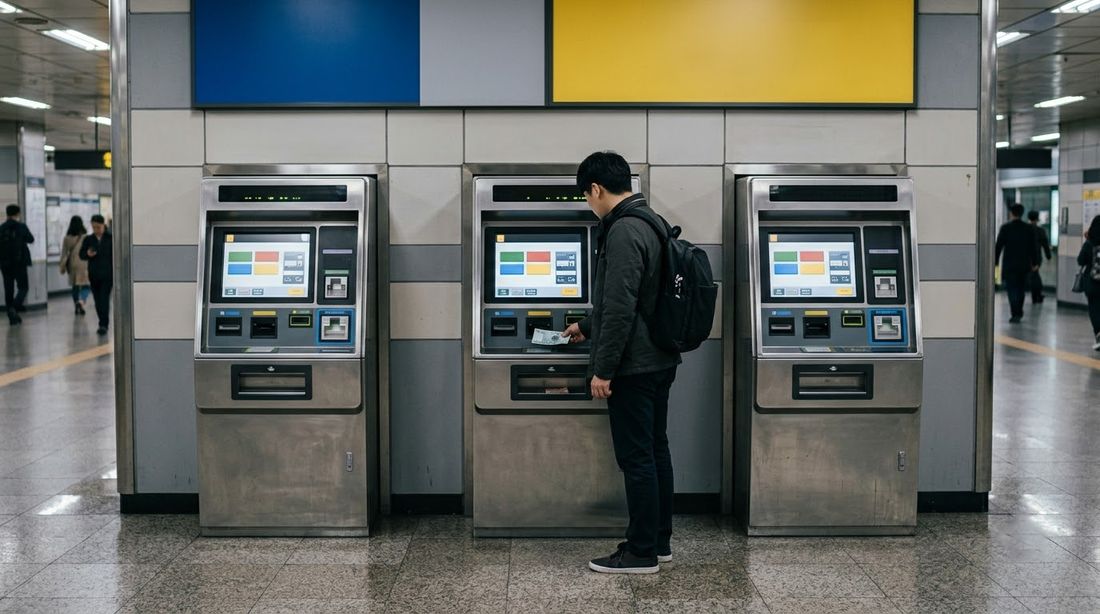
Yes, at the newer ticket machines in Seoul Metro stations on Lines 1 to 8, which accept international Visa and Mastercard credit and debit cards for buying and charging a Climate Card. On a phone, the mobile Climate Card works on Android (version 12 or later); iPhone users need the physical card.
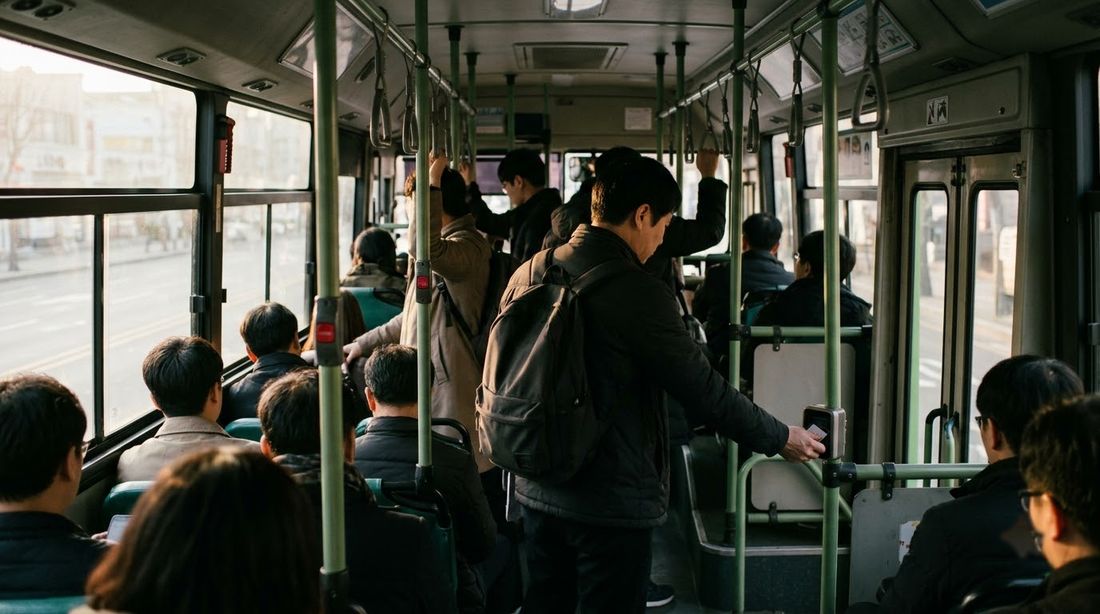
The honest part: you still cannot just tap your bank card
In New York, a visitor can tap a contactless credit card or phone at the OMNY reader, with no sign-up and no transit card to buy. Seoul is not there yet. The city plans to move to the global contactless standard in stages through 2030, with subway readers on Lines 1 to 8 due for replacement in 2027 under that plan.
Until then, every visitor needs a card, a top-up and a refund. T-money refunds leftover balance minus a small fee, but not the price of the card. A physical Climate Card must be registered on the Tmoney Card & Pay website, or it cannot be refunded at all. On buses, you also have to tap again when you get off; forget, and you lose the transfer discount.
Why one card covers so much
The reason a single card and a cheap unlimited pass work at all is the shape of the network. Subways and buses run by different operators share one fare system, with a base fare for the first 10 km and transfers within 30 minutes counted as one trip. That kind of integration is easiest to justify where routes overlap thickly and many trips use more than one line or bus, which is what a dense city produces. By the city's count, 16.36 million foreign tourists visited Seoul in 2024 and rode that same system.
FAQ
Is the Climate Card or T-money better?
T-money is better if you leave Seoul or ride a few times a day. The Climate Card pass is better if you stay inside Seoul and take at least the break-even number of trips shown above.
Can I use the Climate Card from Incheon Airport?
You can ride it to Incheon Airport and get off at Terminal 1 or 2, but you cannot board with it at those airport stations, and airport buses are not covered.
Where do I get a transportation card in Korea?
T-money cards are sold at convenience stores such as GS25, CU, 7-Eleven and Emart24 and at subway ticket machines. The physical Climate Card is sold at the newer ticket machines in Seoul Metro Line 1 to 8 stations and at convenience stores near Line 9 and some light-rail stations.
Sources
- Seoul Metropolitan Government, Climate Card short-term pass (Korean, updated Oct. 1, 2026)
- Seoul Metropolitan Government, Climate Card (English)
- Seoul Metropolitan Government, fares and transfer rules (Korean)
- Seoul Metropolitan Government, open-loop payment plan for foreign visitors (Korean)
- T-money, Tmoney Travel Card for foreign tourists
- T-money, transit card guide for visitors
- MTA, tap and ride with OMNY
- Spectrum News NY1, MTA fares, OMNY and the $35 weekly cap
This is part 54 of a series on why daily life in Korea feels so frictionless. Part 53 compared the cost of living in Seoul and New York, line by line. Earlier parts are here.
Next in this series: whether healthcare in Korea is actually free, and what a visit really costs.


Comments
Post a Comment