Seoul Metro Platform Screen Doors: Why All 345 Stations Have Them
You hear the train before you see it, and without quite deciding to, you step back from the yellow edge. Plenty of New York riders now wait with their backs near the wall or a pillar. The habit is not paranoia. It is a reasonable response to a platform that is open on one side, with a live track a few feet below.
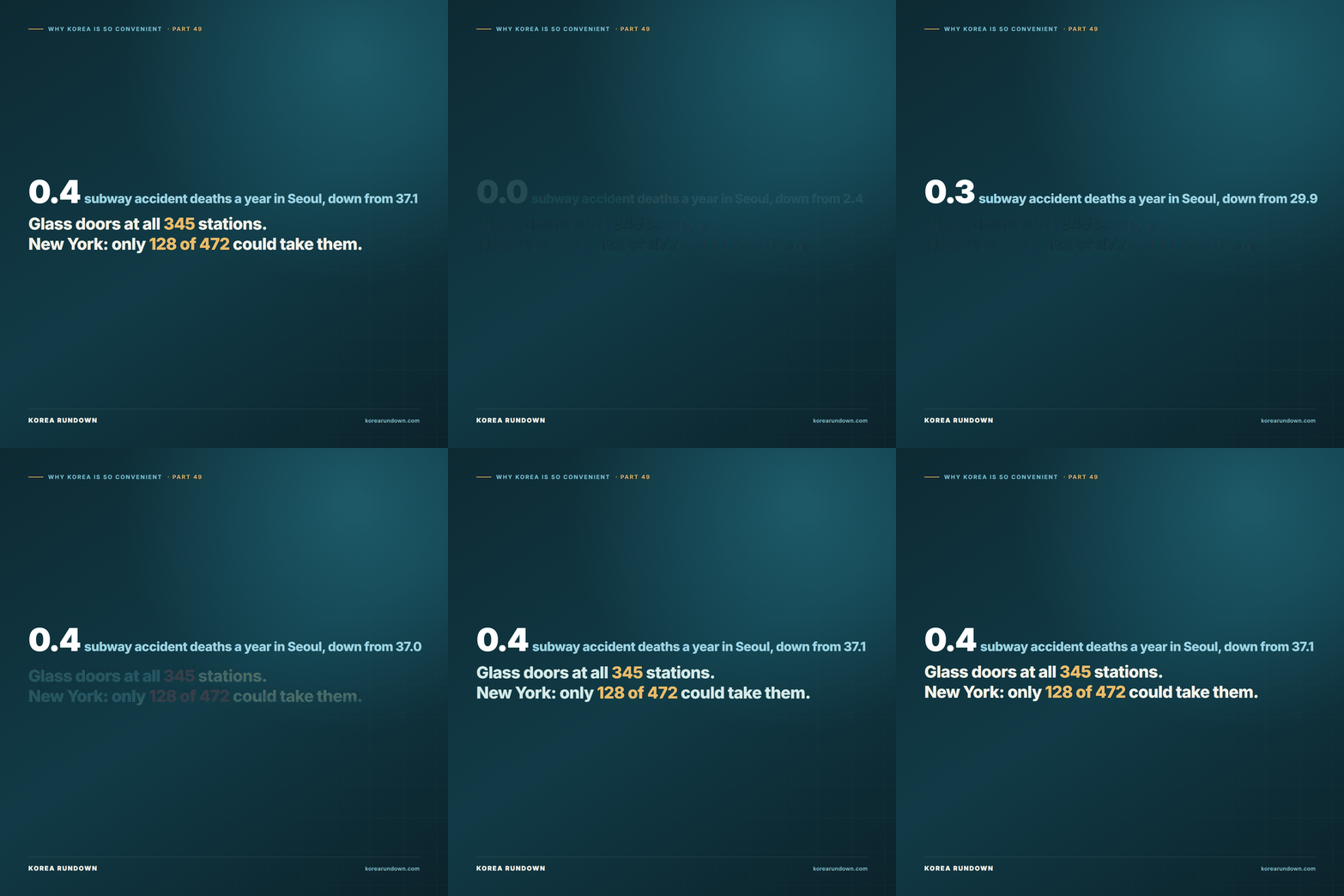
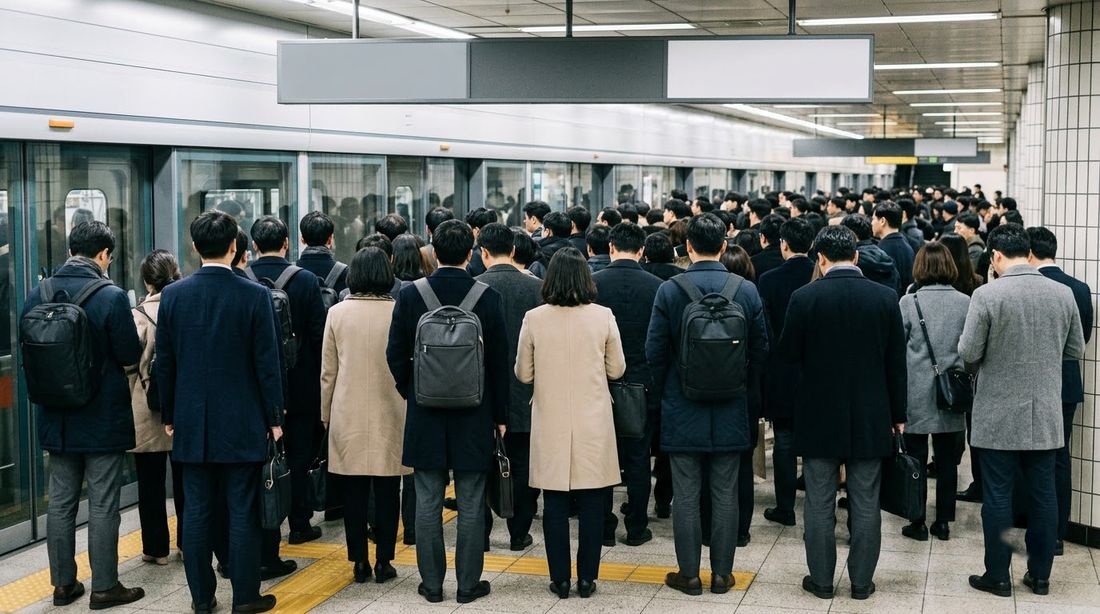
In Seoul, that open edge is gone. Every subway platform has platform screen doors: a wall of glass with sliding panels that line up with the train's doors and open only once the train has stopped. Riders stand against the glass, look at their phones, and lean on it. There is nothing to fall into.
What platform screen doors did to Seoul's subway deaths
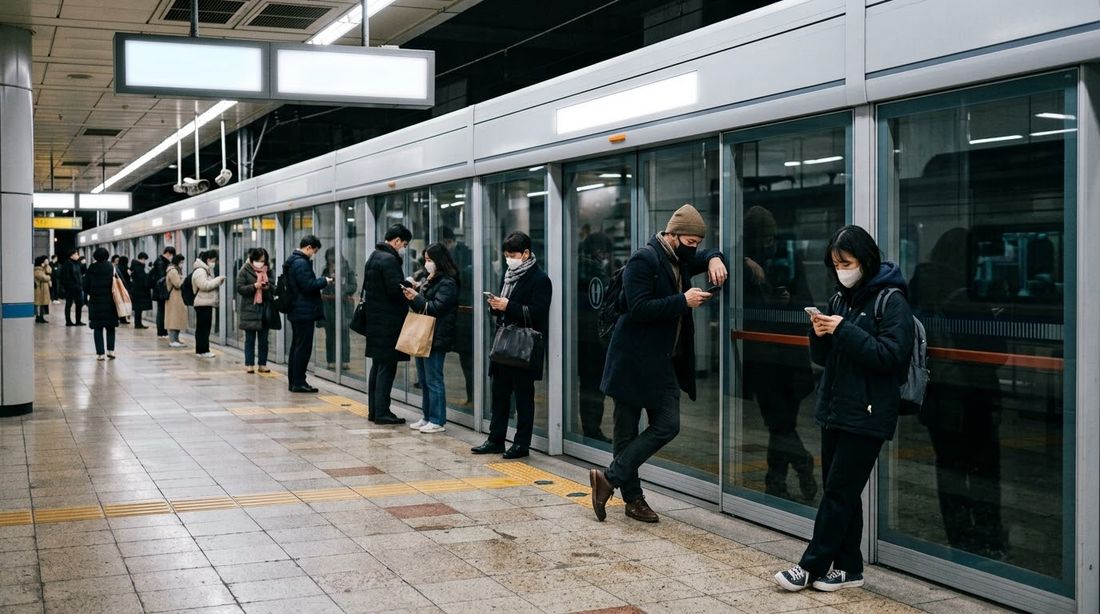
Seoul started fitting doors in the mid-2000s and, according to the city's own policy archive, finished every station on Lines 1 to 8 by 2009. As of 2025, the city counts 345 stations with doors, including Line 9 and the newer light-rail lines.
The result shows up in the casualty count. The same city record says deaths in subway accidents averaged 37.1 a year from 2001 to 2009. From 2010 through 2024, the average was 0.4 a year. Those figures cover every kind of subway accident, not only falls and pushes, but falls and pushes are exactly what the glass removes.
The doors did a few quieter jobs too. Seoul reports that platform fine dust dropped by about 20%, that platform noise fell by about 8%, and that air conditioning became efficient enough to save around 16.7 billion won over a summer, because the cooled air no longer pours into the tunnels.
Why New York has so few platform screen doors
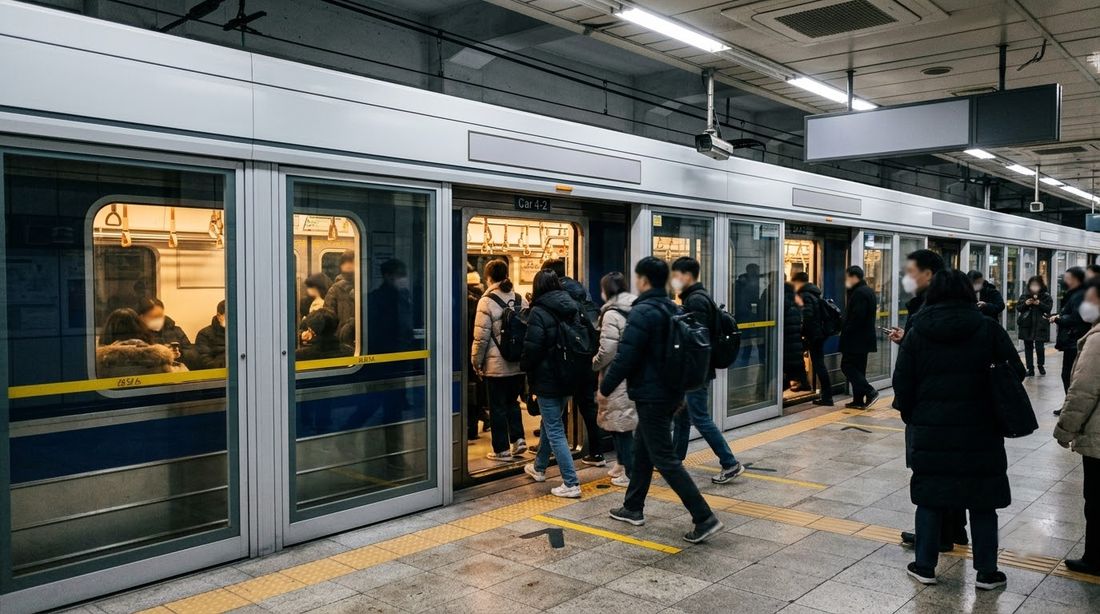
New York has argued about platform doors for years, and the numbers explain why it keeps stalling. A 2019 study commissioned by the MTA, as reported by Gothamist, found that only 128 of the system's 472 stations could physically take platform screen doors, and put the cost of fitting those at around $7 billion.
After a woman was pushed to her death in front of a subway train in January 2022, the MTA announced a $100 million pilot at three stations: Times Square on the 7, Third Avenue on the L, and Sutphin Boulevard-JFK on the E. The MTA chairman told NY1 that the engineering could not work at "a lot of stations." We could not confirm from a primary source whether all three pilots are in service as of this writing, so we have left their current status out.
A common assumption: Koreans are simply more careful
It is tempting to credit the safety to the riders, as if Seoul commuters are calmer or more orderly. The death figures argue against that. The same population, riding the same lines, was losing more than thirty people a year before the doors went in. People did not change in 2009. The platform did.
The glass also does something no amount of courtesy can: it removes the need to trust the stranger standing behind you.
The honest part: the doors had a cost, and some of it was human
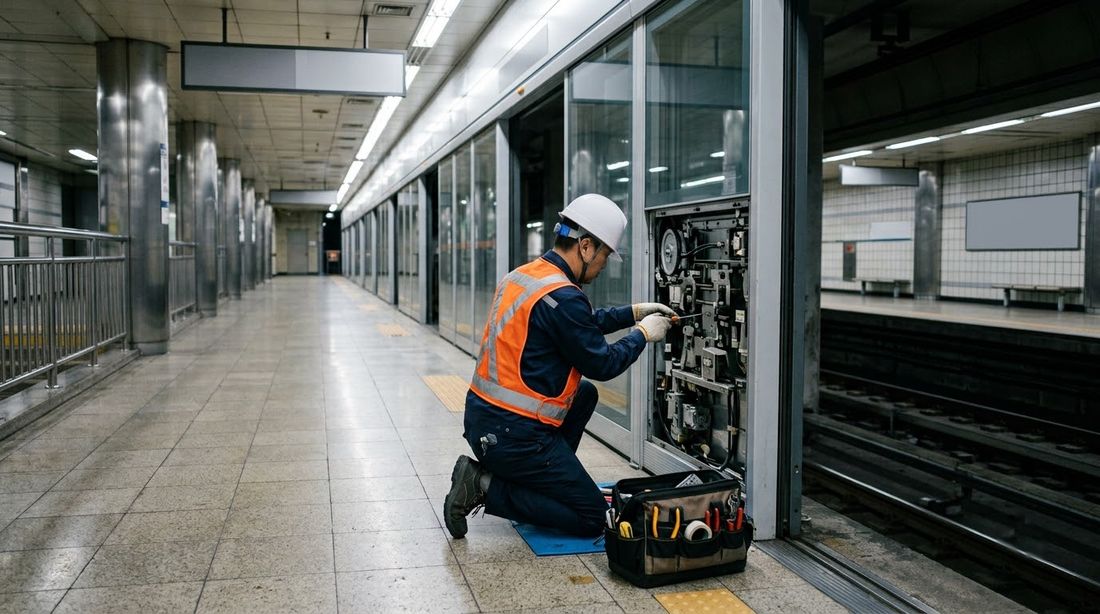
Seoul's doors were not a clean success story. They were installed fast, maintenance was handed to outside contractors, and the sensors needed constant attention. In 2016, according to Seoul's own news service, passengers were trapped and killed between the doors and moving trains at Seoul Station and Gimpo Airport, and in May that year a 19-year-old contract repair worker was struck and killed by a train at Guui Station while fixing a door alone. That death became a national scandal about outsourcing dangerous work, and it led to changes in how the doors are maintained.
The average since 2010 is also not zero. It is 0.4 a year, which means some deaths still happened. Doors break down, they need staff, and they are expensive to run.
Why platform screen doors are a density decision
A glass wall at every station only pays off if a lot of people use every station. Seoul's network carries huge crowds, and as earlier parts of this series have shown, it serves a population packed into apartment complexes close to the lines. When millions of trips a day funnel through the same platforms, the cost of the doors is spread across an enormous number of riders, and the energy savings alone help pay for them.
New York has the ridership, but it built its subway more than a century ago, with platforms and trains that were never designed to line up with a wall of doors. The obstacle is not that New Yorkers care less about safety. It is old concrete, laid down for a city that did not yet know what it would become.
This is part 49 of a series on why daily life in Korea feels so frictionless. Part 48 looked at Korea's monthly transit fare cap and New York's weekly one. Earlier parts are here.
Next in this series: the government office Koreans can walk to, and why it exists on almost every block.


Comments
Post a Comment