Korea Community Service Center: One for Every 14,400 People
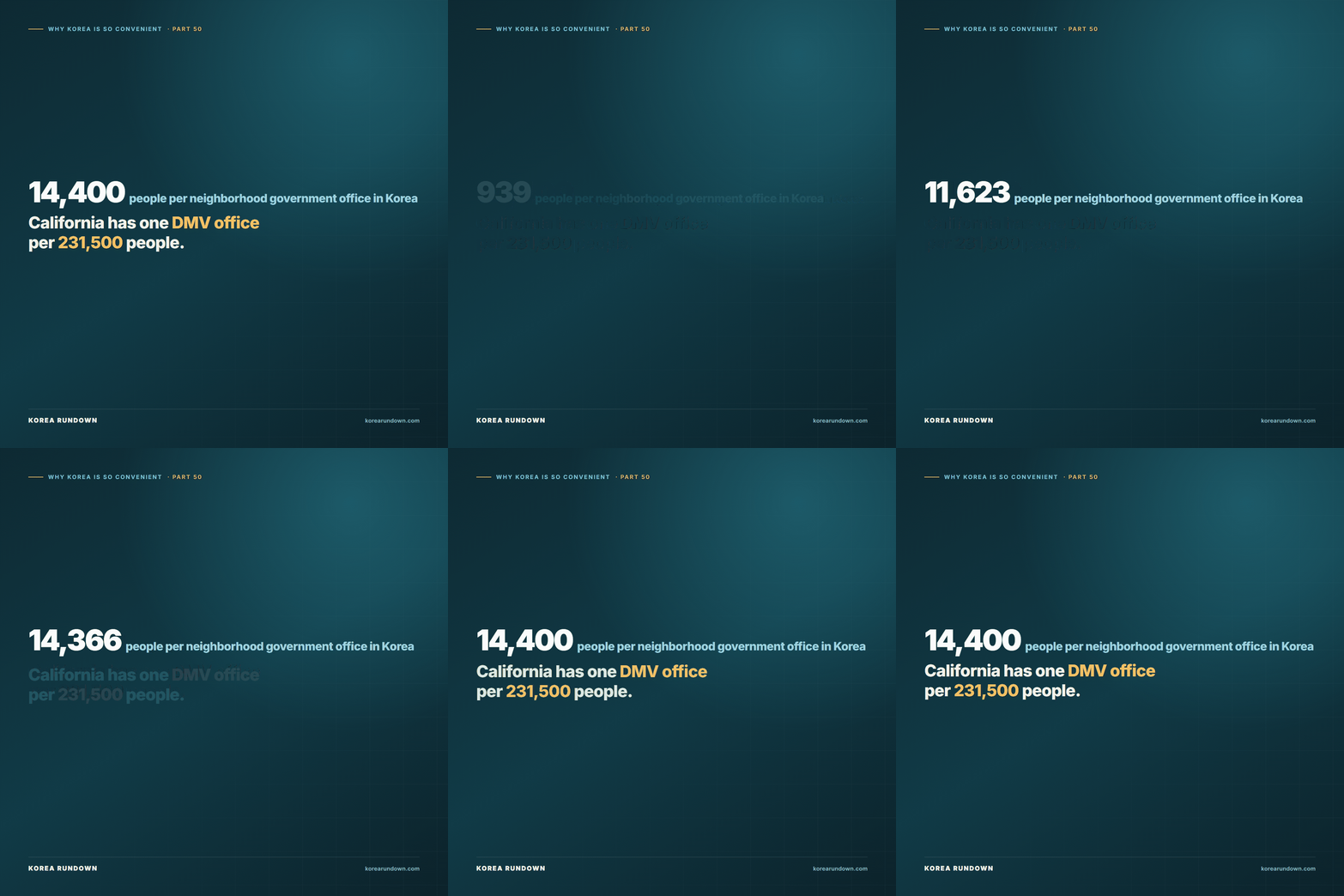
You need a new ID, so you look up the nearest DMV office, and the nearest one is a drive away. You book the first appointment you can get, take a morning off work, and sit in a plastic chair holding a paper number. None of this is anyone's fault. It is simply what it costs to reach a government counter in a big state.
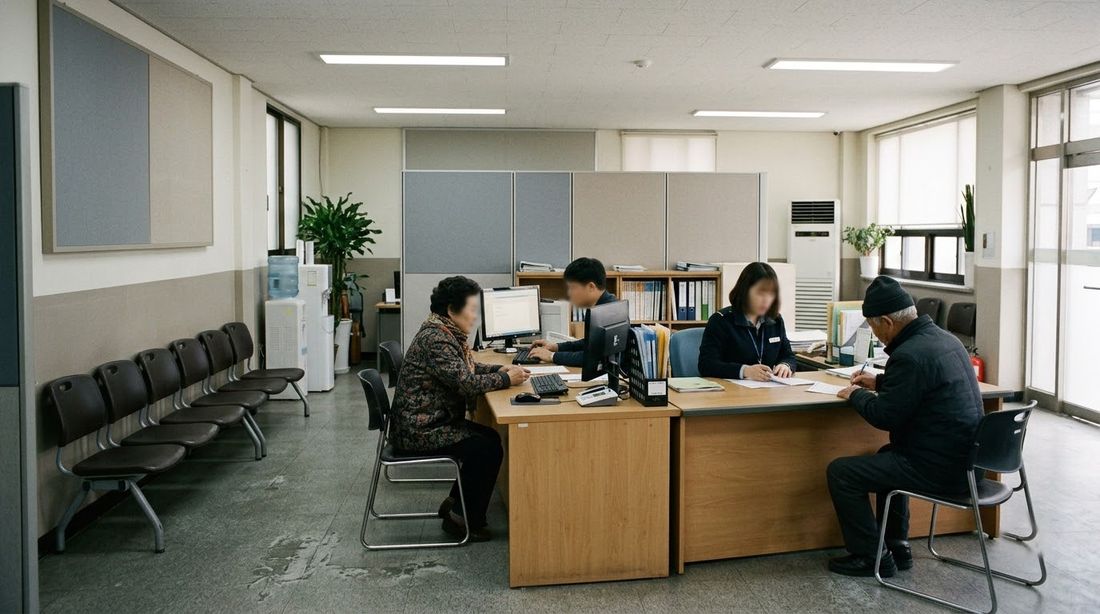
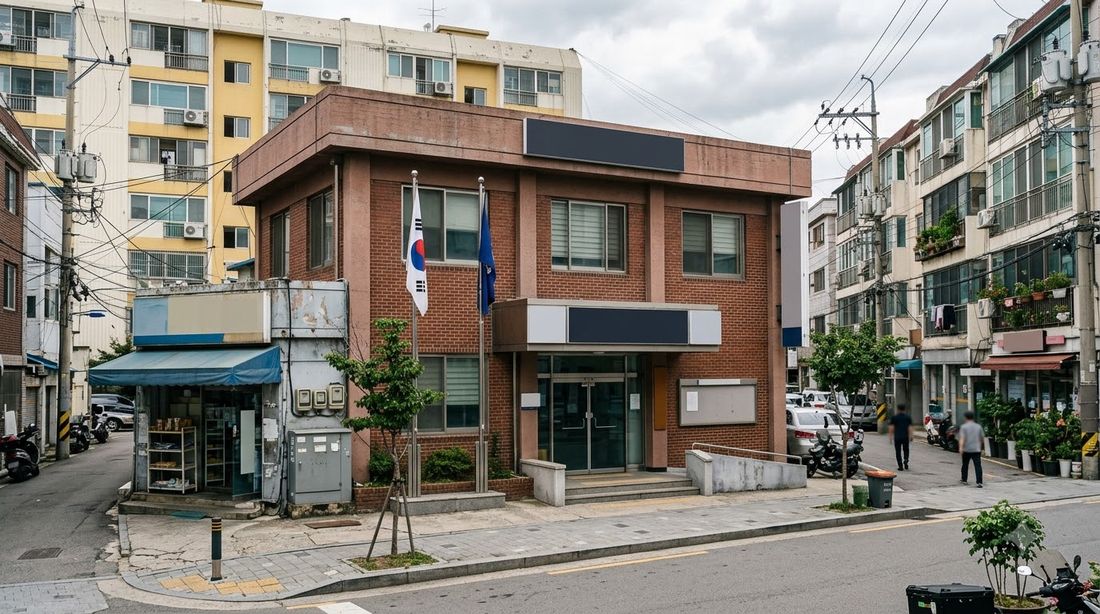
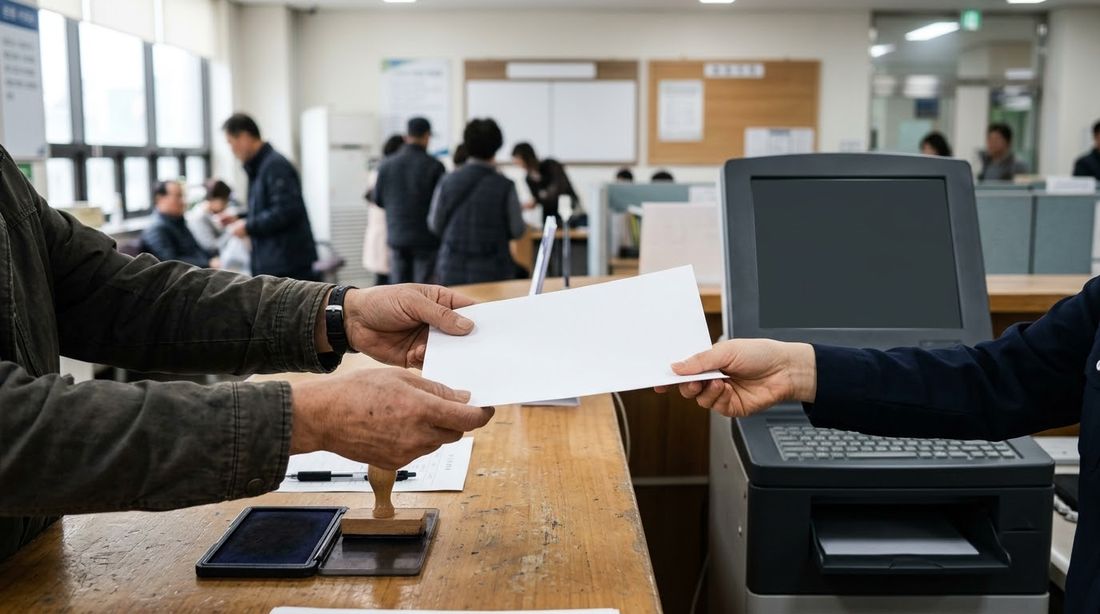
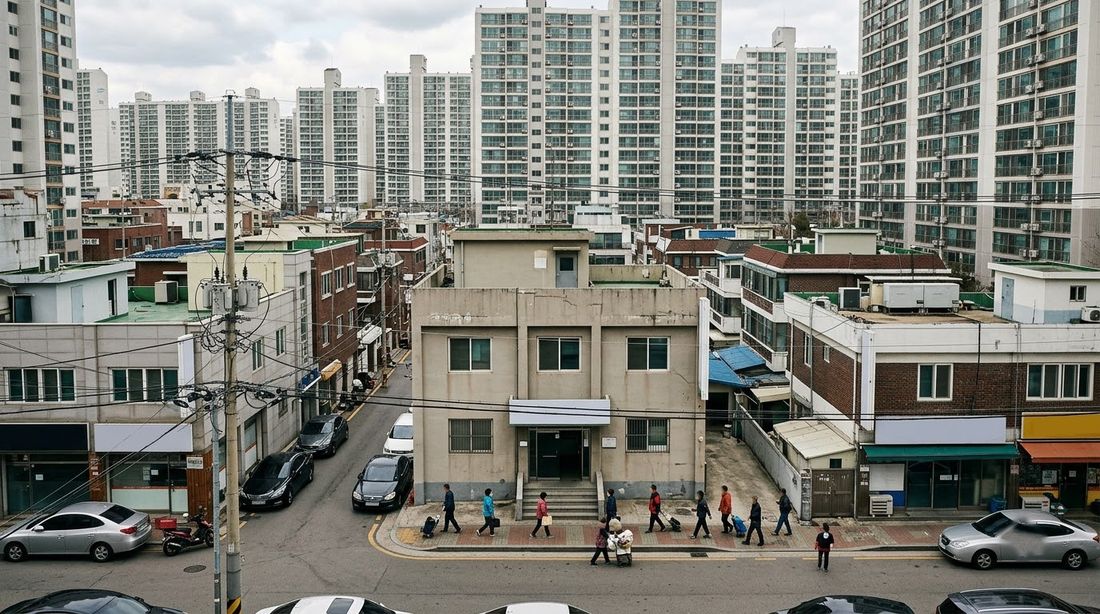
In Korea, the government counter is usually a short walk from home. Every neighborhood has a Korea community service center, a small public office where residents get a national ID card, print official records, report a move and apply for welfare support. In Seoul they sit on ordinary streets, between apartment blocks and corner shops.
How many Korea community service centers there are
Korea's local government is divided into neighborhoods called eup, myeon and dong, and each one has its own office. According to the Ministry of the Interior and Safety's yearbook of administrative districts, at the end of 2024 the country had 3,562 of them: 235 eup, 1,176 myeon and 2,151 dong. Against a registered population of 51,217,221, that is one office for roughly every 14,400 people.
Seoul is denser still. The same yearbook lists 426 dong offices for 9,331,828 residents on 605 square kilometers. Each office serves about 21,900 people, and each neighborhood covers about 1.4 square kilometers, a little over half a square mile. For most residents, that puts the office within walking distance.
Since January 2023, according to the government's policy news service, a first national ID card can be applied for at any of these offices in the country, not just the one where you are registered.
The American counter, by the same measure
There is no single American equivalent, because the work a Korean neighborhood office does is split across federal, state and county agencies. The closest everyday comparison is the office where Americans get an ID: the DMV.
California's Legislative Analyst's Office wrote in 2023 that the state DMV runs 171 field offices. The California Department of Finance estimated the state's population at 39,593,000 on January 1, 2026. That works out to one DMV office for about 231,500 people, roughly sixteen times as many people per counter as Korea's national average.
A common assumption: Korea just has a bigger government
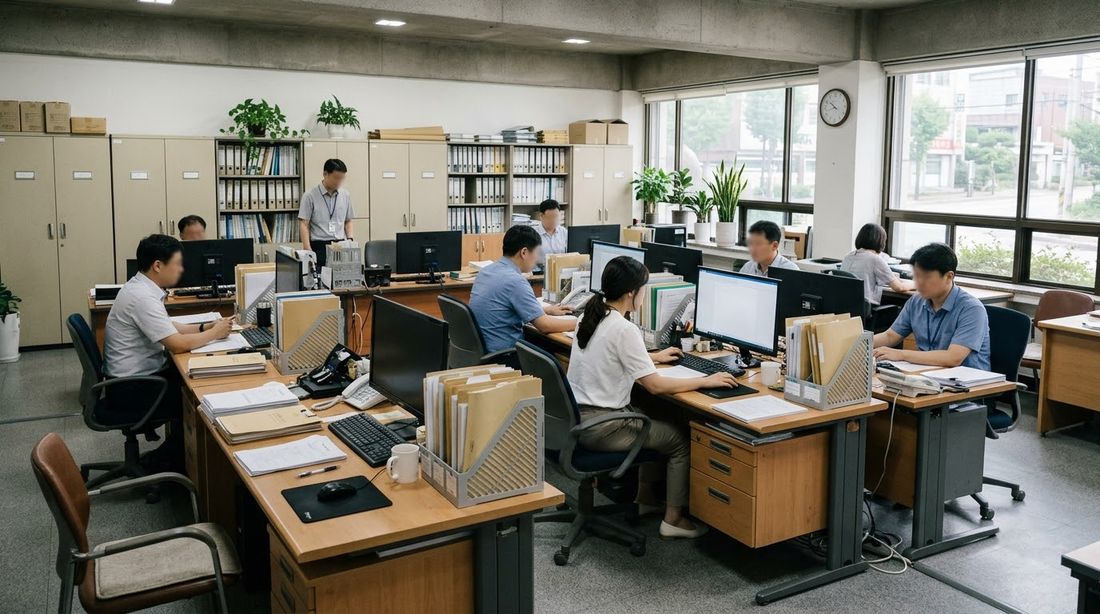
It is easy to assume Korea simply spends more on bureaucracy, hiring armies of clerks to staff all those counters. The office count alone does not show that. Each one is a single neighborhood office, not a large agency branch, and the same yearbook puts the average staff of a rural myeon office at 16 civil servants.
The difference is less about size than about distance. Korea did not build bigger offices. It built smaller ones and put them closer together, which only works when enough people live within walking distance of each one.
The honest part: the walkable office comes with a paperwork system
Korea's neighborhood offices exist partly because Korea asks more of its residents. Everyone is enrolled in a national resident registration system with a lifelong ID number, and every change of address has to be reported to the local office. Many Americans would find that level of state record-keeping uncomfortable, and Korea has had its own debates over how much the registration number exposes.
The offices also cost money to staff in every neighborhood, including in rural townships, where the same yearbook puts the average myeon office at about 3,700 residents. And a growing share of what they do has moved online. As Part 13 of this series described, Koreans can now pull most routine documents from a phone, which raises a fair question about how many counters the country will need in the future.
Why a Korea community service center is a density story
A government office on every few blocks is only practical where the blocks are full. Seoul packs more than 9 million people into 605 square kilometers, so even an office serving one small neighborhood has tens of thousands of potential visitors. Spread the same population across a state the size of California and each counter has to serve a far larger area, which means driving, appointments and waiting rooms.
None of that reflects a difference in how much either country values its citizens' time. It reflects how far apart those citizens live.
This is part 50 of a series on why daily life in Korea feels so frictionless. Part 49 looked at why every Seoul subway platform has a glass wall. Earlier parts are here.
Next in this series: another everyday Korean convenience that turns out to be less about national character than about how many people live on the same block.


Comments
Post a Comment