Korea Made Old Apartment Complexes Install EV Chargers. In California, the Condo Owner Pays.
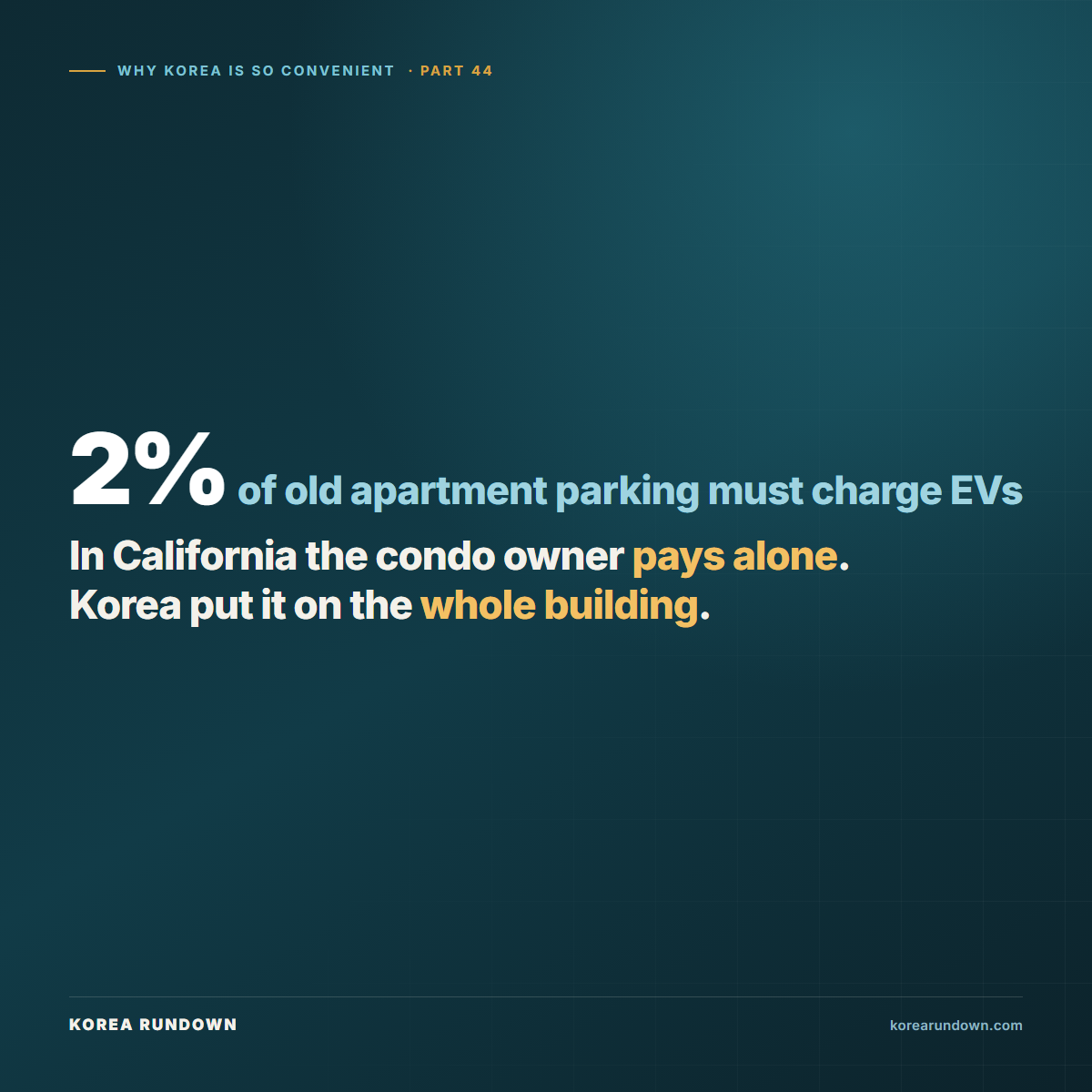
You live in a condo and you are thinking about an electric car. The garage has no charger. You ask the board, and the board asks who is going to pay for the wiring, what happens to the electric bill, and whether the insurance covers it. Months later you have an answer: you may install one, if you hire the contractor, carry the insurance, and pay for the equipment and the electricity yourself.
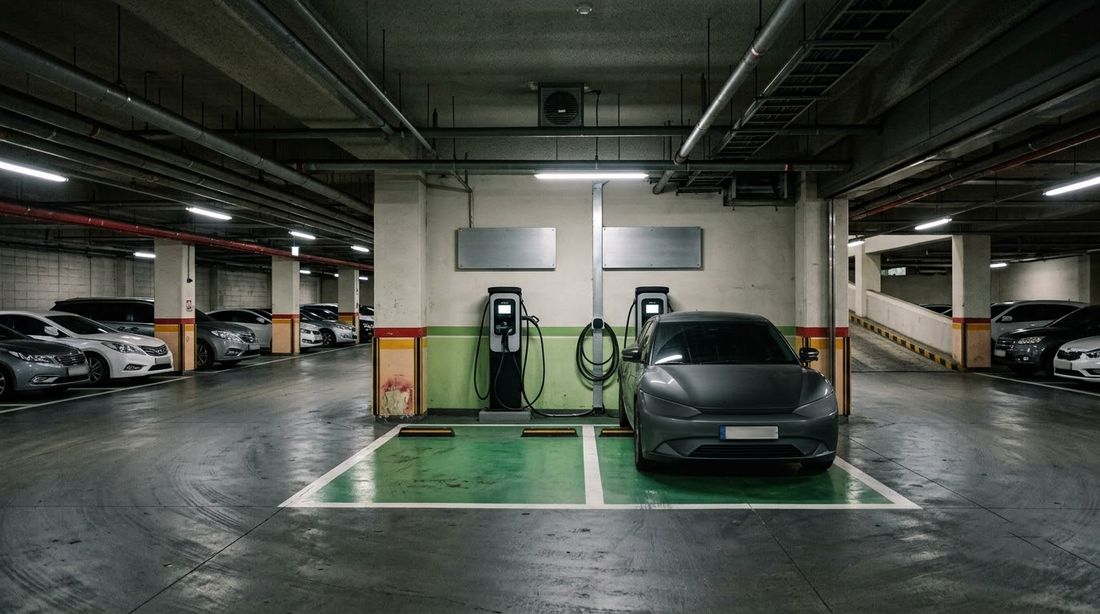
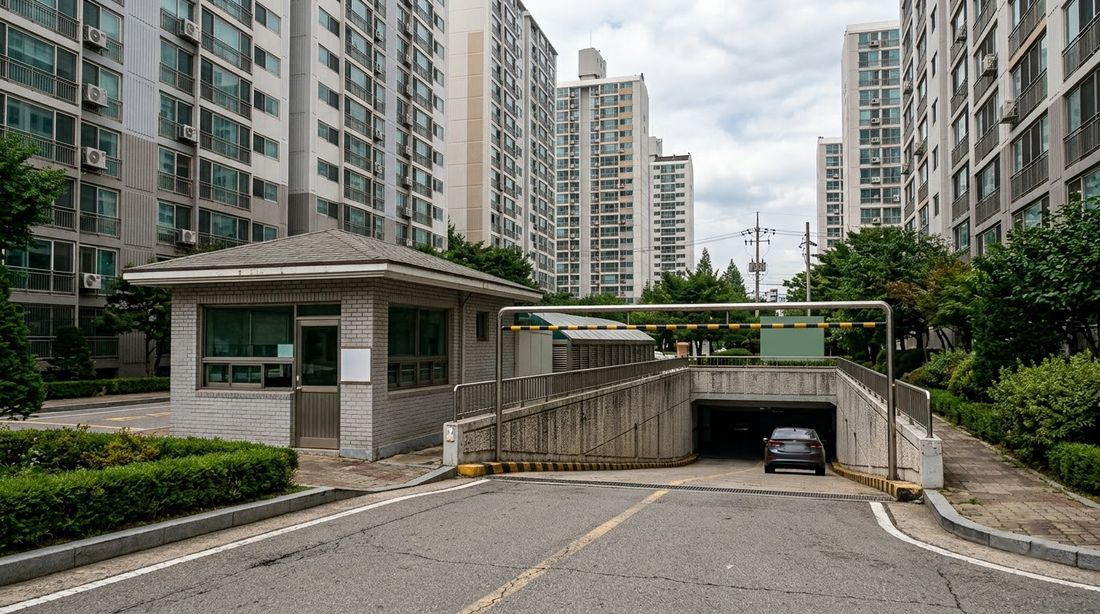
In a Korean apartment complex built long before anyone there owned an electric car, the chargers are often already in the underground garage, in marked spaces that ordinary cars are not supposed to block. Nobody on the residents' committee volunteered for that. The law told the complex to do it.
What Korea's apartment EV charger rule actually says
Korea's eco-friendly vehicle law was tightened on January 28, 2022. Before that date, the charger requirement applied only to apartment complexes of 500 or more households, and only to new ones. The amended enforcement decree lowered the threshold to 100 households and, for the first time, reached back to buildings that already existed.
New complexes must put chargers in at least 5% of their total parking spaces, up from 0.5%. Existing complexes must reach at least 2%. Those are floors, not ceilings: each province or metropolitan city sets its own figure by ordinance, at or above the national minimum. Existing apartments were given until January 27, 2025 to comply, with extensions of up to one more year where the electrical supply had to be upgraded first.
Given that about 54.5% of Korean households live in apartments, a rule aimed at complexes of 100 units or more reaches a very large share of the country in one step.
The California comparison is not what you expect
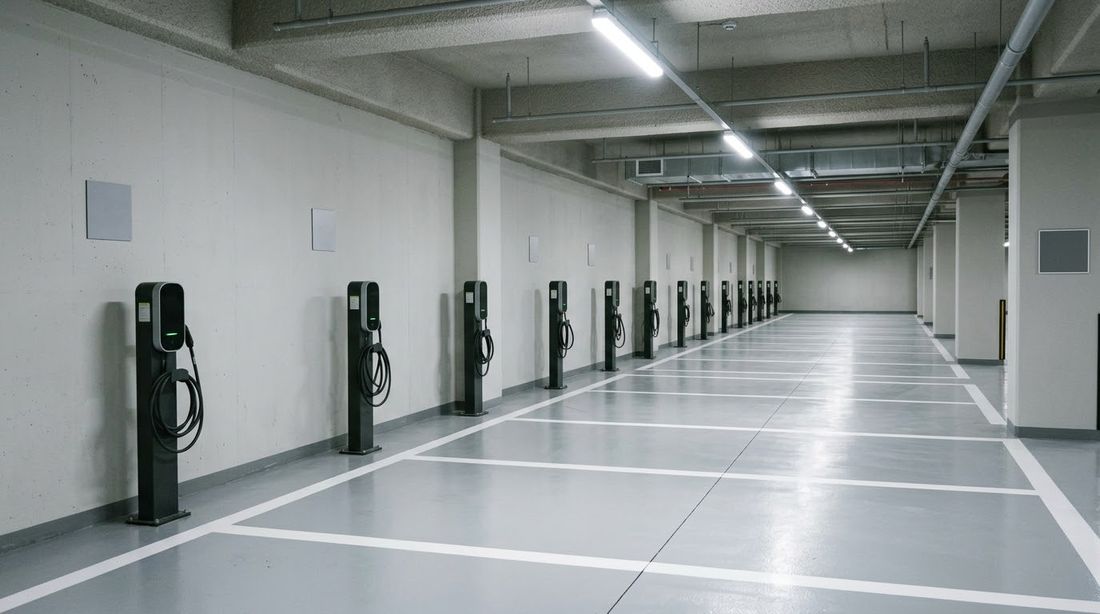
It would be easy to present this as Korea regulating and America not bothering. That is wrong, at least for new buildings. California's green building code is stricter than Korea's. Under the 2022 edition of the CALGreen standards, a new multifamily building had to equip 40% of its parking spaces with low-power Level 2 charging outlets and 10% with Level 2 chargers. The 2025 edition reorganizes the outlet rule around one outlet per home where homes have assigned parking. Korea's figure for new complexes is 5%.
The gap is in buildings that already stand. For an existing condo, California's rule works the other way around. Under Civil Code section 4745, an association cannot effectively prohibit or unreasonably restrict an owner from installing a charger; such restrictions are void. But the owner has to get the association's approval first, and the owner pays for the installation and for the electricity.
The honest part: the garage fire that changed the mood
Korea's approach has a cost that became impossible to ignore on August 1, 2024. An electric car parked in the underground garage of an apartment complex in Cheongna, Incheon, caught fire. According to the local district's later account, about 900 vehicles were burned or damaged by smoke, and around 600 households dealt with smoke and dust or lost power and water.
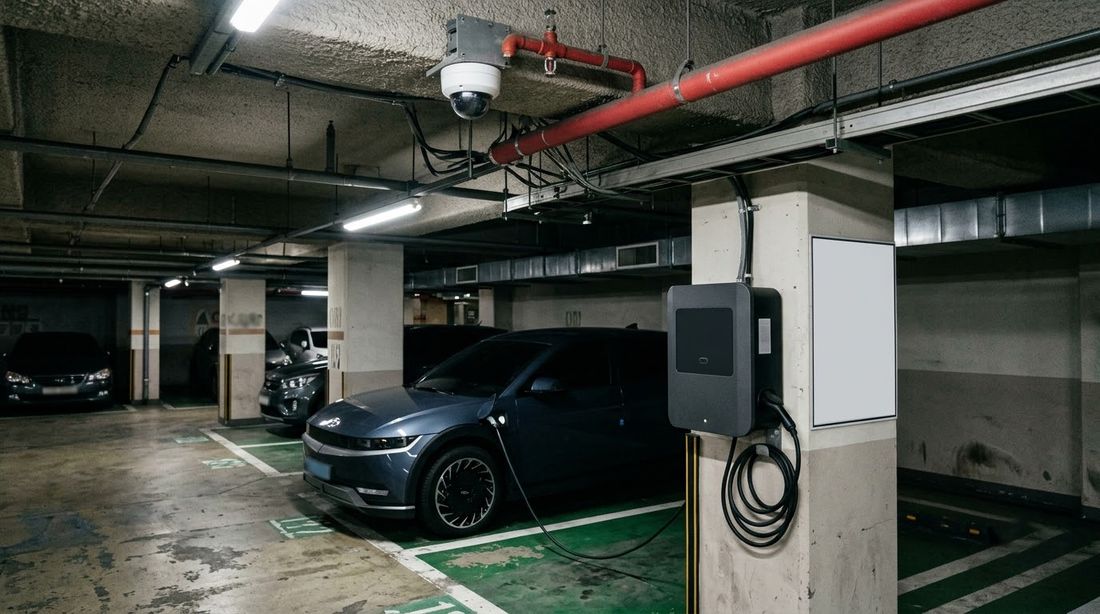
It happened in exactly the kind of shared underground garage the charger rule was designed to fill, and it left many residents uneasy about electric cars parked beneath their homes. The government's 2025 charger subsidy guidelines now pay for surveillance cameras, including thermal cameras, over charging spaces, and favor chargers with smart controls meant to reduce fire risk. A mandate that puts chargers where hundreds of families sleep also puts the risk there.
Why Korea apartment EV charging rules reach a whole complex
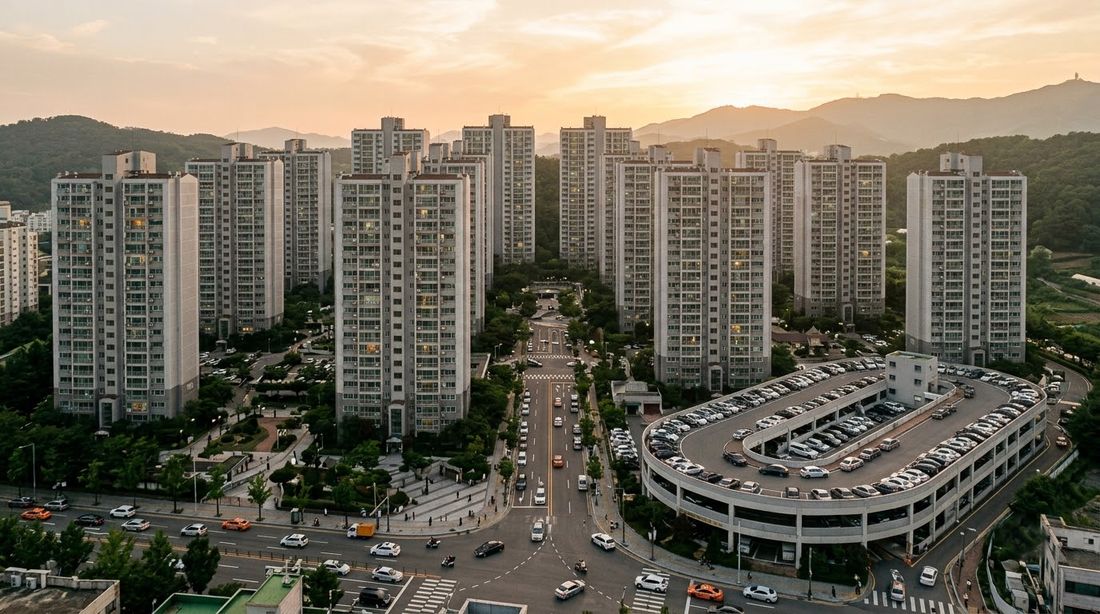
The reason Korea could order old buildings to comply is less about political will than about shape. A typical Korean complex has hundreds of households, one shared underground garage, one electrical room, and one management office that already handles repairs for everyone. Put a 2% requirement on that, and one decision by one management body covers a few hundred families.
American condo buildings exist, and California's statute is written for them. But a large share of American housing is detached homes with their own driveways, where an owner who wants a charger simply calls an electrician and nobody else has to agree. A law aimed at shared garages covers a smaller slice of daily life there.
Density, not devotion
None of this means Koreans are more enthusiastic about electric cars or that their regulators are braver. California asks more of new buildings than Korea does. The difference in existing buildings comes down to how people are housed: when most families share one garage and one management office, one rule can reach all of them at once, and when families park in their own driveways, there is no shared garage for a rule to reach.
In Korea the charger showed up in the old garage because the garage belonged to everybody. That is a density story, and like most density stories, it came with a fire risk nobody had fully priced.
This is part 44 of a series on why daily life in Korea feels so frictionless. Part 43 looked at why Seoul's riverside parks feel generous even though the city has no more park per person than New York. Earlier parts are here.
Next in this series: another everyday Korean convenience that looks like a policy choice and turns out to be a question of how many people share the same building.


Comments
Post a Comment