Korea Has Fewer Post Offices per Person Than America. It Has Ten Times More per Square Mile.
You need to mail one package. The nearest post office is a drive away, it closes at five on weekdays, and the parking lot is full because everyone else also needs to mail one package before it closes. Inside, a line runs past the rack of padded envelopes. You check the time on your phone and do the math on whether you will make it back before your lunch hour ends.
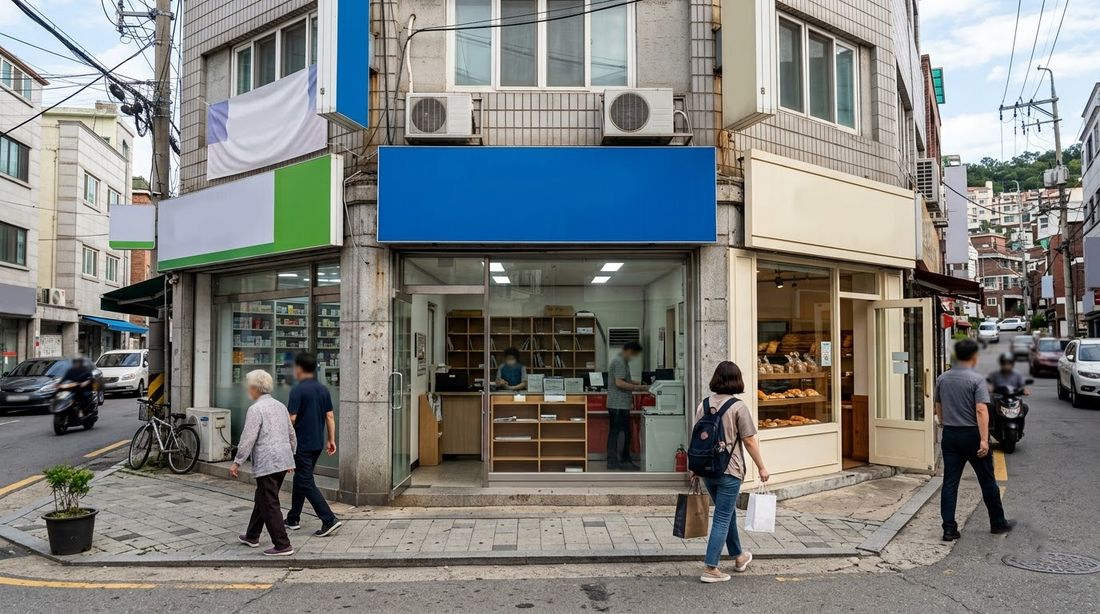
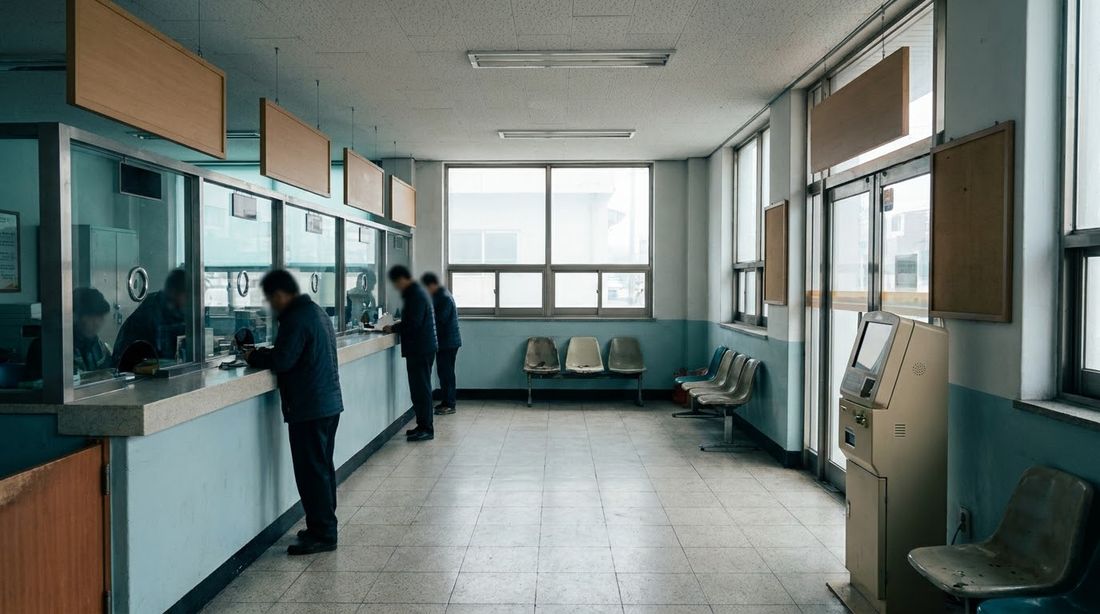
In most Korean neighborhoods the post office is something you pass on the way to somewhere else. It sits on the ground floor between a pharmacy and a bakery, a short walk from the subway exit, and it doubles as a bank. You take a number from a machine, sit down, and are usually called before you have finished reading the notices on the wall.
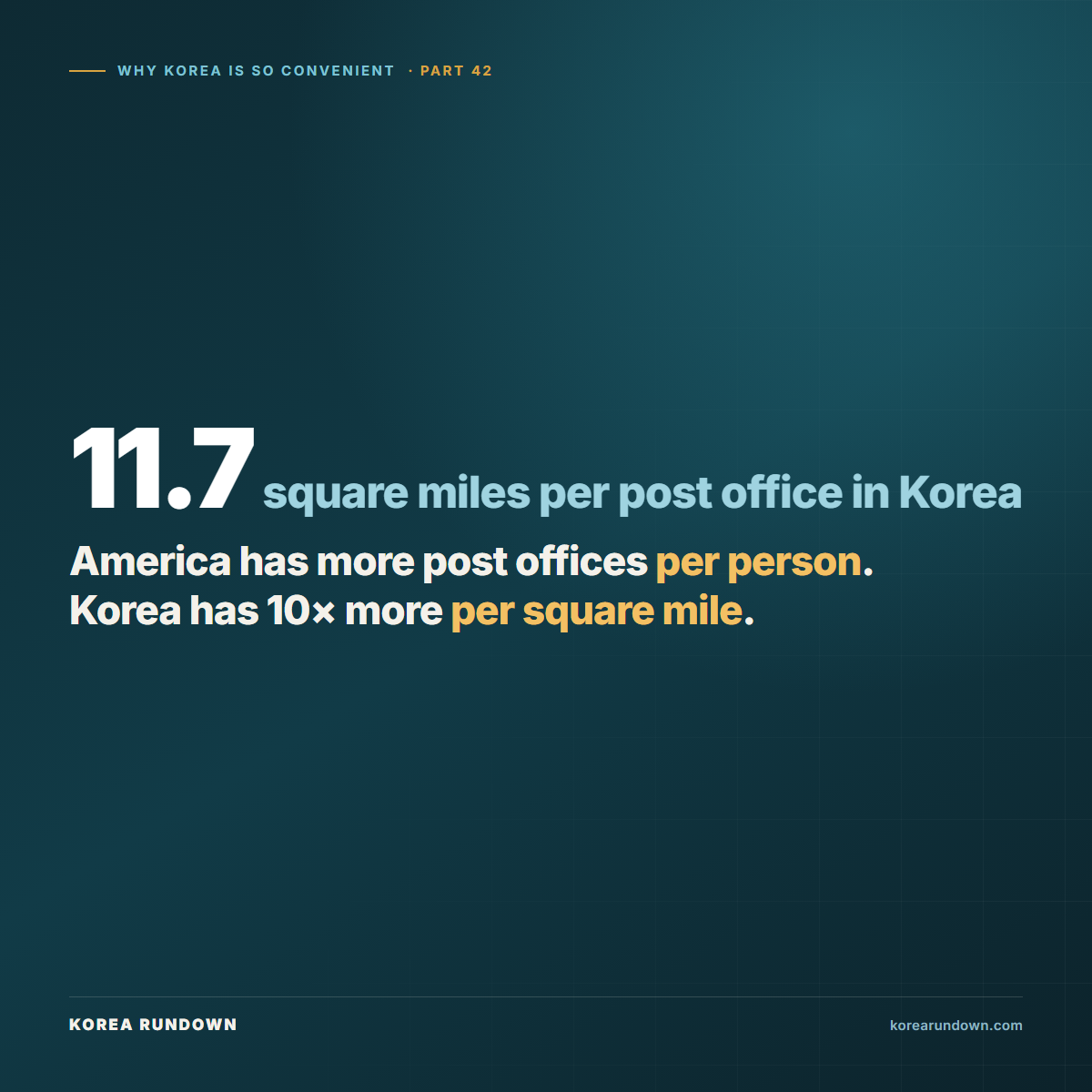
That makes it tempting to assume Korea simply has more post offices. It does not. Per person, it has fewer.
How many post offices Korea actually has
Korea Post's national office list, as updated in the government's open data portal, contains 3,308 post offices. With 51,117,378 registered residents at the end of 2025, that works out to about one post office for every 15,500 people.
The United States Postal Service reports 30,972 retail post offices in fiscal year 2025. Set against a Census Bureau estimate of 341.8 million residents in July 2025, that is one for every 11,000 people. By that measure America is the better-served country, by a wide margin.
So the difference in daily experience cannot come from how many offices exist per person. It comes from how much ground each one has to cover.
The Korea post office count per square mile
Divide by land instead of by people and the picture flips.
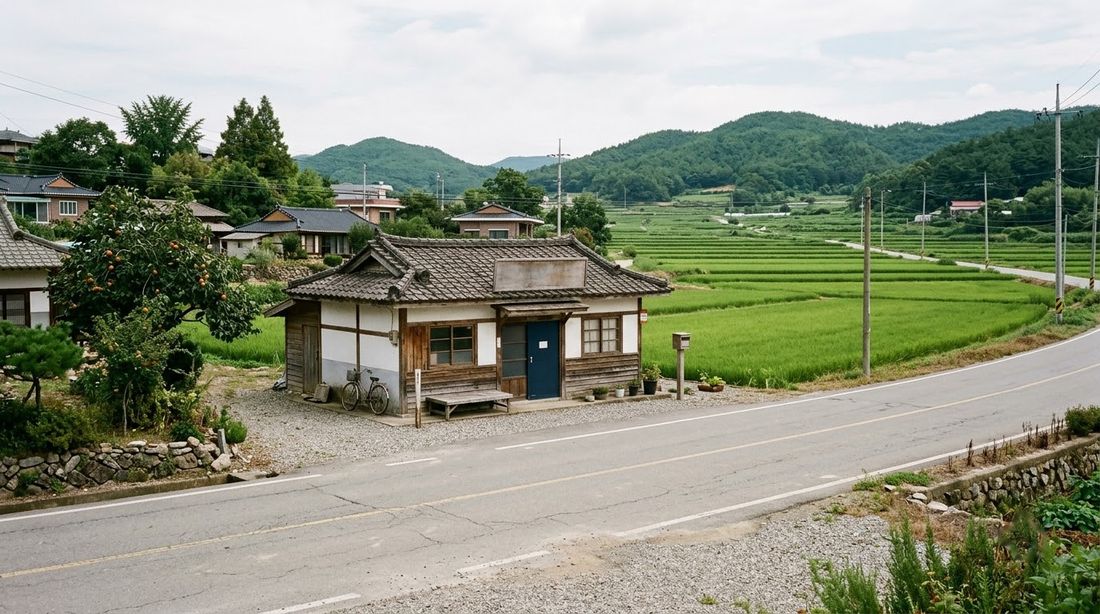
Korea's land area is a little over 100,000 square kilometers — about 38,800 square miles. Spread 3,308 offices over it and each one accounts for roughly 11.7 square miles. The United States has about 3.53 million square miles of land, so each of its offices accounts for roughly 114. That is close to a tenfold gap, and it runs in the opposite direction from the per-person figure.
Averages hide a lot, and the footnote above says so. But the direction is the point. A post office that has to reach people spread across 114 square miles will be sited for drivers, with a parking lot, on a road that connects to other roads. One that only has to reach a dozen square miles can sit on a corner that people walk past.
The honest part: the mail itself loses money
Korea's network is not a triumph of postal economics. Korea Post's mail business ran a deficit of 326.3 billion won in 2025, according to its year-end figures as reported in January 2026. The organization as a whole still came out ahead, because its savings-bank arm earned 685.8 billion won and its insurance arm 545 billion won. In other words, the neighborhood post office stays open partly because it is also a neighborhood bank.
The network is also shrinking. In 2020, a plan to close roughly half of Korea Post's smallest, lowest-grade offices — 677 of 1,352 — drew opposition from rural groups who argued that bank profits should cover the mail deficit instead. So the Korean post office on your corner is not guaranteed. It is a line item that keeps being defended.
Why Korea post office lines stay short
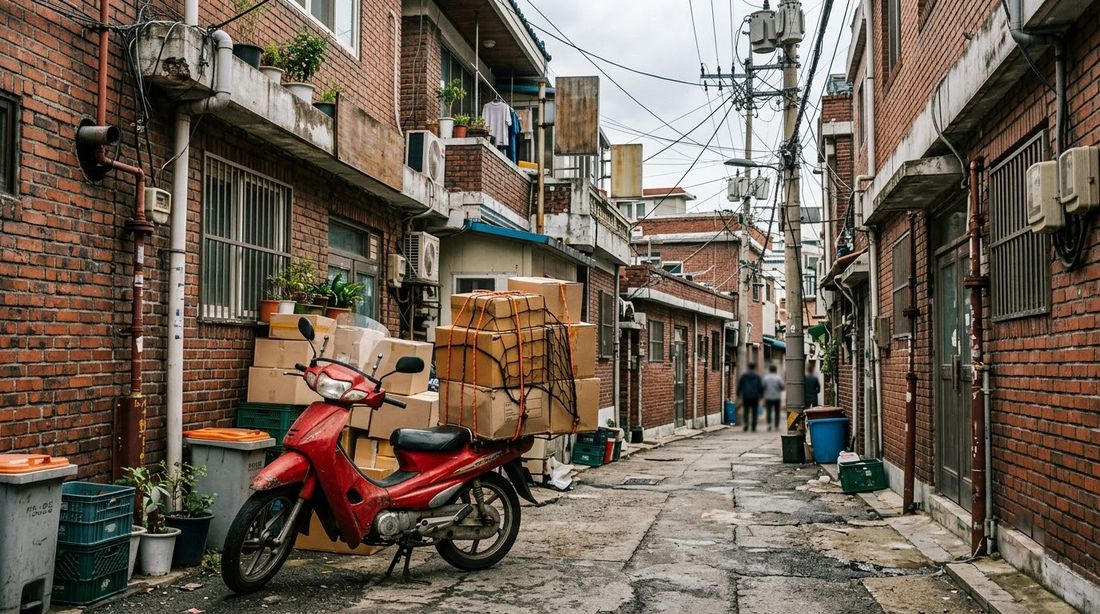
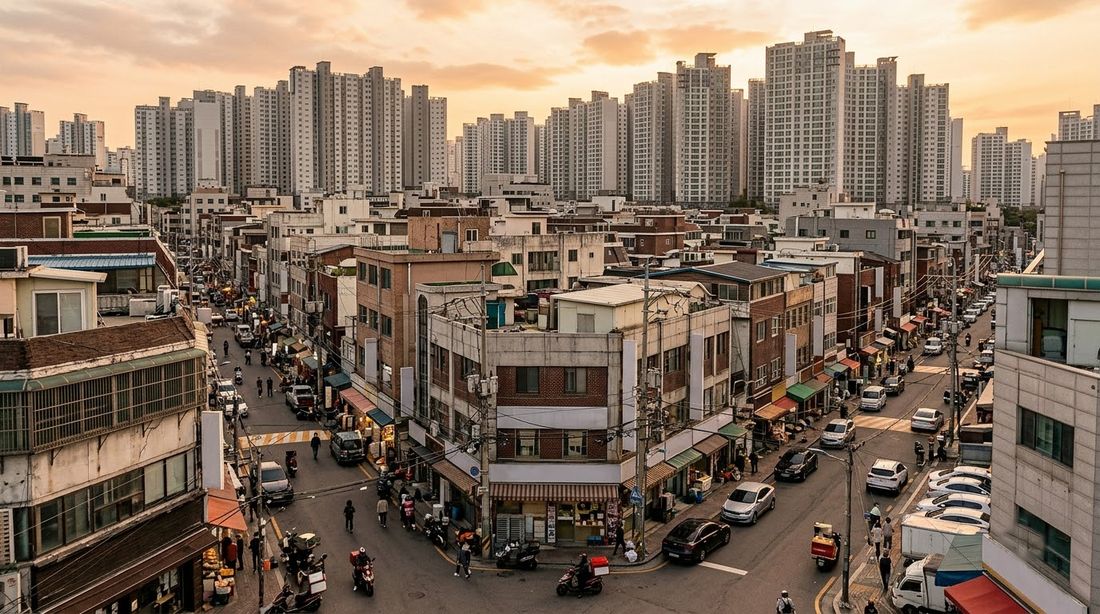
One more factor keeps the lines short, and it has little to do with the post office. Korea Post is only one of several large parcel carriers, and the market leader is a private company, CJ Logistics. Private couriers collect from the door, and many convenience stores accept drop-offs, so a good deal of parcel traffic never reaches a post office counter. (Korea Post's own share of the parcel market is not stated here, because the figures available for it did not agree.) That is part of why a numbered ticket and a short wait are normal.
That, too, is a density story. A courier can afford to stop at every door when the doors are stacked twenty floors high, and a convenience store can afford a parcel counter when thousands of people walk past it every day.
Distance, not devotion
Nobody at the United States Postal Service is less committed to service than their Korean counterparts. They are running more offices per person than Korea does, across ten times as much ground per office. The friction American customers feel is the cost of distance, and no amount of staffing fixes distance.
Korea's advantage is not that it built more. It is that it had less ground to cover.
This is part 42 of a series on why daily life in Korea feels so frictionless. Part 41 looked at why Seoul's bike share charges less than a dollar an hour and still matches New York's ridership. Earlier parts are here.
Next in this series: another everyday Korean convenience that looks like a policy choice and turns out to be a question of how far people have to walk.


Comments
Post a Comment