In Korea, Movers Pack, Move, and Unpack Your Home — All in One Day
You booked the truck three weeks out, because the good Saturdays go first. You texted the group chat and promised pizza. The morning of, you and three friends spend six hours carrying a couch down a stairwell, arguing about whether it fits through the door sideways, and by the time the truck is unloaded everyone is too tired to do anything but stack boxes against a wall. Two weeks later, half of those boxes are still sealed. About 62–66% of American movers do exactly this — rent a truck and handle it themselves — and the average person gets asked to help a friend move about twice a year, something 39% admit they find genuinely annoying.
In Seoul, the movers arrive at eight in the morning. By six that evening, the plates are back in the cabinet, the bed is made, and the television is mounted on the wall of an apartment you did not sleep in the night before. You did not lift a box. You did not ask a single friend.
What actually happens in that one day
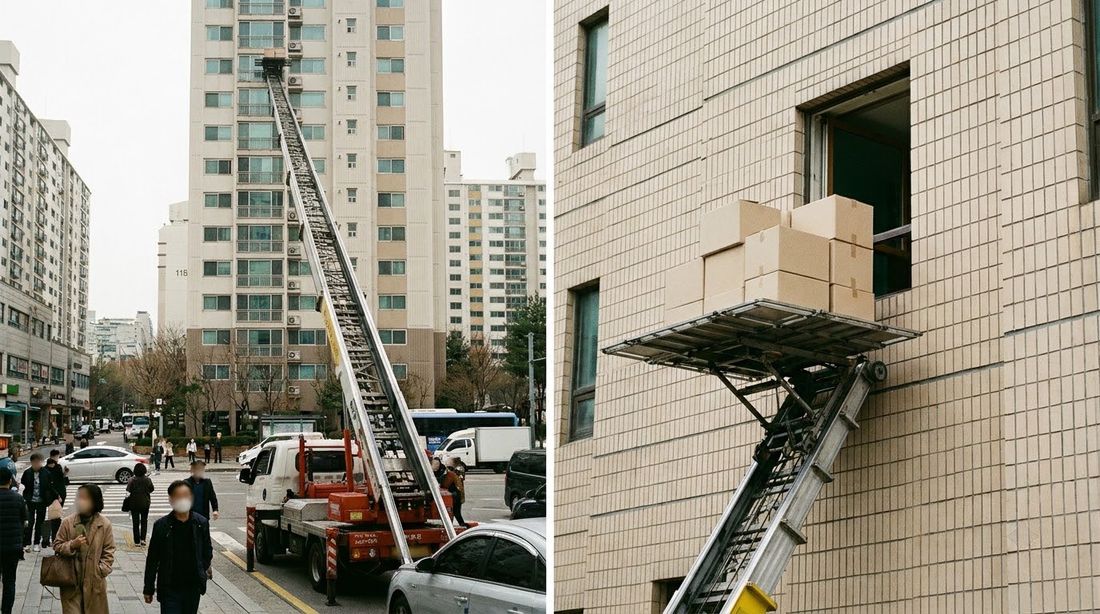
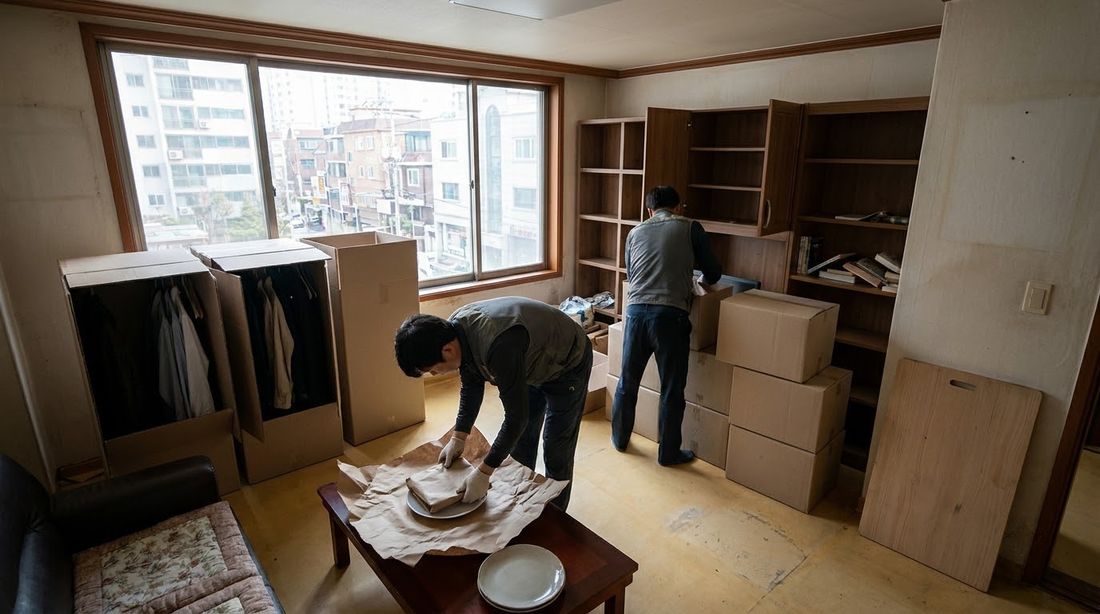
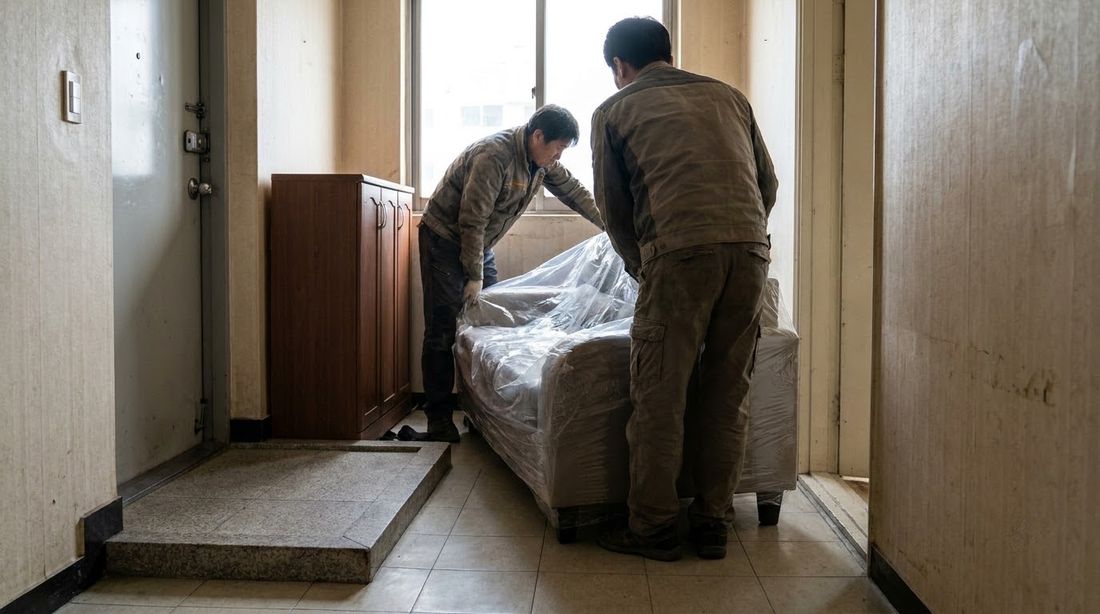
The service is called pojang-isa — literally “packed move.” A crew wraps and boxes everything, including food still in the refrigerator, clothes still on their hangers inside tall wardrobe boxes, and the contents of every drawer exactly as they sat. They load it, drive it across the city, and then do the whole sequence in reverse at the other end: boxes opened, dishes shelved, furniture placed roughly where it was before. The physical move — loading, driving, unloading — typically takes four to six hours. Packing and unpacking happen on either side of that window, all in the same day.
The number that explains the trick
A full pojang-isa for a studio apartment runs roughly ₩350,000 to ₩500,000, or about $260 to $365 at the current exchange rate. A one-bedroom apartment (about 50 square meters) runs closer to ₩500,000–₩600,000, or roughly $365–$440. That price includes the packing and the unpacking.
Compare that with the U.S., where the average cost of a local move with professional movers is about $1,250 to $1,489 — and that price is typically for loading, driving, and unloading only. Packing your belongings into boxes and unpacking them at the other end usually costs extra, if it is offered at all. That gap is a large part of why most Americans skip movers entirely and do it themselves.
Why the truck never has to leave the neighborhood
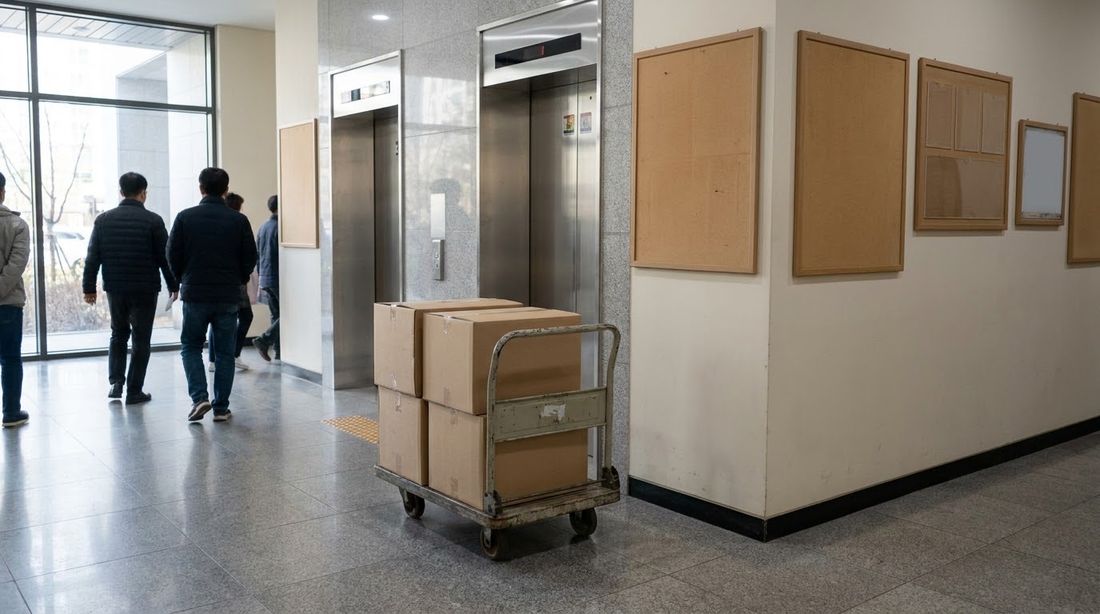
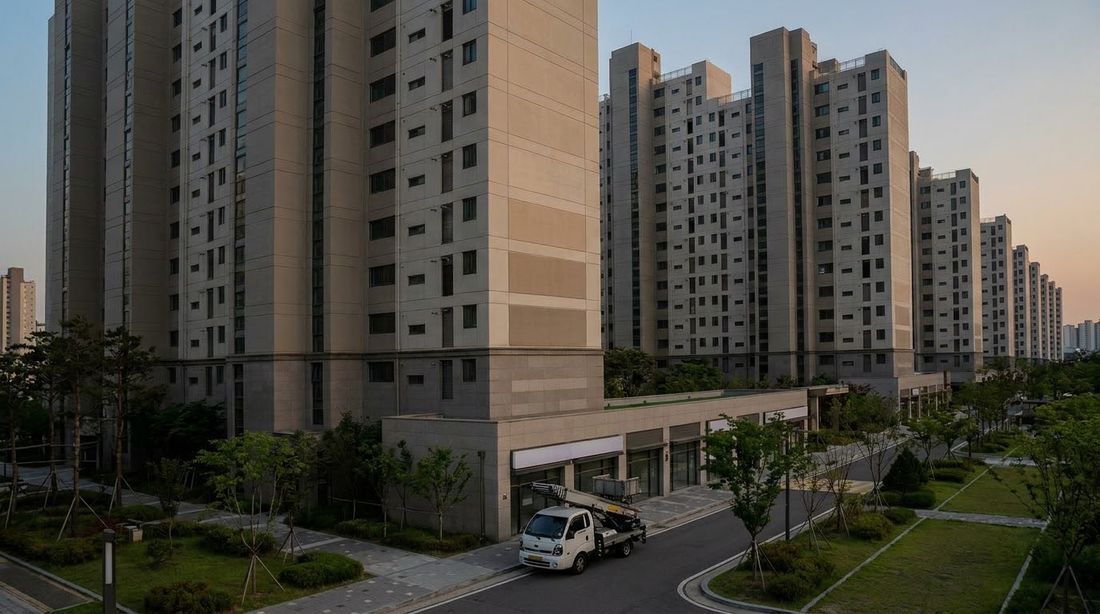
A moving crew's day is limited by how many trips it takes and how far each one goes. In Korea, 54.5% of households live in an apartment complex — a fact this series covered in Part 16 — and apartment complexes are built from a small number of repeating floor plans. A crew that has moved a hundred families out of identical 84-square-meter units already knows, before the truck arrives, exactly where the fridge outlet is and how the wardrobe boxes fit through that model's front door. The elevator and loading dock do the vertical work a staircase would otherwise cost in labor.
Distance helps too. With 50.8% of the country living in the Seoul metropolitan area, most moves cross a few subway stops, not state lines. Compare that to the U.S., where a long-distance move averages $4,572, with typical bids running $2,391 to $6,868 — a price built on hours of highway, not floors of a building.
None of this is about work ethic. A crew repeating the same 20-story tower dozens of times a year develops a playbook. A crew that does a ranch house on Tuesday and a walk-up on Wednesday cannot.
The honest part
There is no official price index for pojang-isa. The figures above come from competing quotes on private moving-comparison platforms, not a government survey, and actual prices swing with the amount of furniture, the floor, and even the day of the week. Because it is an informal, quote-by-quote market, disputes over broken items and insurance coverage do happen, and there is no single regulator standing behind the number on your invoice.
And the one-day trick has a person absorbing the time you do not spend. We could not find verified wage or injury statistics specific to Korea's packing-move industry, so we are not going to invent one — but four to six hours of continuous heavy lifting, repeated the next morning in a different building, is the actual mechanism behind the convenience. The truck leaving your street by dinner does not mean the labor behind it was free.
What density actually buys you
This is the same trade the parcel drop in Part 11 and the dawn grocery run in Part 18 both made: pack more households within reach of one crew, one truck, one repeatable floor plan, and the cost of serving each of them falls. Spread the same job across driveways, staircases, and hundreds of miles of highway, and the price does exactly what it does in most of the United States.
Nobody in Seoul moved house faster because they work harder than anyone in Ohio. They moved house faster because the building did most of the planning for the crew before the truck ever left the depot.
This is part 19 of a series on why daily life in Korea feels so frictionless. Part 18 looked at why dawn grocery delivery reaches barely half of Korea's map. Earlier parts are here.
Next in this series: how a transfer that costs an American $25 to $40 costs a Korean nothing at all.


Comments
Post a Comment