Korea's Top Cram-School City Is Not Gangnam. It Is a Commuter Town With 3,911 of Them.
An American parent who wants a child tutored is buying an adult's hours. Published rates for general tutoring run roughly $25 to $80 an hour, and SAT prep sits higher, commonly quoted at $45 to $100. Then there is the second bill, which is not money: surveys of parents put weekly driving to activities somewhere between about 38 minutes a day and seven hours a week, and two out of three working parents say those trips regularly interrupt their work.
The Korean version of the same purchase is not priced by the hour and does not involve a car. It is priced by the month, for a seat, in a building the child walks to.
What a Korean family actually pays
The government surveys this every year. In 2025, spending on private education by families of elementary, middle and high school students totaled ₩27.5 trillion. Averaged across every student in the country, including those who buy none of it, it came to ₩458,000 a month — about $330. Counting only students who actually attend, the figure was ₩604,000, roughly $436. Participation was 75.7%, and participating students averaged 7.1 hours a week.
Run that against the American unit price. Seven hours a week of one-on-one test prep at the low end of the quoted U.S. range is more per week than the Korean monthly average is per month. The difference is not effort or discount. It is that one number pays for a person and the other pays for a chair.
The city with the most cram schools is not Gangnam
Ask anyone where Korea's education industry lives and the answer is Daechi-dong in Gangnam, which does in fact hold the densest single neighborhood: 1,609 academies and tutoring rooms as of 2023, up from 1,381 in 2019, ahead of Mok-dong's 1,052.
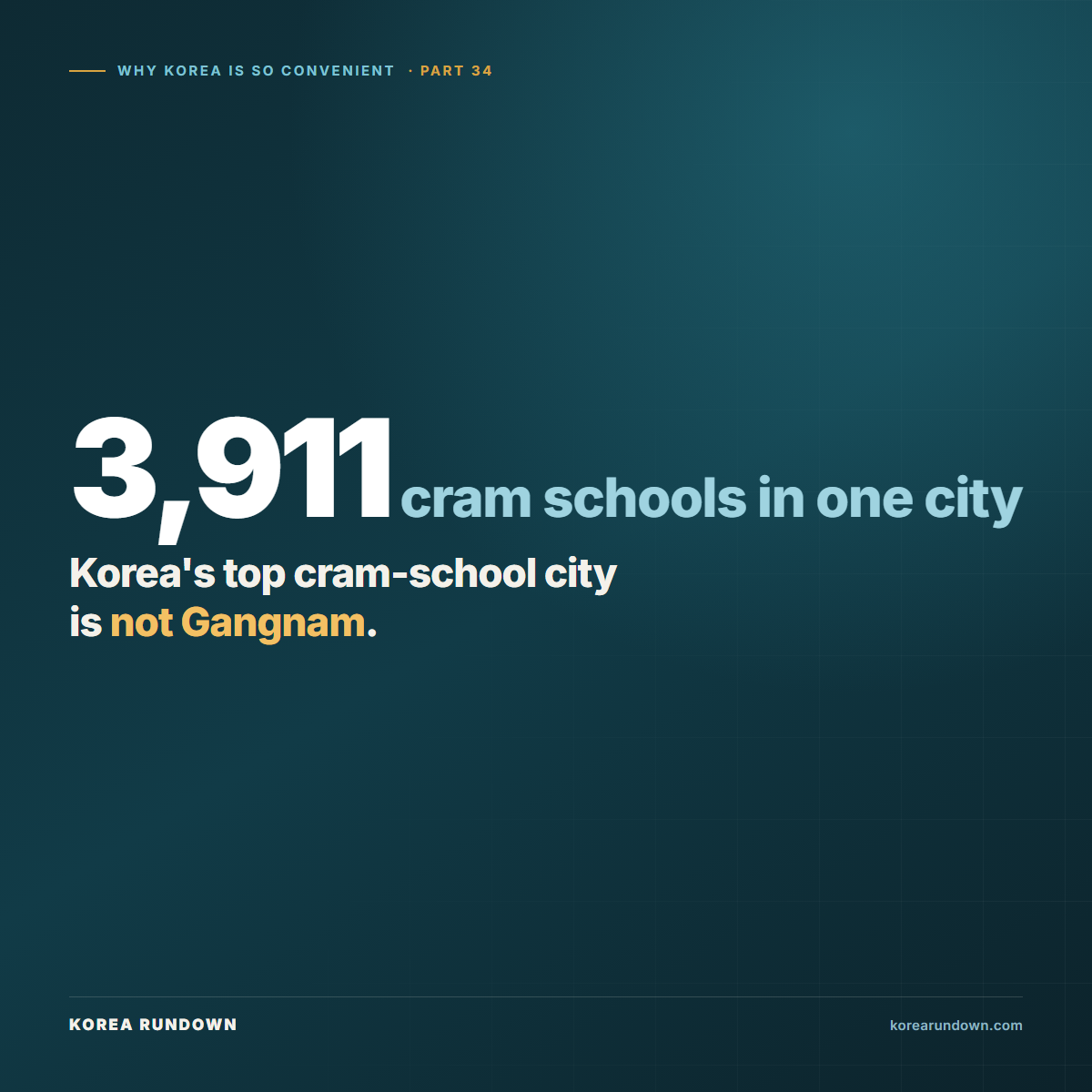
Zoom out to whole cities and the ranking breaks. Counted by district, the leader is Hwaseong with 3,911, ahead of Gangnam's 3,679, then Suseong-gu in Daegu at 2,867, Bundang at 2,622, Bucheon at 2,545 and Namyangju at 2,511 — figures from a study submitted to the National Education Commission, covering 2021. Nationwide there were 88,738 such businesses in 2023, up from 67,649 in 2007.
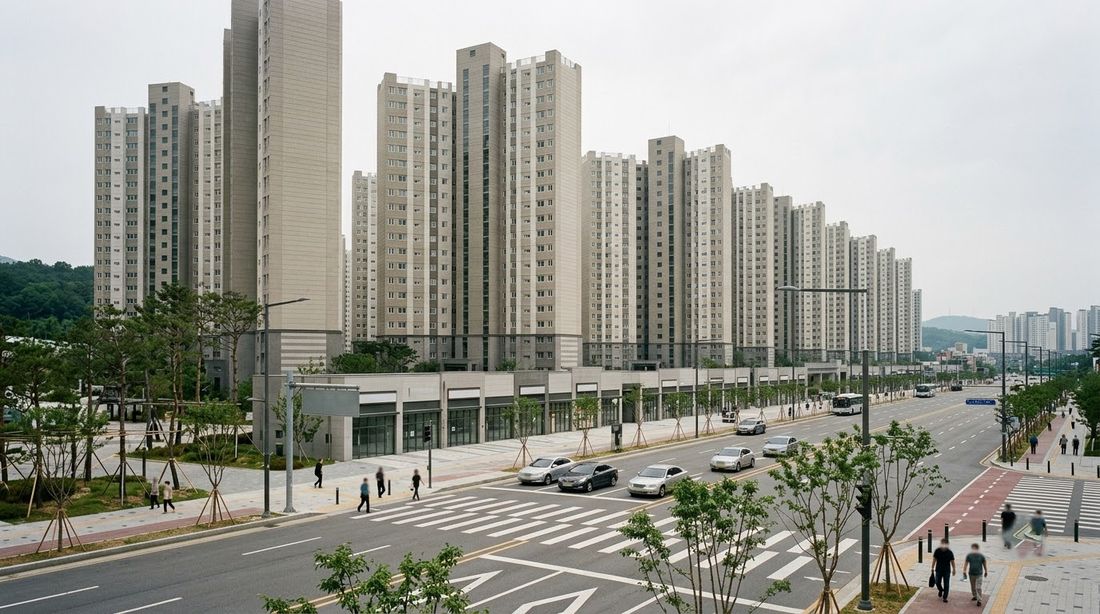
Hwaseong is not a byword for academic ambition. It is a city of recently built high-rise apartment districts full of young families. The cram schools went where the children are stacked, not where the prestige is.
A class is a room that has to fill at seven in the evening
This is the whole mechanism, and it is a logistics problem rather than a cultural one.
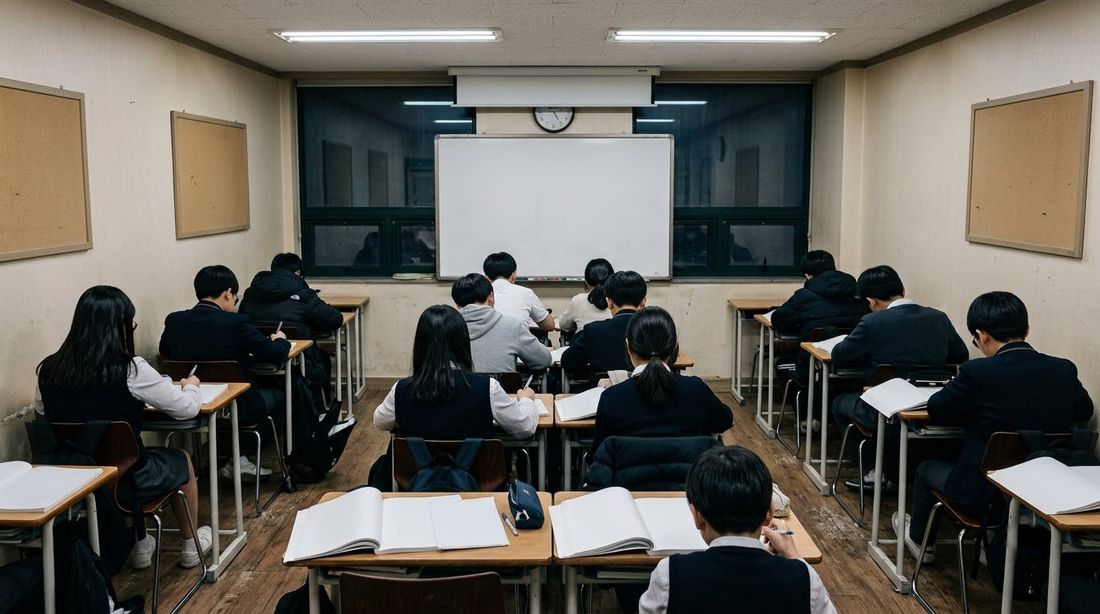
To sell instruction by the seat instead of by the hour, a business needs to put twelve or fifteen children of the same age and roughly the same level in one room at the same time on a weekday evening, and to do it again tomorrow. That only works if those children can get there by themselves, because no parent is making that trip twice a day.
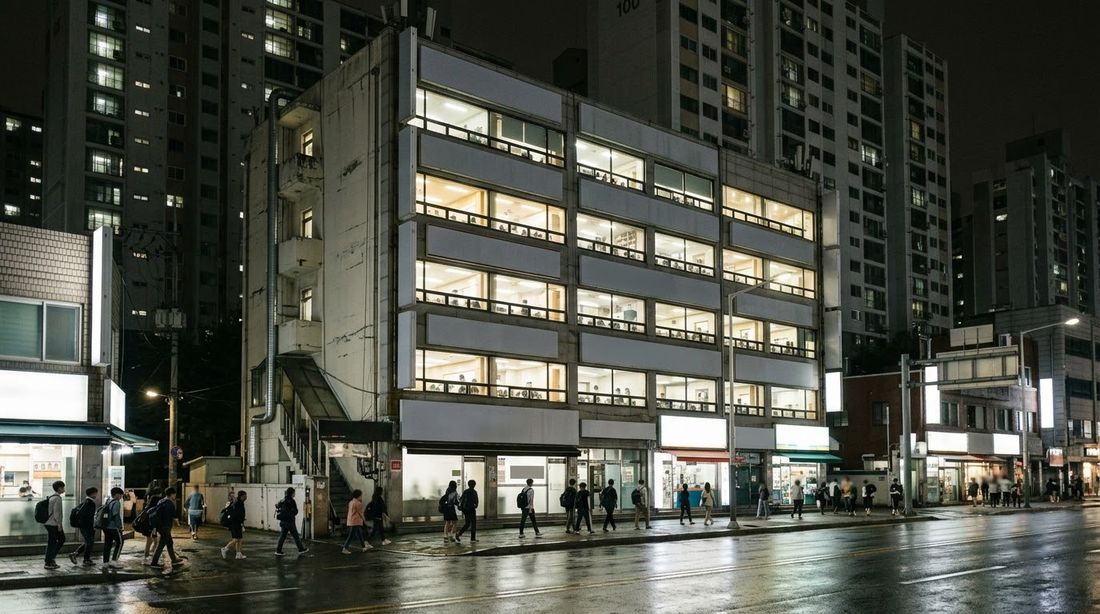
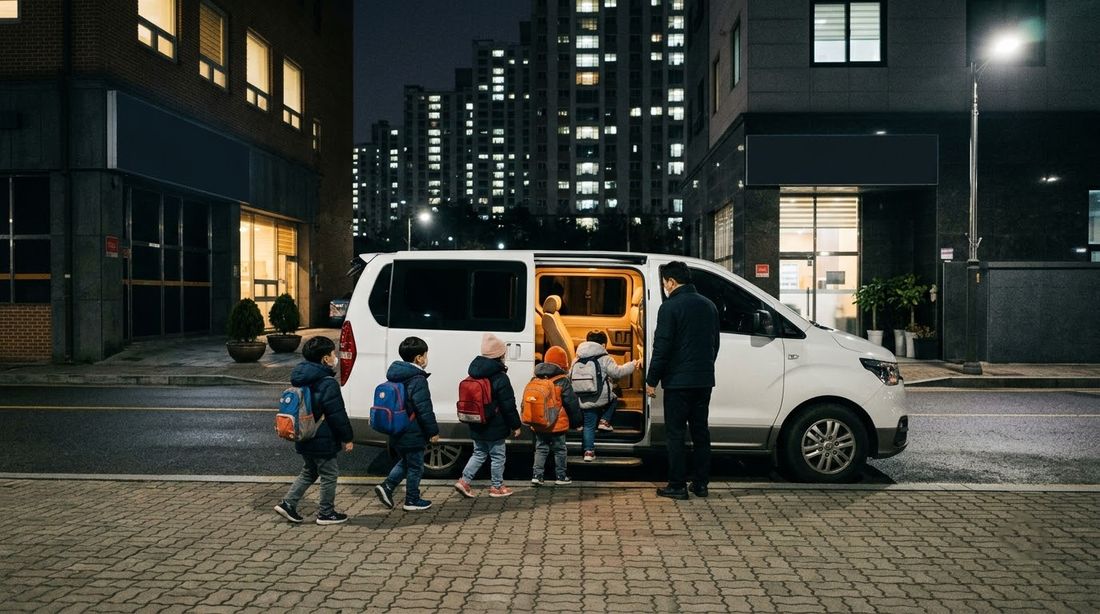
A single Korean apartment complex of 500 to 1,000 units contains enough same-grade children to fill a class. Ten such complexes within a fifteen-minute walk contain enough to fill a building of them, which is what a Korean hagwon street is: a commercial block of six or seven floors, one academy per floor, stacked beside the apartment towers. Children arrive on foot or on a shuttle van that loops the same three complexes.
The honest part: per-hour cheap is not cheap
None of this makes the Korean arrangement a bargain, and the trend line says so plainly. In 2025 the national total fell by ₩1.7 trillion and participation dropped 4.3 percentage points — but spending per participating student rose 2%, to ₩604,000. Fewer families are buying, and the ones still buying are paying more. A falling headline number that hides a rising bill for the households inside it is not relief.
The walkability has a cost of its own. A class that starts at seven because the children can walk home afterward is a class that ends at ten. And the same density that makes the seat cheap makes opting out conspicuous, because the building is right there and everyone in the complex knows who is in it.
Where the density comes in
A cram school is a retail business with a filling problem, no different in structure from the cafe or the third-floor dental clinic. It needs a specific number of specific people to walk through the door at a specific hour, and it survives on how many of them live inside a short radius.
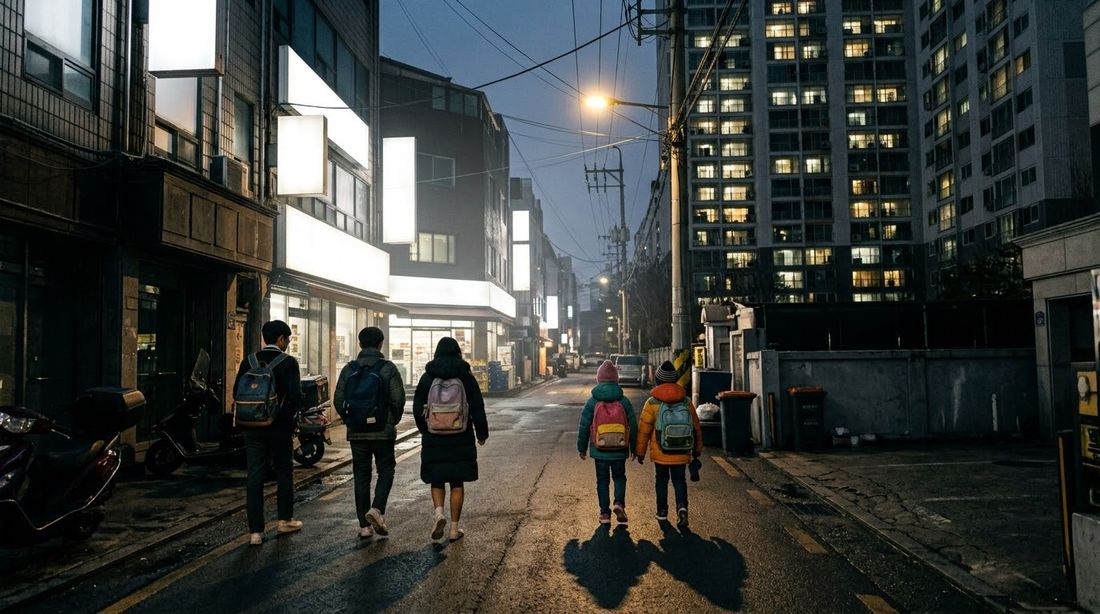
Stack households vertically and that radius holds thousands of children, which makes the seat cheap, which fills the room, which supports 88,738 businesses competing on price. Spread the same households across a subdivision and the room cannot be filled on foot at seven o'clock, so the product reverts to the only version that still works there: one adult, one child, billed by the hour, reached by car.
Hwaseong outranking Gangnam is the cleanest evidence available that this is a floor-plan outcome. Ambition did not build 3,911 academies in a commuter city. Apartment towers full of ten-year-olds did.
This is part 34 of a series on why daily life in Korea feels so frictionless. Part 33 looked at why a gym and a library are built into Korean apartment complexes by law. Earlier parts are here.
Next in this series: another everyday Korean convenience that turns out to be an ordinary consequence of how many people live within one short walk of it.


Comments
Post a Comment