Korean Building Code Puts a Daycare Inside Every 300-Unit Complex. Parents Pay $0 for It.
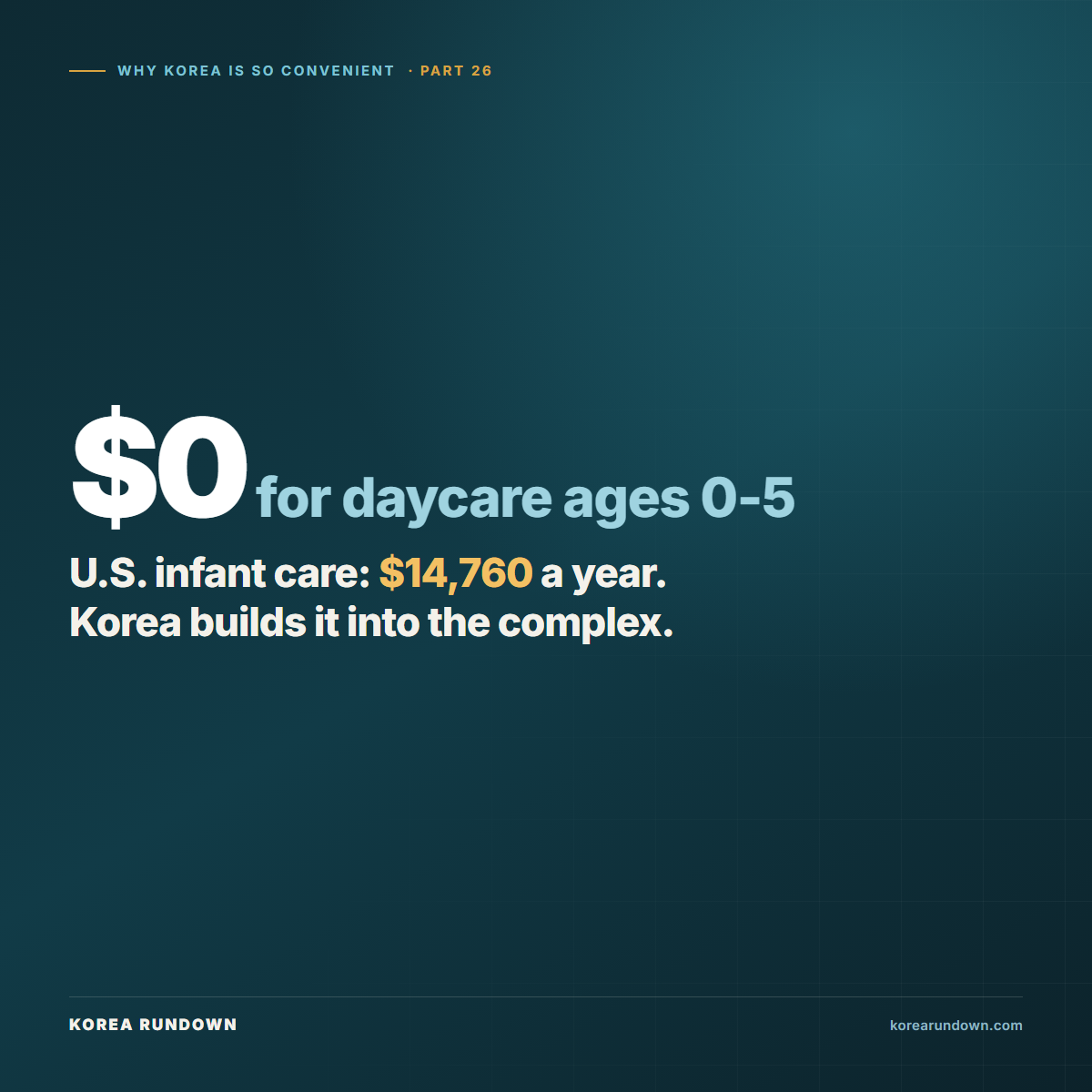
The number that ends most American conversations about a second child is the childcare quote. Child Care Aware of America put the national price of child care at $13,184 in 2025, up from $13,128 the year before and about 23% higher than in 2021. Center-based infant care, the most expensive category, runs closer to $1,230 a month — roughly $14,760 over a year. In 41 states and the District of Columbia, a year of infant care in a center now costs more than a year of in-state public university tuition. And that is the price where care exists at all: an estimated 46% of American children under six lived in a child care desert in 2025, a figure that rises to about 70% in remote rural areas.
So the American version of this problem has two halves that compound each other. The care is expensive, and it is also far away.
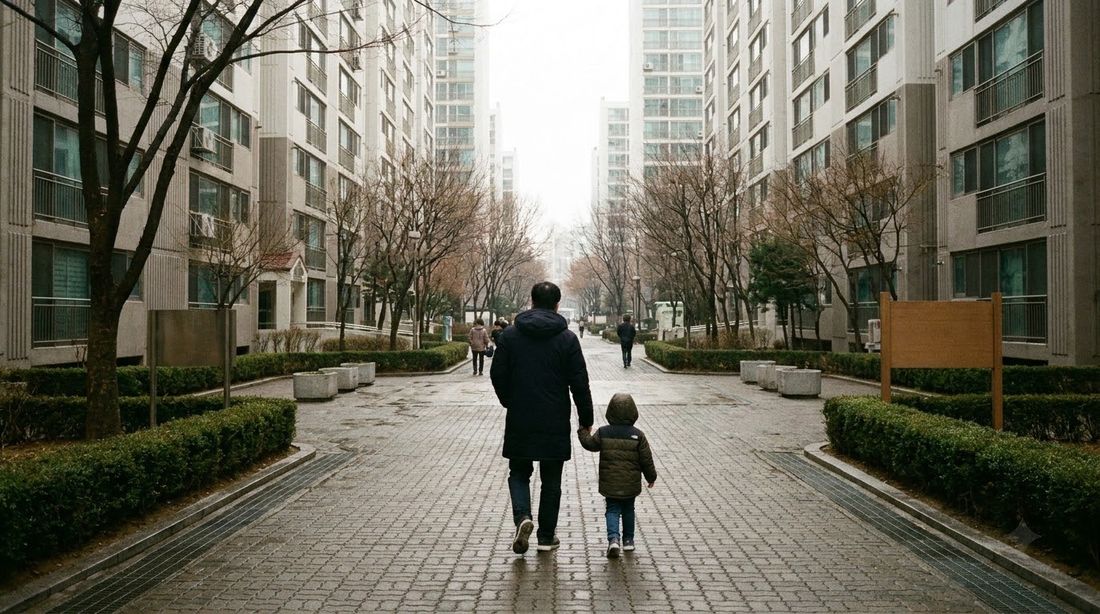
The Korean version of the same morning is that a parent walks a child four minutes across a landscaped courtyard to the ground floor of another building in the same apartment complex, drops them off, and walks back. The standard program costs the family nothing.
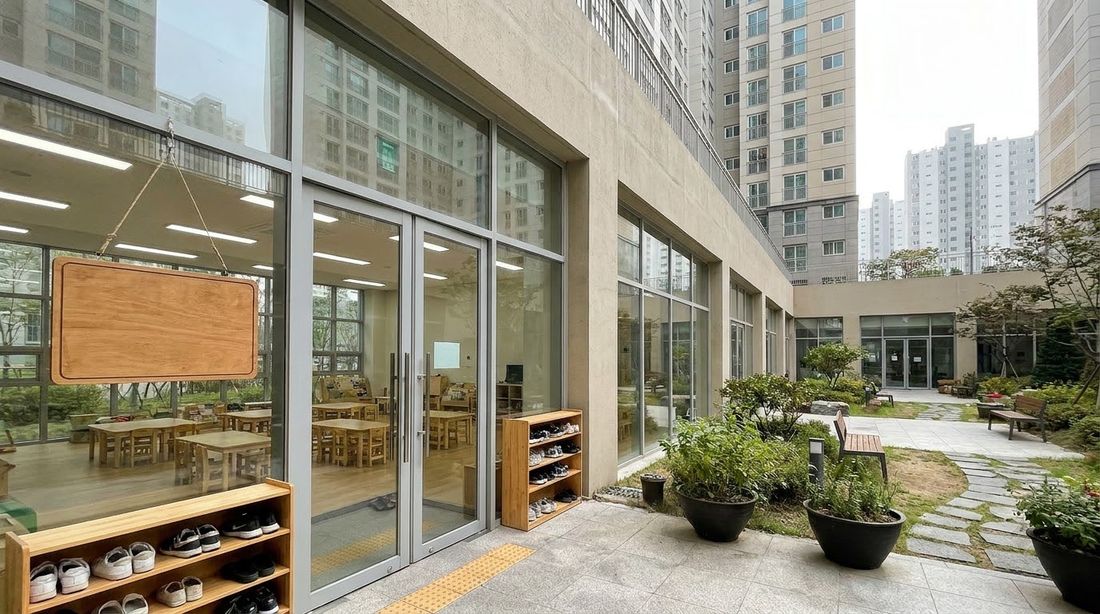
The daycare is there because the building code put it there
This is not a story about a generous subsidy landing on top of an ordinary housing market. The supply exists because Korean construction rules manufacture it. Under the national regulation governing housing construction standards, an apartment complex of 300 units or more must include a set of shared resident facilities, and a daycare center is one of the named items, alongside a senior center and a children's playground. Cross 500 units and the required list grows again, adding a fitness facility, a small library, and an after-school care center.
Read that carefully, because it inverts the usual logic. In the U.S., a childcare operator finds a site, zones it, parks it, and then has to fill it from a catchment wide enough to make the rent work — which is exactly the calculation that fails in low-density suburbs and produces deserts. In Korea, the room already exists before any operator is looking for one, because it was a condition of getting the residential building approved. Supply is not the outcome of a market search. It is a line item in a construction permit.
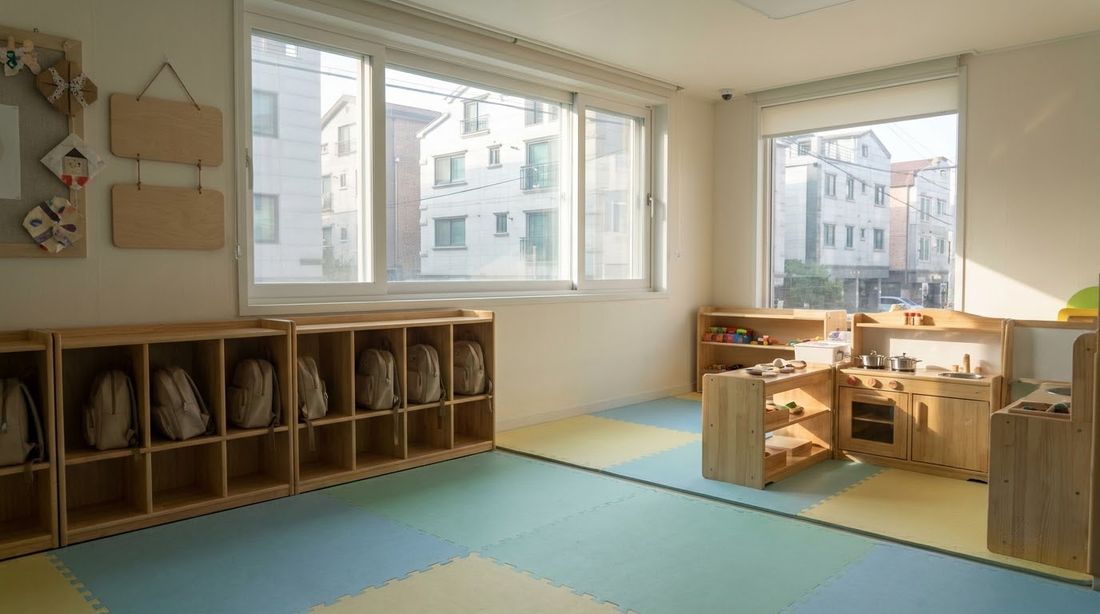
And the standard program is free
The second half is money. Korea funds childcare for ages 0 through 5 for every household, regardless of income or family structure. The subsidy is paid to the center rather than reimbursed to the parent, so the standard program simply has no invoice attached to it. The 2026 schedule published by the Seoul city government lists monthly rates of about 510,000 won for an infant under one, 450,000 won at age one, 370,000 won at age two, and 280,000 won for ages three to five — roughly $370 a month at the top rate, at early-September 2026 exchange rates of about 1,385 won to the dollar.
It is not generosity, and it is not a love of children
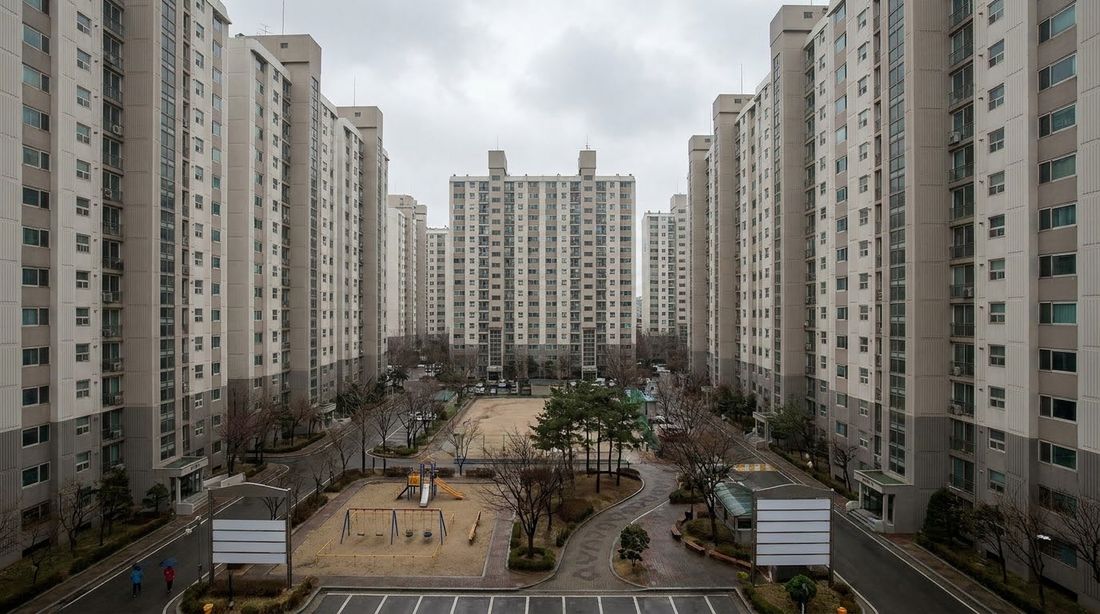
The tempting explanation is that Korea simply values families more. That explanation collapses the moment you look at the birth rate, which is among the lowest in the world. Something else is doing the work, and it is the same thing that has been doing the work in every part of this series: 54.5% of Korean households live in apartment complexes, in standardized developments of hundreds or thousands of units.
That is what makes a mandated on-site daycare a sane rule rather than an expensive one. One facility inside a 600-unit complex sits within a four-minute walk of 600 families, needs no parking lot, no separate land acquisition, and no marketing to fill its roster. The catchment is the building. Write the identical rule into American suburban zoning and it would be absurd, because 600 households there occupy several square miles and no single room can be walkable for all of them. The policy is not more enlightened. The floor plan is different.
The honest part — the system is shrinking and thinly staffed
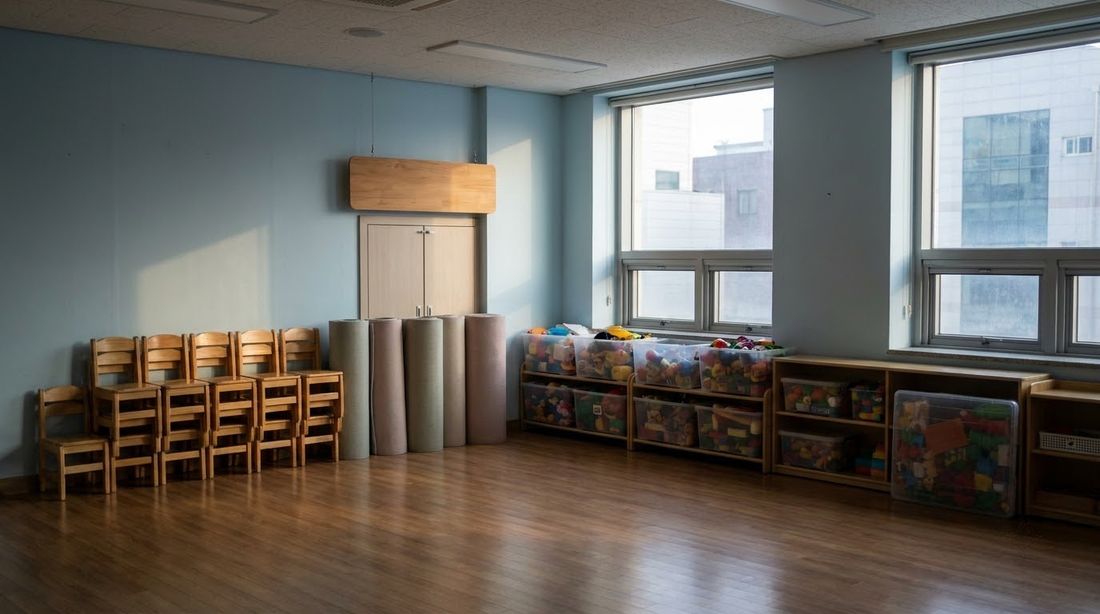
Two things undercut the picture. The first is that most Korean daycare is not public. At the end of 2023 the country had 28,954 childcare centers, of which public centers accounted for 21.4%, or 6,187; private and home-based centers made up 67.6%. Parents strongly prefer the public ones, which is why waitlists for them coexist with a sector that is closing. In Seoul the total number of centers fell from 5,049 in 2021 to 4,010 in 2025 — roughly a fifth of them gone in four years, as the number of children fell faster than the buildings could adjust. The strange result is closures and queues at the same time.
The second is pay. A 2024 national survey put the average monthly salary of a childcare teacher at about 2.87 million won, which is close to what full-time minimum-wage work yields. Free care for parents rests on labor that is priced near the legal floor, and that is not a footnote to the model. It is part of how the arithmetic closes.
What survives all of that is still the part an American parent would notice first. The room exists because a building code required it, it is within walking distance because half the country lives stacked, and the standard fee is zero because a national schedule pays it. None of those three facts is about how much anyone loves children.
This is part 26 of a series on why daily life in Korea feels so frictionless. Part 25 looked at why a Korean clinic visit needs no appointment and no referral. Earlier parts are here.
Next in this series: another piece of Korean daily life that turns out to be a consequence of how the buildings are arranged rather than how the people are.


Comments
Post a Comment