Korea's Budget Carriers Just Passed 10 Million Users. A Line Runs About $11 a Month.
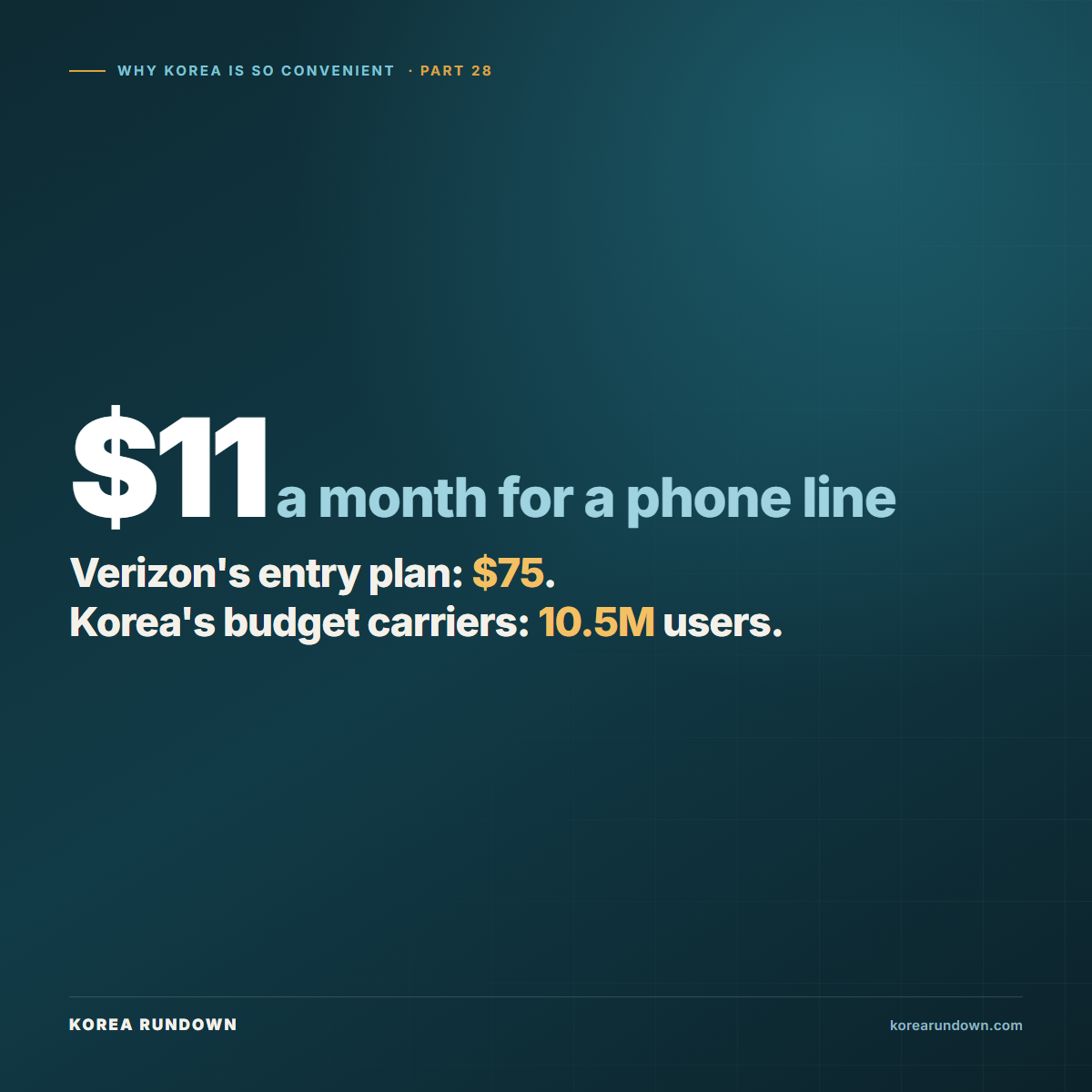
Open Verizon's plan comparison page and the entry unlimited plan, Welcome, lists at $75 a month for a single line, or $65 with autopay. Plus is $90, or $80 with autopay. Ultimate is $105, or $95. Taxes and fees are added at billing on top of the advertised rate. You can get out of that — there are American resellers, and some of them are genuinely cheap — but you are opting out of the default, and the default is what most people pay.
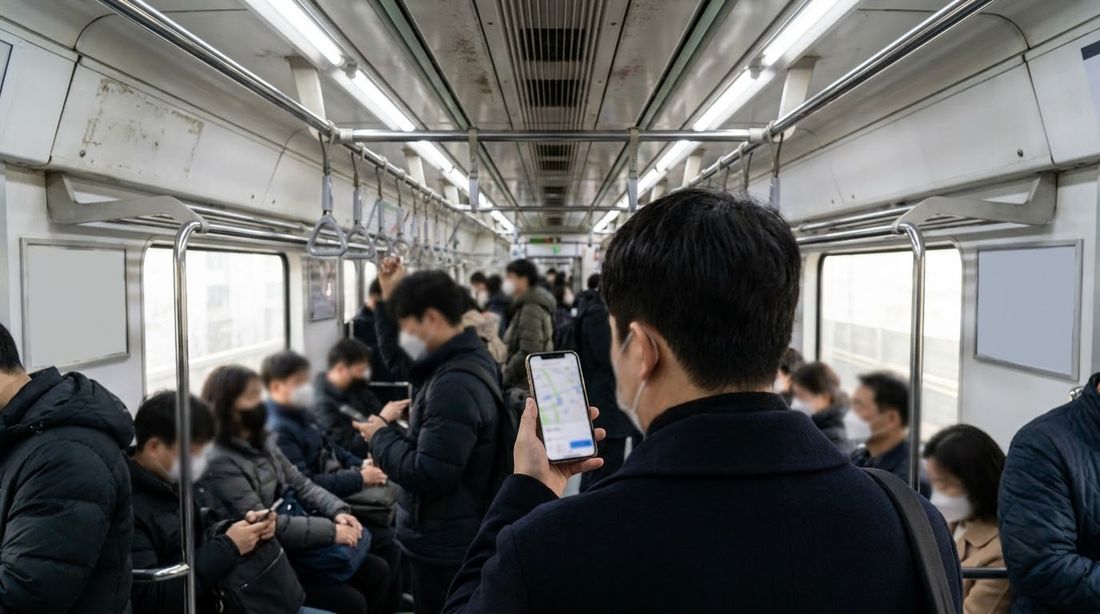
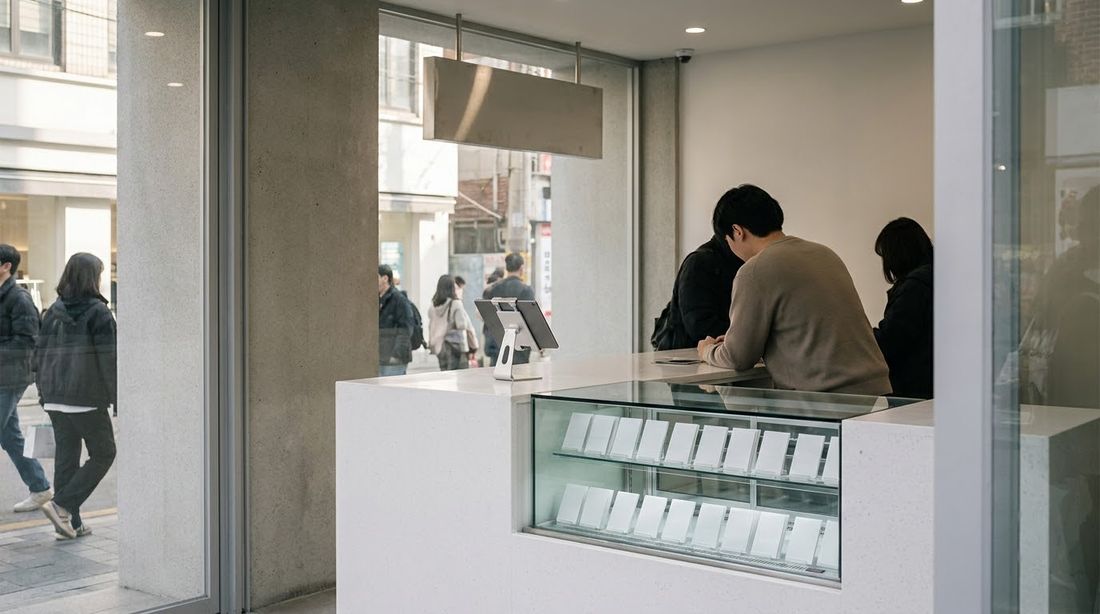
In Korea the cheap thing is not an escape hatch. It is a market with 10.49 million subscribers as of June 2026, on the Ministry of Science and ICT's count, spread across 59 operators. A representative published plan: LG Hellovision's SIM-only tier at 15,900 won a month — about $11.50 at the roughly 1,385-won-to-the-dollar rate used through this series in early September 2026 — for 7GB of full-speed data, after which it keeps working at 1 Mbps rather than cutting off. No contract, no handset attached.
The resellers exist because a statute says they must
This is the part that does not transfer, and it is worth being precise about because it is not the usual density argument.
Korean telecom law designates a mandatory wholesale service: a dominant carrier is required to sell network access to resellers, and the Ministry of Science and ICT sets the standard those wholesale agreements must follow, with the wholesale price calculated against the cost of provision, retail rates and volume rather than left to negotiation. The obligation used to be a sunset provision that expired and had to be renewed; it was made permanent in a 2024 amendment, and advance regulation of the wholesale rate — which had been due to lapse in March 2025 — was restored rather than allowed to expire.
Strip the legal language and it says this: the company that built the network does not get to decide what its competitors pay to use it. That single sentence is the entire reason a 15,900-won plan exists. The incumbents opposed the change, which tells you it was not a favor they were doing anyone.
It is not that Korean carriers are nicer
The tempting reading is that Korean telecoms are somehow less greedy, or that Korean consumers are unusually thrifty and forced prices down by shopping around. Neither holds up. The same three companies — SK Telecom, KT and LG Uplus — own the networks, run the retail brands, and fought the wholesale mandate. Consumer pressure did not produce the 15,900-won plan. A regulator setting a wholesale price did.
The honest part — three things wrong with this picture
The first is that the budget market is substantially owned by the incumbents. Of the 59 operators, five are subsidiaries of the big three, and those five account for about 47% of budget subscribers — roughly 4.92 million of the 10.49 million. Nearly half of the people who "left" the big three are still customers of the big three. The law now caps that share at 50%, which is an admission that it was heading somewhere worse.
The second is that the headline prices are churn subsidies. A large share of the cheapest advertised plans are promotional for six or seven months and then revert: plans advertised at 110 won or 900 won a month for seven months that reset to 22,990 or 27,590 won afterward are ordinary listings, not outliers. The rational Korean response is to switch carriers every seven months, and a lot of people do exactly that. The sticker price is real. The steady-state price for someone who does not want a recurring chore is higher.
The third is that budget carriers are barely in the modern network. Of roughly 35.63 million 5G lines in Korea at the end of last year, budget carriers held about 370,000 — around 1%. The cheap plans run on LTE. For most daily use in a country with dense LTE coverage that is close to invisible, but it is not the same product the incumbents are selling.
Where the density comes back in
A wholesale mandate is a legal instrument, and legal instruments travel. The United States could write one. What would not travel is the number the mandate is applied to.
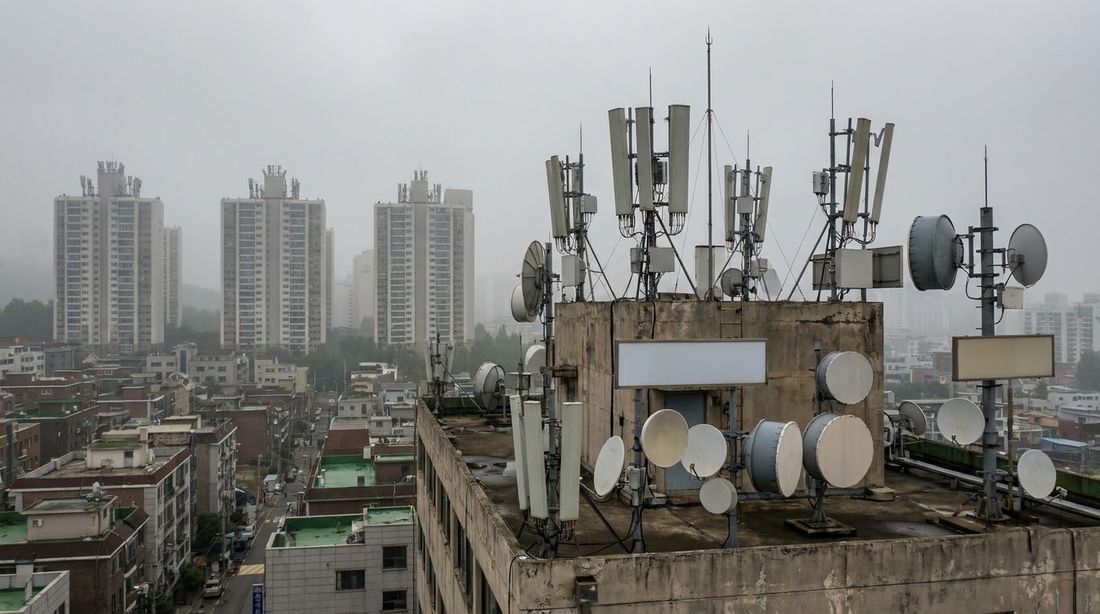
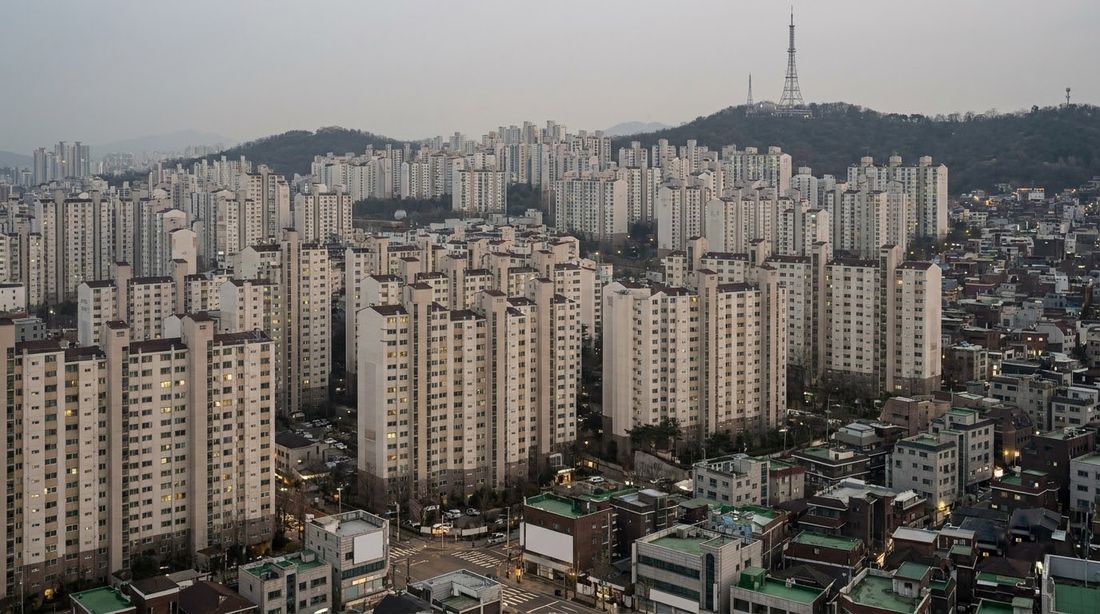
A regulator setting a wholesale rate against the cost of provision is setting it against how much it costs to carry one more subscriber on an existing network. In Korea that is a network covering about 51 million people in a country roughly the size of Indiana, with just over half the population in the capital region and a majority of households stacked in apartment complexes. The towers are already built, they are close together because the people are, and each one has an enormous number of subscribers in range. The cost of provision the regulator is dividing by is small because the denominator is huge.
Apply the same formula to a network that has to reach across a continent and the regulated wholesale price is not 15,900 won, because the underlying cost per subscriber is not the same number. The rule is copyable. The geography underneath it is not. As with everything else in this series, the Korean outcome looks like a policy choice and is mostly a floor plan.
This is part 28 of a series on why daily life in Korea feels so frictionless. Part 27 looked at the free national health checkup that arrives in the mail every two years. Earlier parts are here.
Next in this series: another piece of Korean daily life that turns out to be a consequence of how the buildings are arranged rather than how the people are.


Comments
Post a Comment