Korea Puts the Bus Countdown on the Pole. New York Put It on Your Phone. The Software Came From Portland.
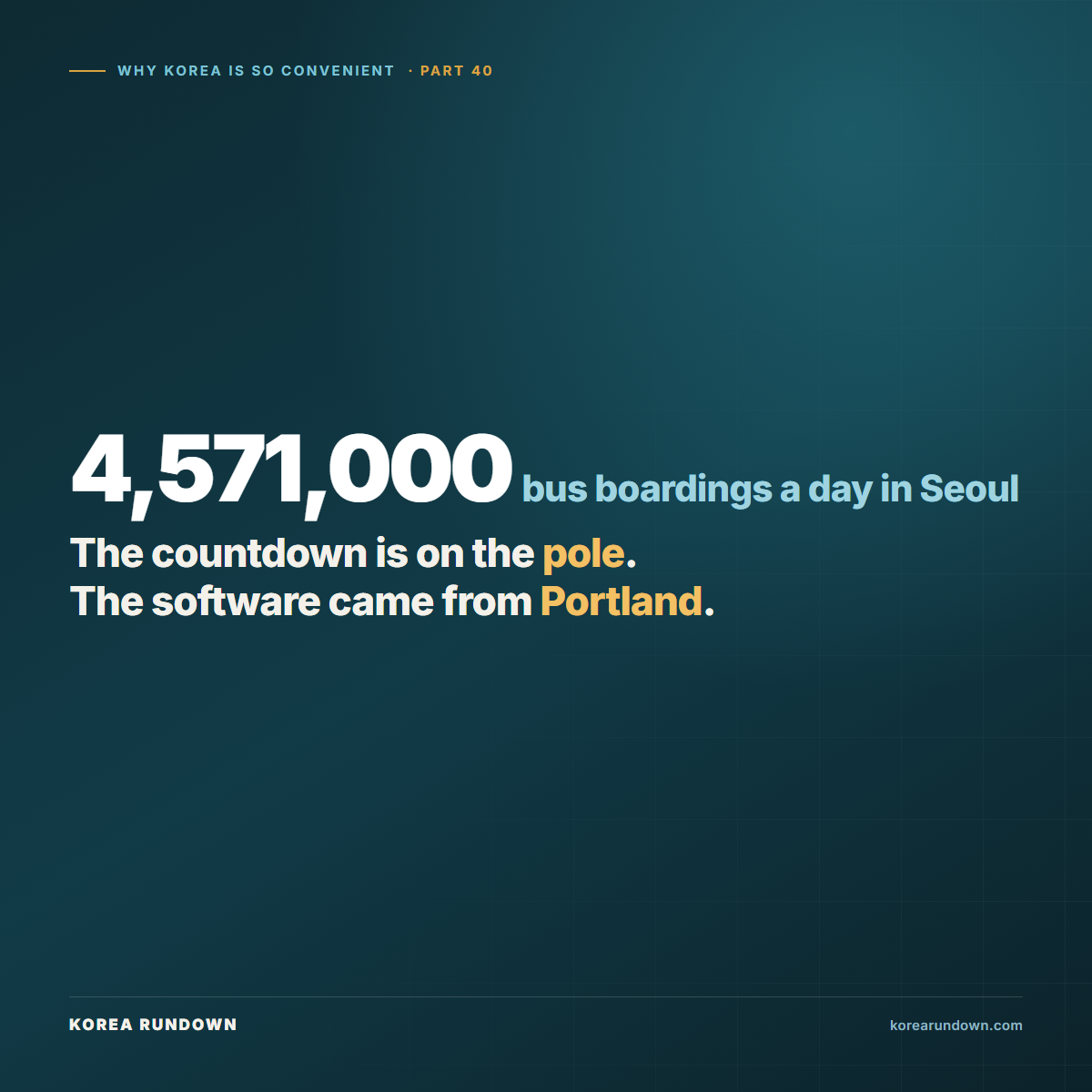
The bus stop is a metal pole with a route number on it. That is the entire interface. Whether the bus is two minutes out or twenty-six is not information the stop has, so you take out your phone, open an app, wait for it to locate you, and read a number that the pole could have been showing this whole time. If your phone is dead, or you are seventy-eight, the pole tells you nothing at all.
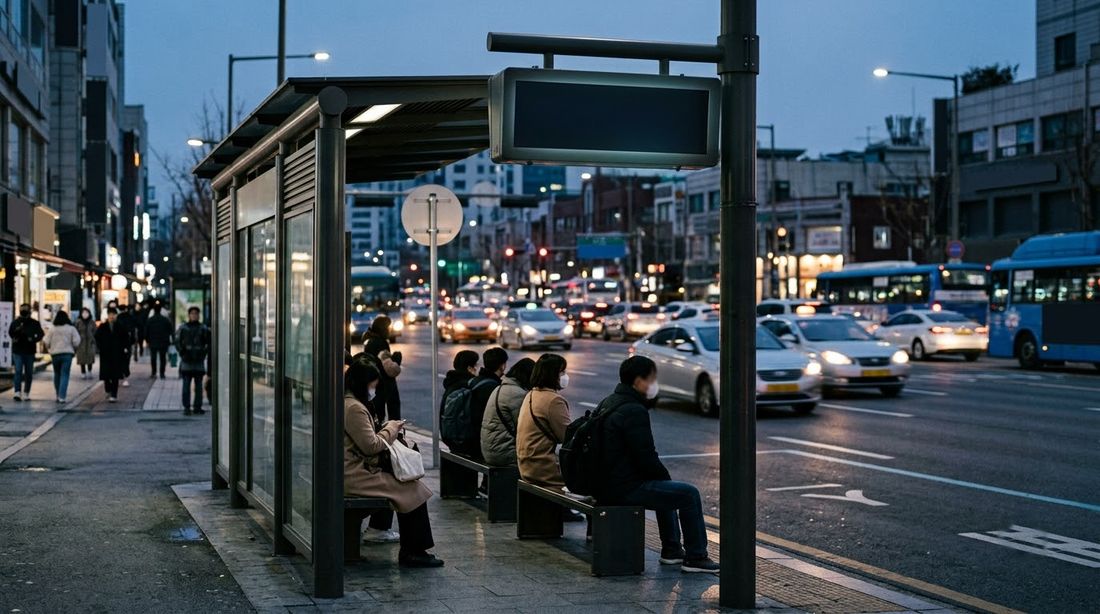
Stand at almost any Seoul bus stop and a lit board on the pole is already counting. Bus 273, four minutes, two stops away. Behind it, the one after that, at fourteen minutes. Nobody unlocked anything.
The natural assumption is that Korea has better transit technology. It does not. The technology is American.
The software came from Portland
The standard that makes machine-readable transit schedules possible was built by Portland's TriMet working with Google. Google Transit launched on 7 December 2005 with TriMet as its only operator, and the specification — first called the Google Transit Feed Specification, later the General Transit Feed Specification — followed in 2006. The real-time extension that lets a system broadcast where the vehicle actually is arrived in 2011.
New York put that to work on its own buses quickly enough. MTA Bus Time started as a pilot on Brooklyn's B63 route in February 2011 with thirty buses, and by March 2014 every bus in all five boroughs was being tracked. The data exists. The question is only where it gets displayed.
Korea put it on the pole, starting in 2001
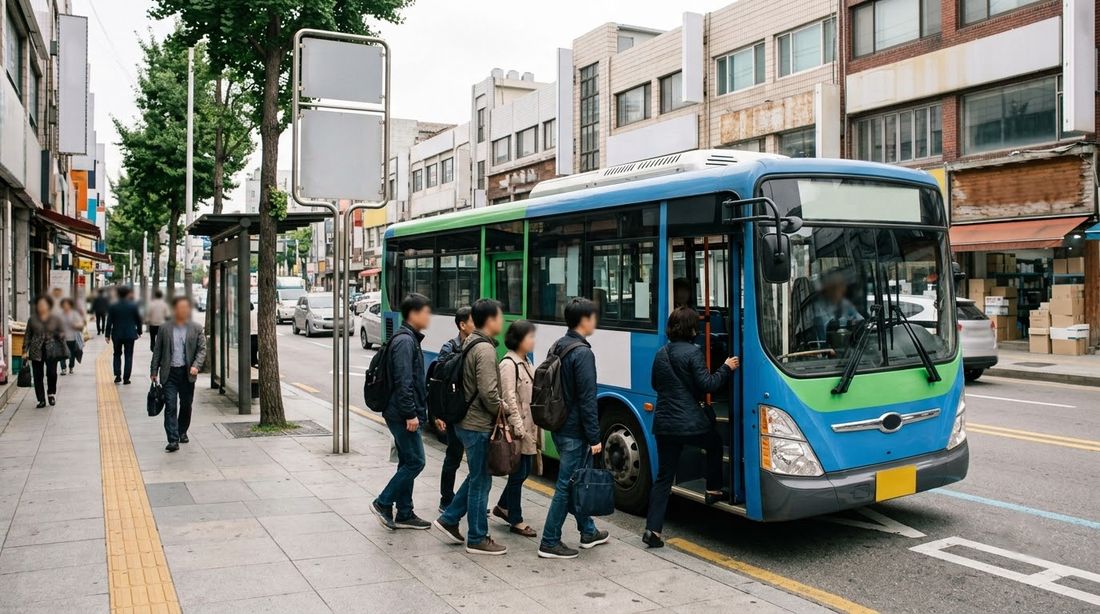
Bucheon, a city in Gyeonggi Province just west of Seoul, ran the first citywide bus arrival system in the country from 2001. It covered 52 routes, equipped 650 buses, and put displays at 510 of the city's roughly 600 stops. Seoul began building its own in 2004, across 427 routes, and other cities followed over the next few years — Daejeon and Gwangju in 2004, Ulsan in 2005.
Coverage of the physical signs took much longer than coverage of the data. As of the city's December 2020 accounting, Seoul had 4,930 display units in place, reaching 79% of stops, with a plan to raise that to 5,270 units and 84.4%. A more recent citywide count does not appear to be published, so 2020 is the last figure stated here as fact.
The sign is a ridership calculation, not a generosity calculation
A powered screen on a pole is not free. It needs electricity, a data link, a housing that survives weather, and somebody to fix it when it dies. Whether that is worth doing comes down to one number: how many people stand at that pole every day.
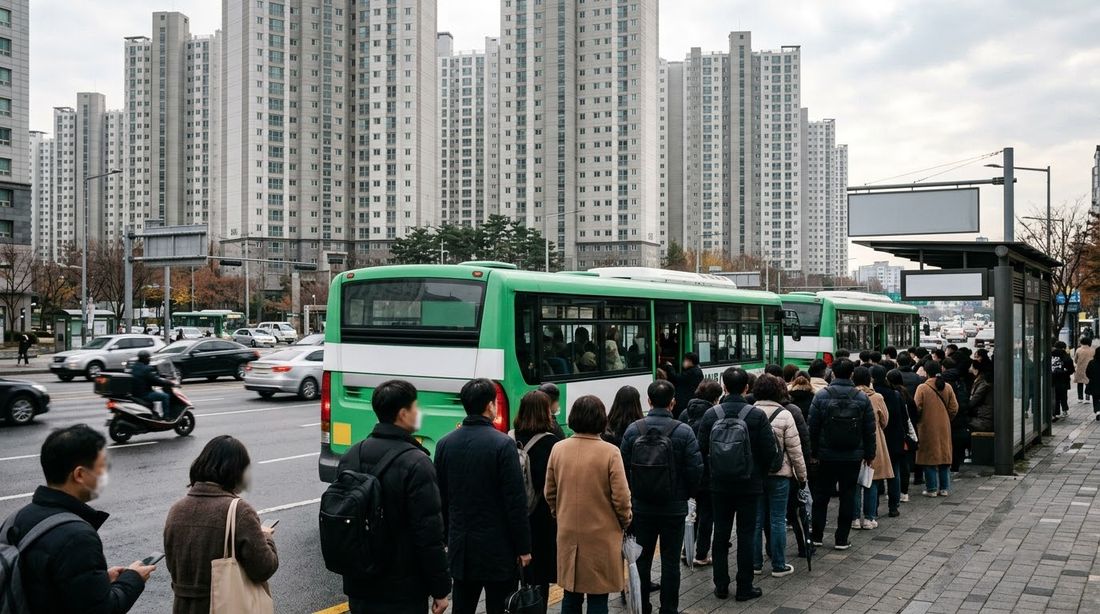
Divide Seoul's bus boardings by its stop count and the average pole sees something on the order of six or seven hundred boardings a day. At that volume a screen costs a fraction of a cent per person who reads it, and the payback is not comfort — it is that people who can see the wait do not give up and take a taxi.
Run the same arithmetic on a city where the bus is a residual mode used mainly by people with no alternative, and the screen serves a handful of riders a day. New York's own history makes the point bluntly: a 2005 pilot that installed countdown clocks at fifteen stops reportedly cost $13 million. An app that runs on a phone the rider already owns is simply the cheaper answer to the same question.
The honest part: the phone won here too
Three things cut against the tidy version.
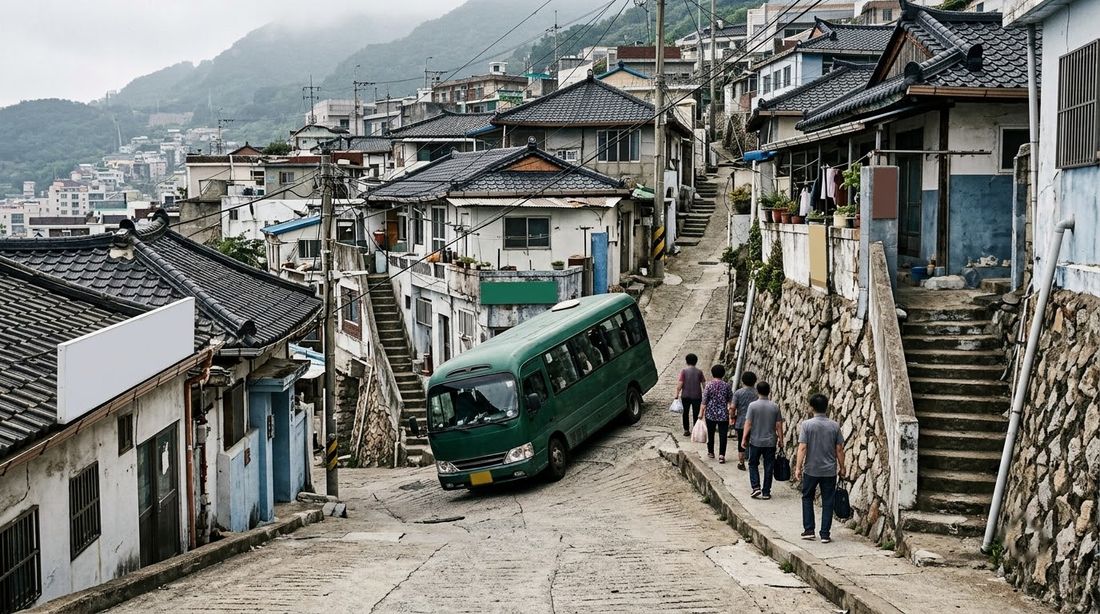
First, the signs are not universal. One stop in five had no display at the last published count, and the small neighborhood village-bus stops are the worst covered — which is exactly where the riders are most likely to be elderly.
Second, most Koreans check their phone anyway. The lit board is a fallback and a shared clock for the whole queue, not the primary interface for anyone under fifty.
Third, this was never a gift. Korea built these systems in the early 2000s when smartphones did not exist, because at that moment a screen on a pole was the only way to deliver the information at all. The infrastructure is a fossil of a decision made before the alternative existed, and it survives because replacing something that works is nobody's budget priority.
Where the density comes in
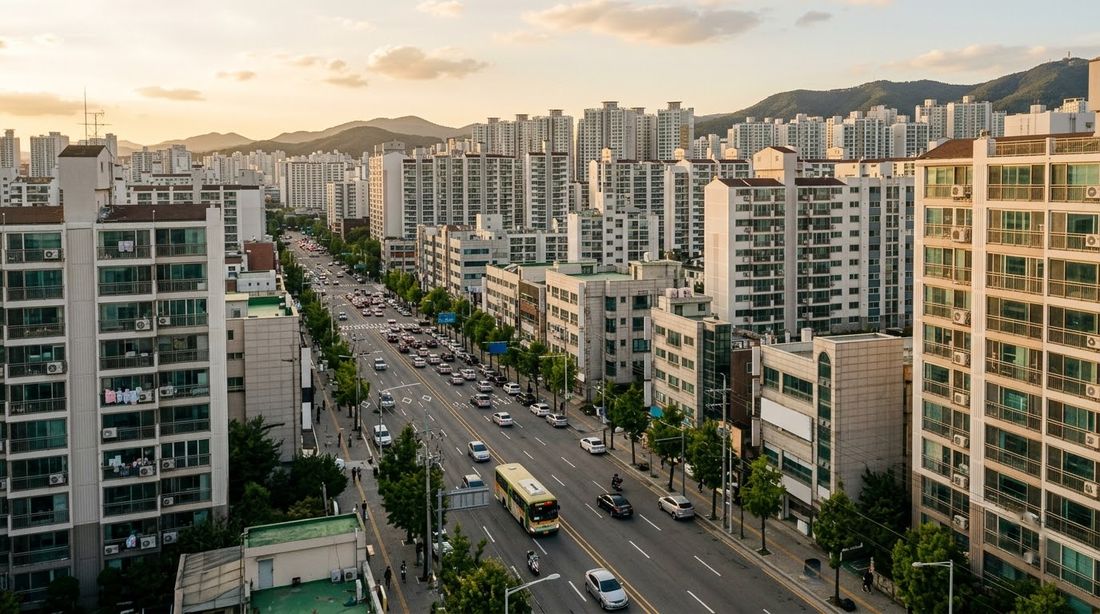
Seoul runs 396 city bus routes with 7,383 licensed buses, plus 253 village-bus routes with 1,626 more, across 6,717 stops. That is a lot of vehicles for a city you can cross in an hour — and it works because the stops are close enough together that almost every address is a short walk from one, which is what makes four and a half million daily boardings possible in the first place.
Ridership like that turns a screen into an obviously good investment. Sparse ridership turns the same screen into a line item somebody cuts. The hardware decision follows the density decision, years later and automatically.
No one in Portland or Brooklyn was less inventive. They were just solving the problem for a different number of people standing at the pole.
This is part 40 of a series on why daily life in Korea feels so frictionless. Part 39 looked at why Korea rations its street parking one numbered box at a time. Earlier parts are here.
Next in this series: another piece of ordinary Korean street furniture whose existence turns out to be decided by how many people walk past it in a day.


Comments
Post a Comment