Korea Tipping Culture: Why There Is No Tip Screen, and What Replaces It
You order a five-dollar latte at a counter in Ohio, tap your card, and the screen spins around before you can put your wallet away. It offers you 18%, 20%, or 25%. The person who pulled the espresso shot is standing right there watching you choose. Nobody carried a tray to a table. Nobody refilled a water glass. But the machine is waiting, and now so is the barista.
You're not imagining that this has gotten worse. A 2026 industry survey found that 65% of consumers say they're fed up with tipping, up from 60% a year earlier and 53% back in 2023. Nearly two-thirds say they feel pressured to leave something when a screen prompts them in front of the employee they'd be tipping. The prompt used to mean someone served your table for an hour. Now it shows up at the counter of a bakery, at a self-checkout kiosk, on a to-go order you're carrying out yourself.
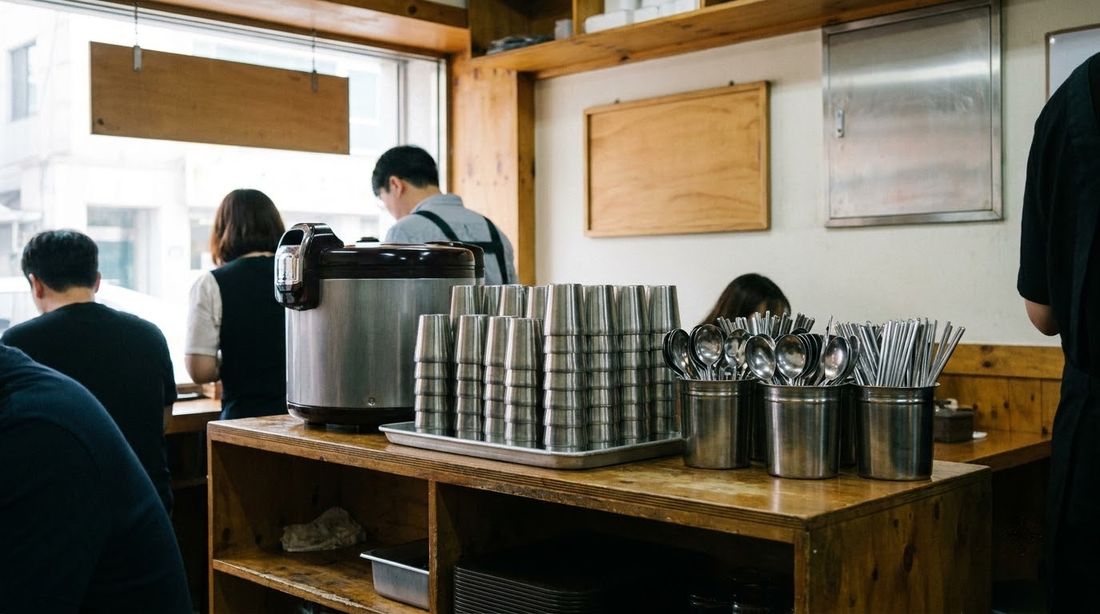
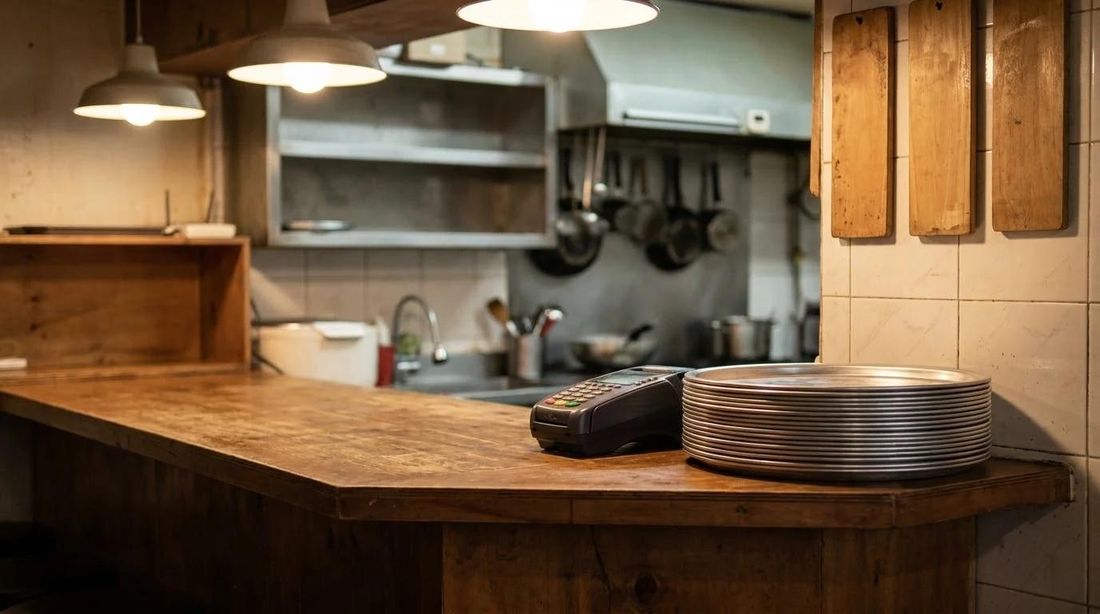
In Seoul, none of that happens. You order the same coffee, hand over a card, and the receipt prints one number — the price on the menu board, tax already folded in. Sit down at a barbecue restaurant that just fed six people for two hours, and the card machine still asks for exactly the total on the check. No screen rotates. No line waits for a percentage. Leave cash on the table on your way out and, in a lot of places, someone will jog after you to hand it back, assuming you dropped it by accident.
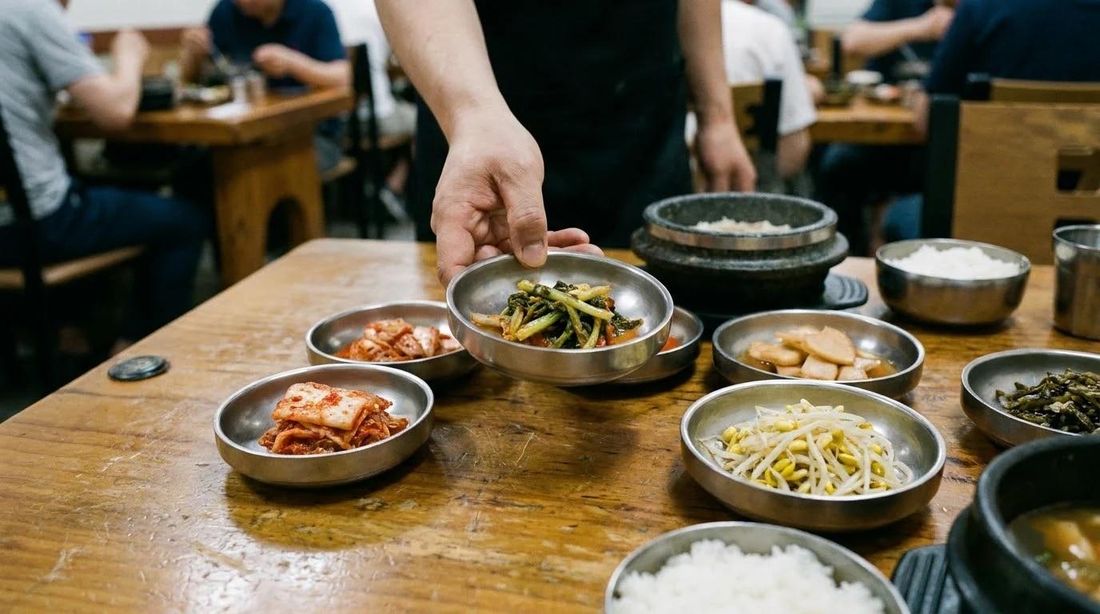
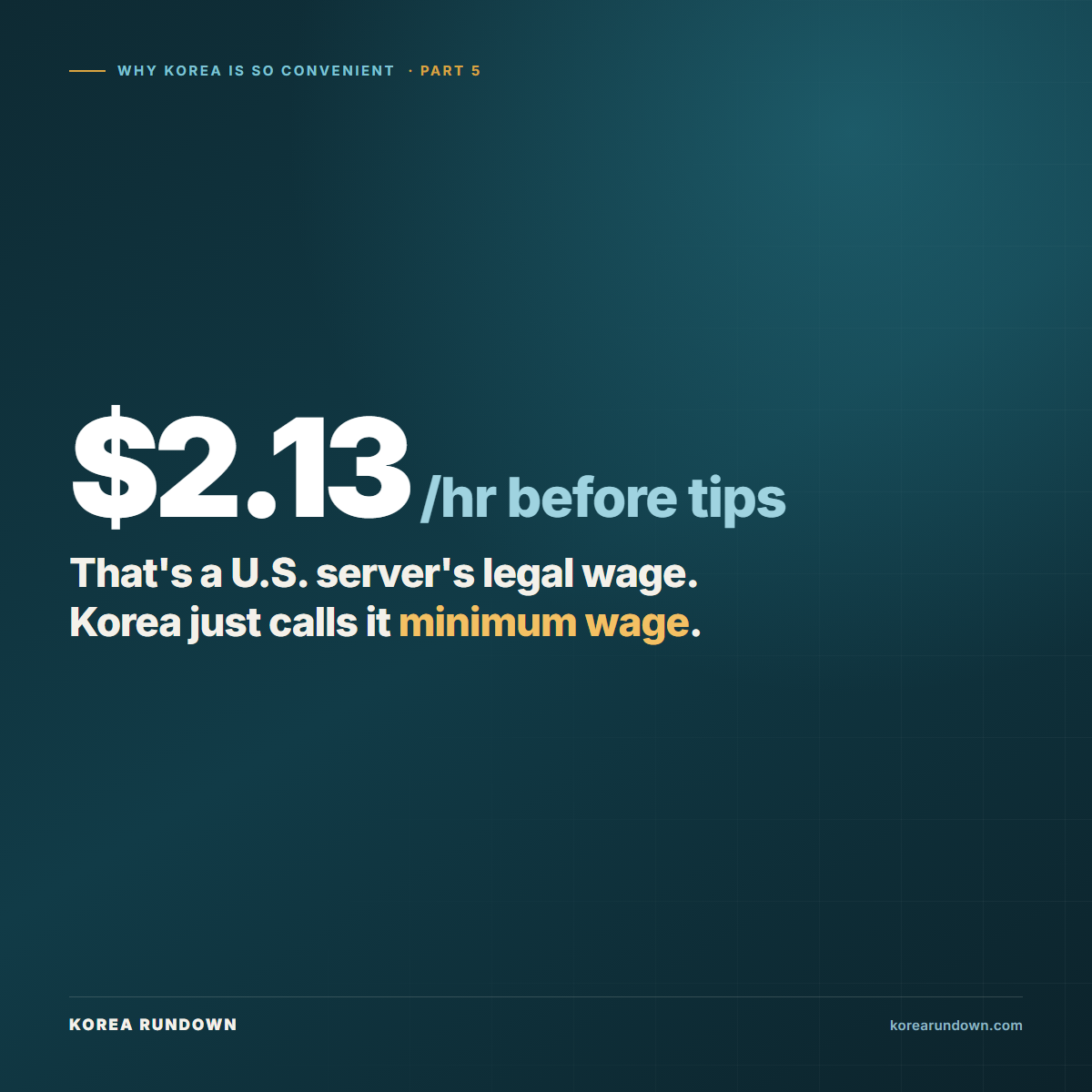
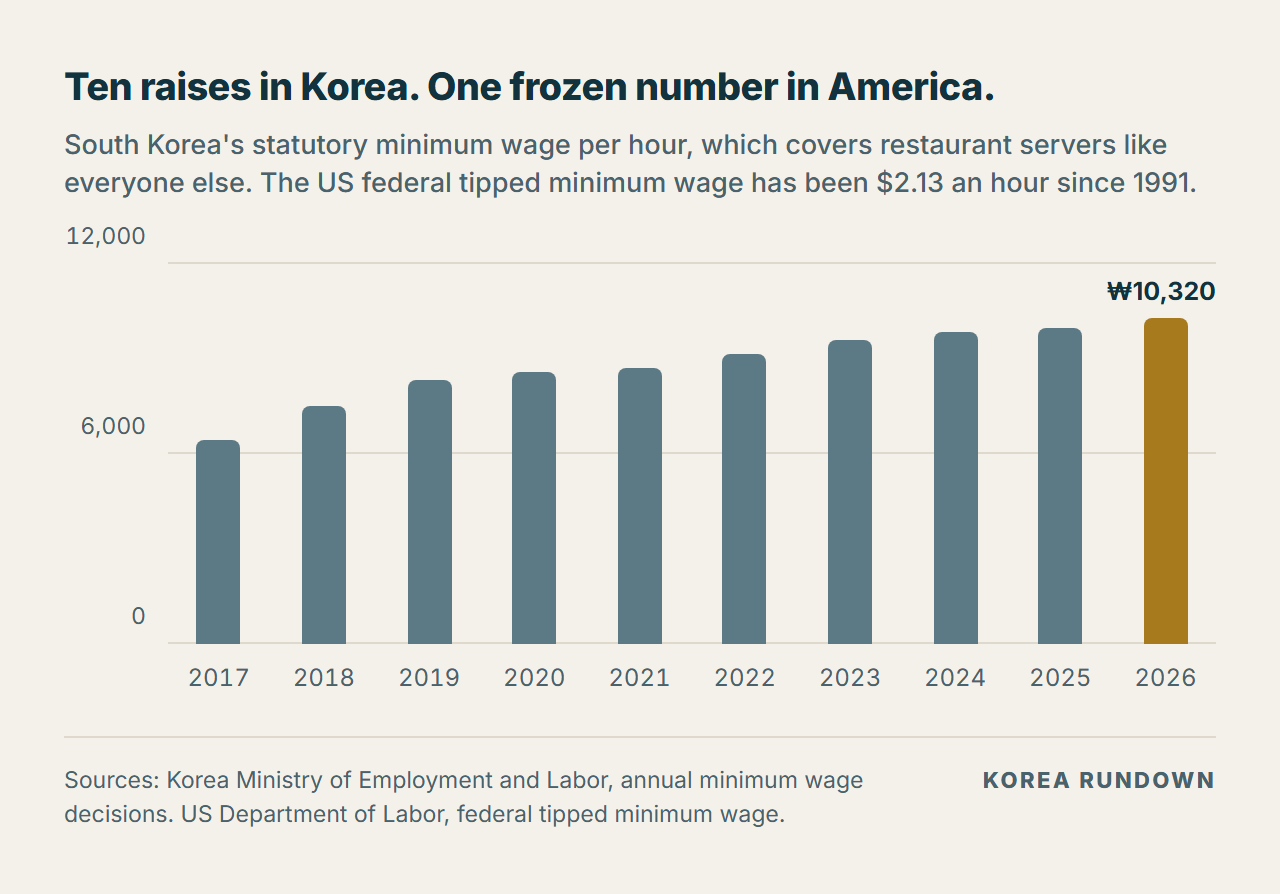
The gap isn't etiquette. It's built into the wage. South Korea's 2026 minimum wage is 10,320 won an hour — roughly $7.46 at the current exchange rate — and that figure isn't a starting point tips are expected to top up. It's the full wage, and it applies to a restaurant server the same way it applies to a cashier or a warehouse worker. In the United States, the federal tipped minimum wage is $2.13 an hour, a figure that hasn't moved since 1991. Employers only have to make up the difference to $7.25 if a worker's tips fall short in a given pay period. The tip isn't a bonus layered on top of pay. In the U.S. system, it functionally is the pay.
The idea that tipping is "rude" in Korea gets repeated so often it sounds like a rule of etiquette, but that's not quite right. Nobody is offended by generosity. Servers just don't have a system for what to do with an unsolicited handful of cash, because their income was never built around expecting it. There is one place a gratuity-like charge does show up on paper: hotels, banquet halls, and some higher-end restaurants add a 10% "service charge" printed directly on the bill. It works less like a tip and more like a built-in service fee — it's automatic, it's taxed, and it goes into payroll generally rather than to whichever server happened to take your table that night.
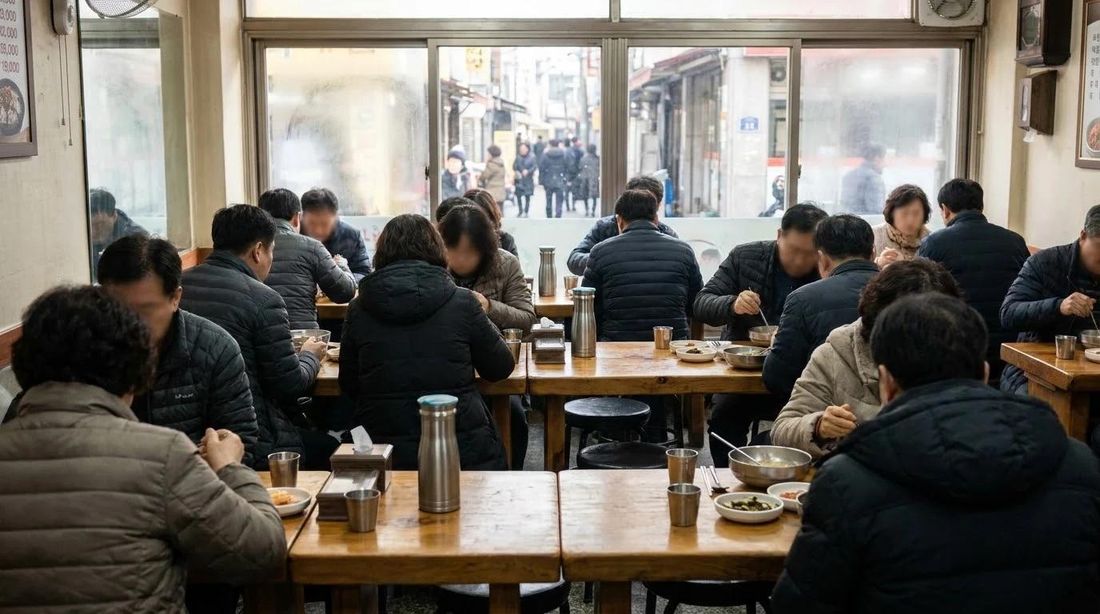
None of this makes the system frictionless for everyone. Small restaurant and cafe owners have been the loudest critics of several straight years of minimum wage increases, arguing that labor costs are eating into already-thin margins faster than menu prices can rise to cover them — part of why self-order kiosks have spread through Korean restaurants faster than through most of the U.S. And the flip side of a guaranteed wage is a flat one. A Korean server having an exceptional night doesn't walk out with an exceptional amount of extra cash the way a server working a packed Friday rush in a busy American city sometimes can. Stability replaced upside, in both directions, not just the one that flatters the story.
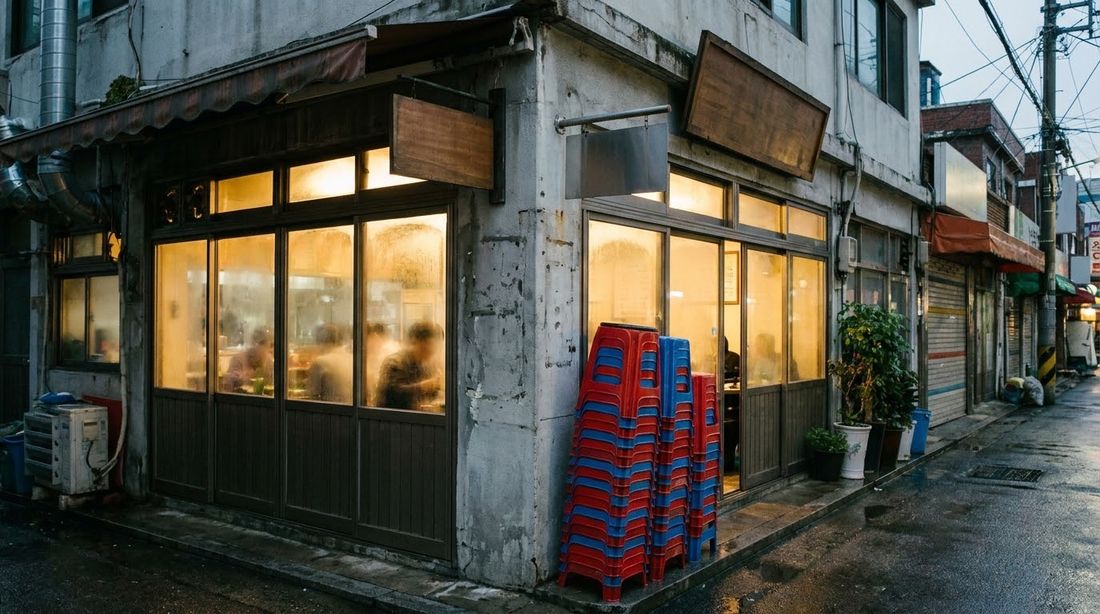
The reason Korea can build the full wage into the menu price instead of into a tip line comes back to the thing this whole series keeps landing on: density. A restaurant in a Seoul neighborhood with tens of thousands of people living within a ten-minute walk has customer traffic that barely swings by day of the week. That predictability lets an owner set a price once and know it covers payroll without guesswork. A diner off a two-lane road outside a mid-size American city doesn't get that guarantee — a slow Tuesday can be genuinely slow — and tipping became the shock absorber that let a worker's take-home pay flex with a demand curve that Korea's density mostly smooths out before it ever reaches the register.
Part 6 of this series looks at a different kind of guarantee: what it actually means, statistically, to walk home alone in Seoul at 1 a.m., and where that reputation holds up against the numbers and where it doesn't.
This is part 5 of a series on why daily life in Korea feels so frictionless. Part 4 covered why a doctor's visit in Korea costs about six dollars.


Comments
Post a Comment