Korea Delivery: How Fried Chicken Reaches a Park Blanket at Midnight
This is part two of a series on why daily life in Korea feels so frictionless. Part one covered convenience stores.
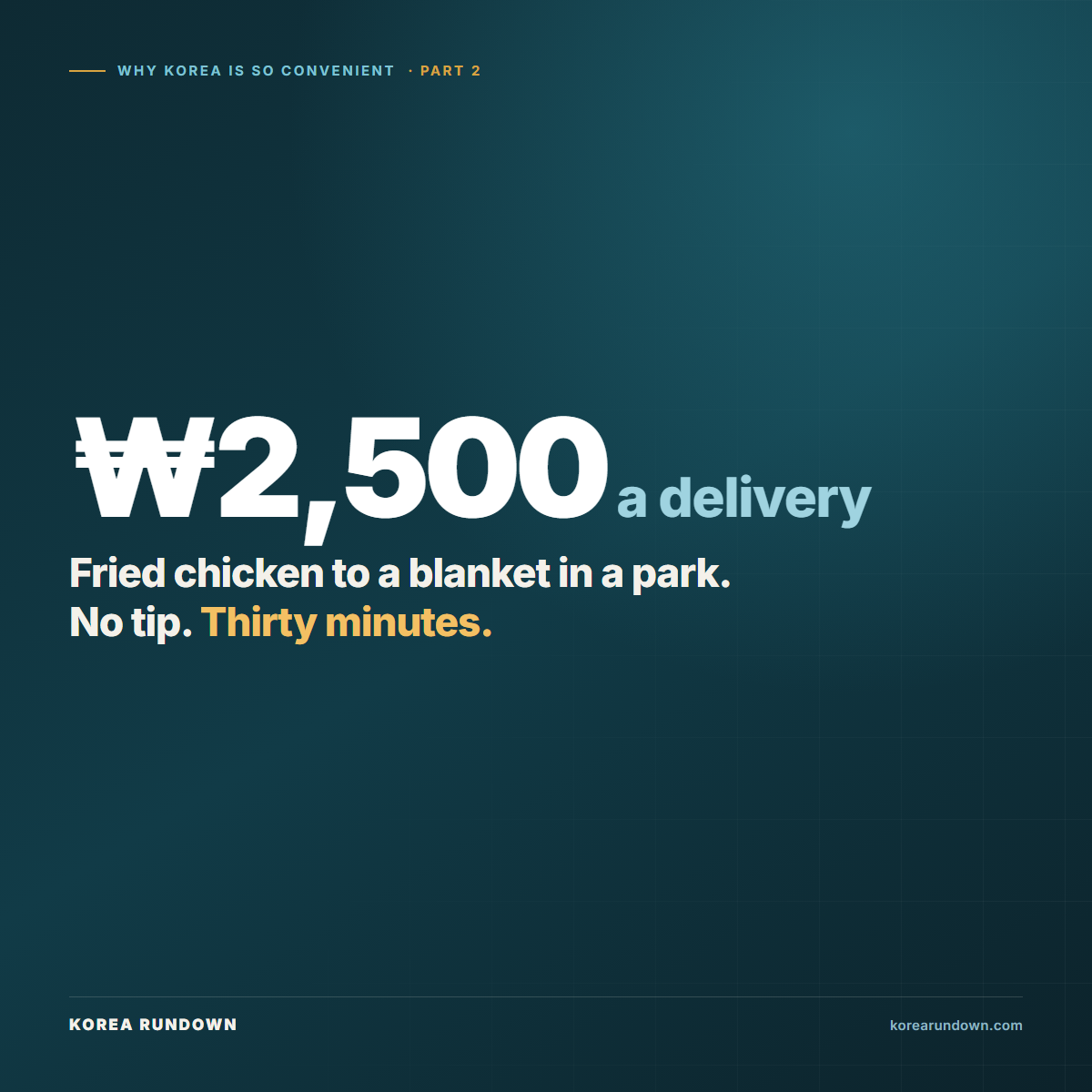
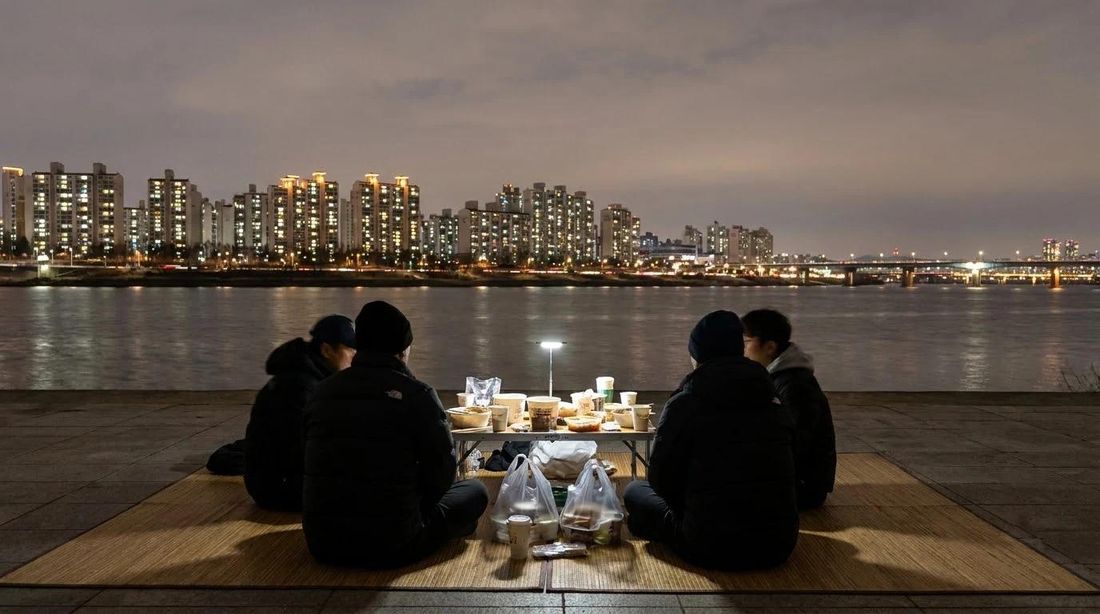
Here is a scene that happens thousands of times on any warm evening in Seoul. A group spreads a blanket on the grass at Hangang Park, next to the river. Someone opens an app, sets the delivery address to a spot in the park, and orders fried chicken. Thirty minutes later a scooter pulls up at a marked curb, the driver calls, someone walks over, and the group is eating hot Korean fried chicken on a blanket by the water.
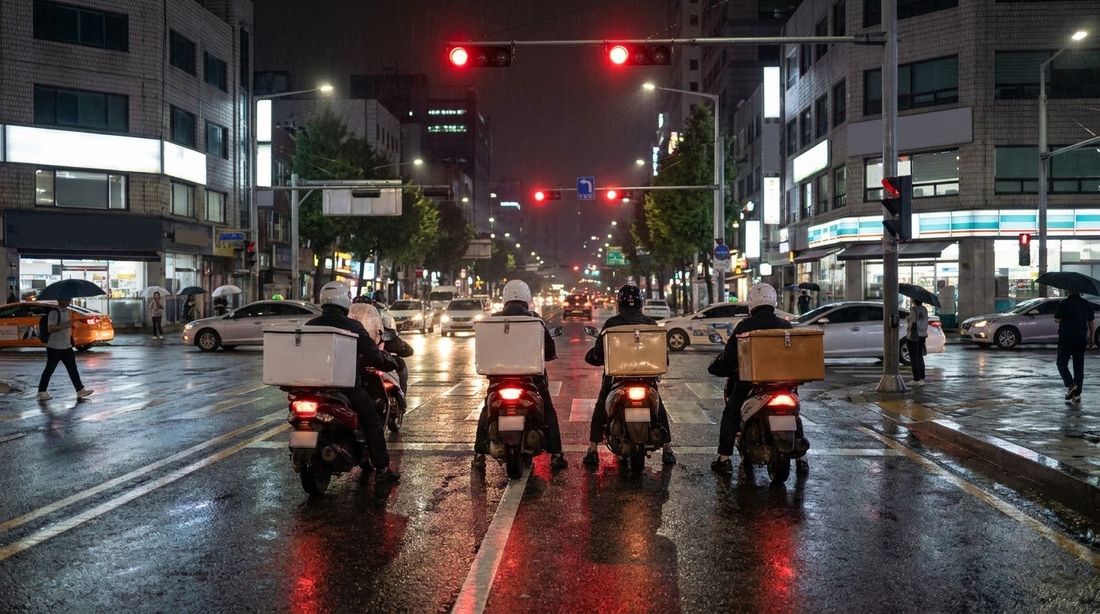
To an American reader, almost every part of that is impossible. You cannot get delivery to a park. You cannot get it at midnight. And if you somehow could, the fees and tip would cost more than the food.
In Korea, it is unremarkable.
The park thing is not a loophole
The most surprising detail is that riverside delivery is not people gaming the system — it is official. Major Han River parks, including Yeouido and Banpo, have designated, clearly marked delivery zones. Yeouido Hangang Park alone has several. You set your delivery address to the zone rather than a street address, the order comes through normally, and the rider meets you at the zone. You walk over to pick it up; the rider does not hunt for your blanket in the dark.
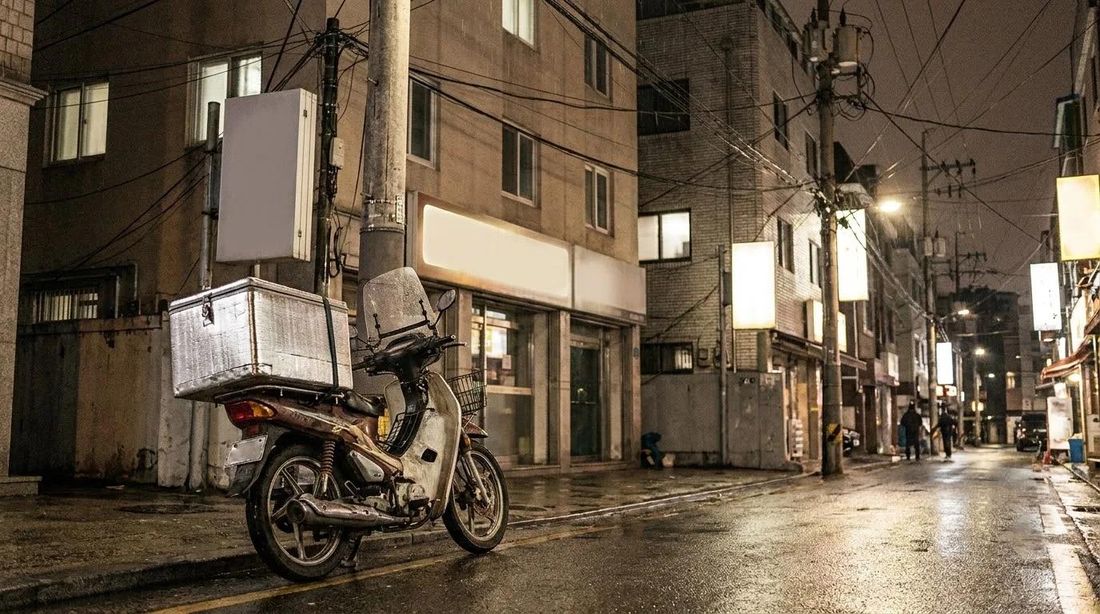
The fact that a public park has infrastructure for food delivery tells you how deeply the habit is embedded. It is not a novelty service. It is treated as a normal thing residents do, so the parks made it orderly instead of fighting it.
The fees are lower, and the reason is not generosity
A typical delivery fee in Korea runs roughly 2,500 to 3,500 won on a standard order — call it two to three dollars — and there is no tipping culture layered on top. In the US, the same order routinely carries a delivery fee, a service fee, and a tip that together can add fifty percent or more to the bill.
Sources: Korean delivery app consumer pricing, 2025; Korean press reporting on platform commissions, October 2025.
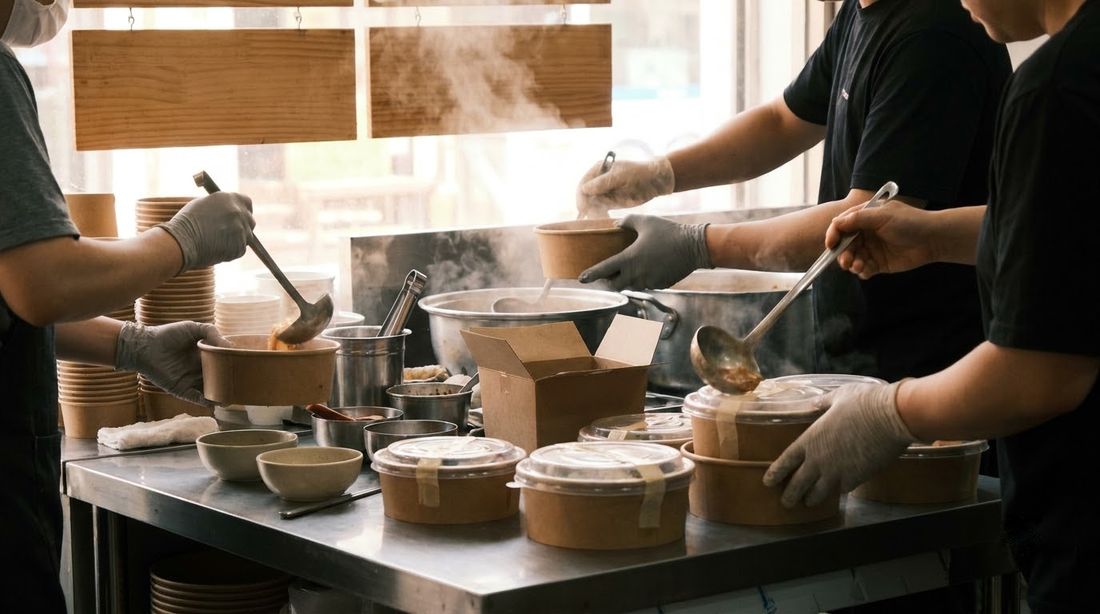
Two structural things explain the gap. First, distance: a Seoul rider is usually traveling a very short hop, often under a mile, because both the restaurant and the customer sit inside the same dense cluster of buildings. Second, order stacking: because so many orders originate within a tiny radius, a single rider can chain several deliveries in one loop instead of driving across a suburb for one order and coming back empty.
Worth being straight about, though: this is not a fixed advantage, and it is getting more expensive. The cost pressure has landed hardest on restaurants rather than customers, as the figures above show. If you read that Korean delivery is cheap, it is cheap for the person eating. The economics are getting harder for the person cooking.
Nobody is waiting at the door
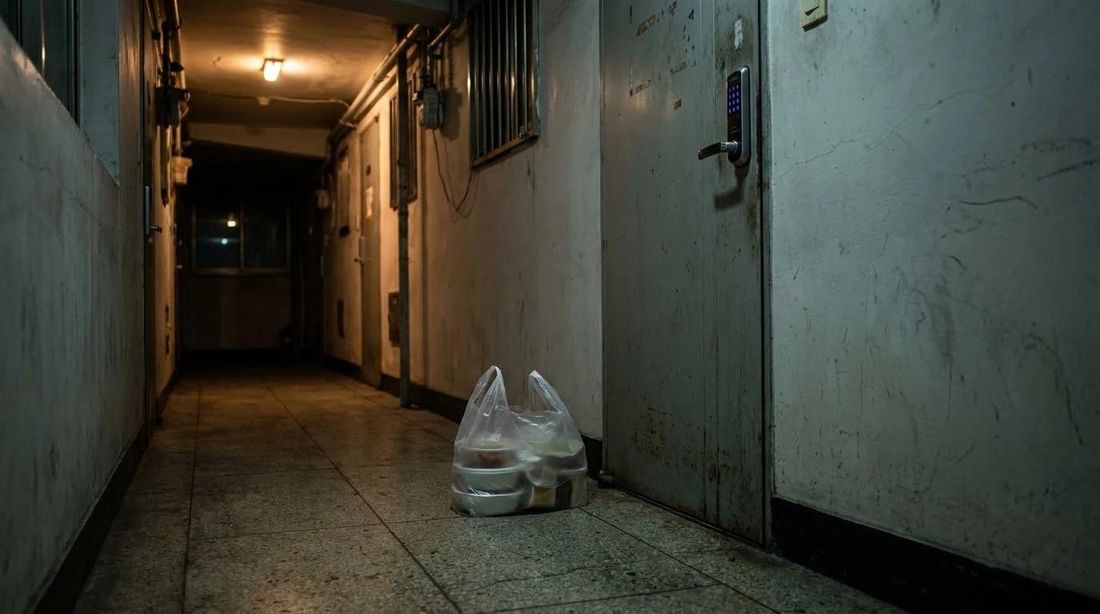
The tipping part deserves more than a clause, because it is probably the piece Americans feel most sharply right now. In Korea there is no tip line. Not a suppressed one, not a socially optional one — the delivery apps simply have no tipping mechanism. The rider hands over the bag and leaves. There is no pause on the doorstep where both people are performing a small negotiation.
The reason is not that Koreans are indifferent to service workers. It is that the wage was never designed around tips in the first place. Korean workers are paid the full legal minimum wage regardless of gratuities. Delivery riders are paid per completed order by the platform, with performance bonuses on top — Coupang Eats, for example, has offered bonuses in the 25 to 30 percent range to riders clearing a high delivery count over a two-week period.
Compare that with the American structure, where the federal tipped minimum cash wage is $2.13 an hour. The employer is supposed to make up the gap to $7.25 if tips fall short, but the architecture assumes the customer covers the wage. Once that assumption is baked in, every transaction has to carry it.
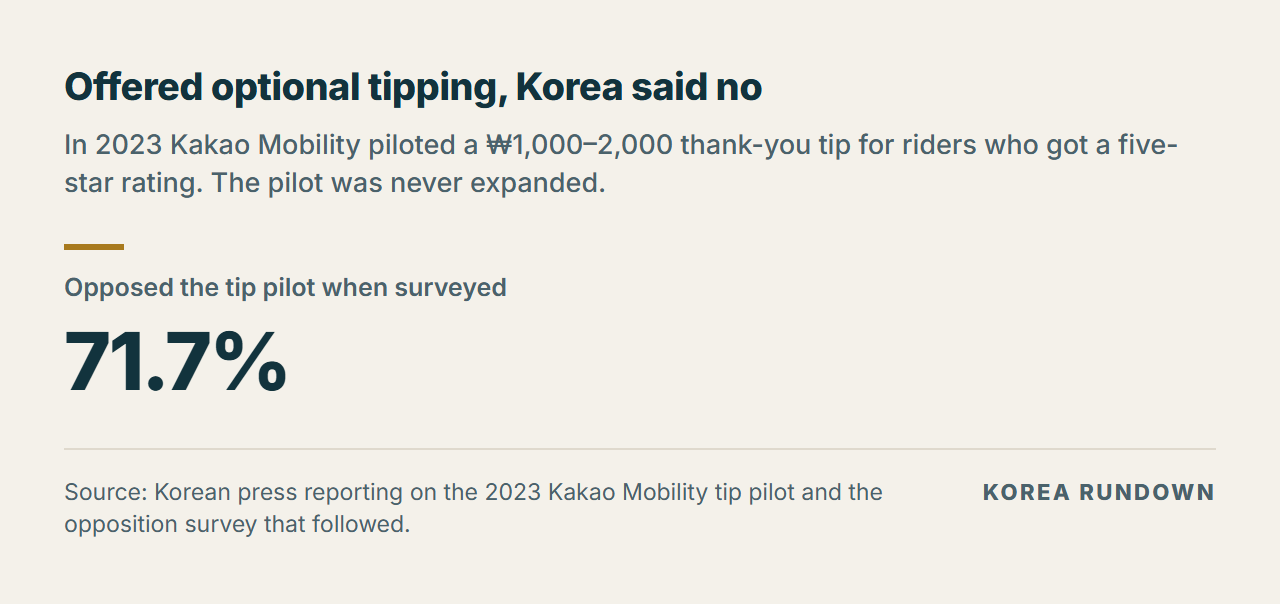
The interesting test came in 2023, when Kakao Mobility ran a pilot letting riders who received a five-star rating collect a 1,000 to 2,000 won thank-you tip. A survey found 71.7 percent of respondents opposed it. The pilot was never expanded. Korean customers did not treat optional tipping as a nice gesture; they treated it as the opening move toward a system where the price stops meaning the price.
That is the part worth sitting with. The absence of tipping in Korea is not a cultural quirk that happens to save you money. It is a structural choice about who pays the wage — and when it was offered as an option, people pushed it away.
It is not the "ppalli ppalli" explanation
The usual shorthand for all of this is Korea's ppalli ppalli culture — "hurry hurry," the national impatience. It is a fun explanation and it is not entirely wrong about how it feels. But as a cause, it does not hold up. Plenty of countries are impatient. Impatience does not produce a rider network that can deliver to a park bench at midnight for three dollars.
What produces that is geometry. Korea concentrates roughly half its population into the Seoul metropolitan area, and most of those people live stacked in apartment towers. That single fact is what makes the numbers work: a rider's effective service radius contains a few thousand potential customers instead of a few dozen, restaurants sit inside the same radius, and the time cost per delivery collapses.
Run the same business in an American suburb and the math inverts. The homes are spread across acres, the restaurants cluster on a commercial strip several miles away, and each delivery is a dedicated round trip by car. No amount of cultural urgency fixes that. The fee has to be high because the trip is genuinely expensive.
Which is the same thing that was true of convenience stores in part one, just pointed in a different direction. Korea did not decide to be more convenient than everyone else. It built vertically, and convenience is what falls out of that when you do it at scale.
Sources: Korean delivery app consumer pricing and rider compensation structure, 2025; Korean press reporting on platform commissions, October 2025; Kakao Mobility tip pilot and opposition survey, 2023; U.S. federal tipped minimum cash wage, U.S. Department of Labor.
Next in this series: the Seoul subway — why a system that moves millions of people a day still shows up within a couple of minutes of when it says it will, and why the fare is a fraction of what a comparable ride costs in New York.


Comments
Post a Comment